
Grain
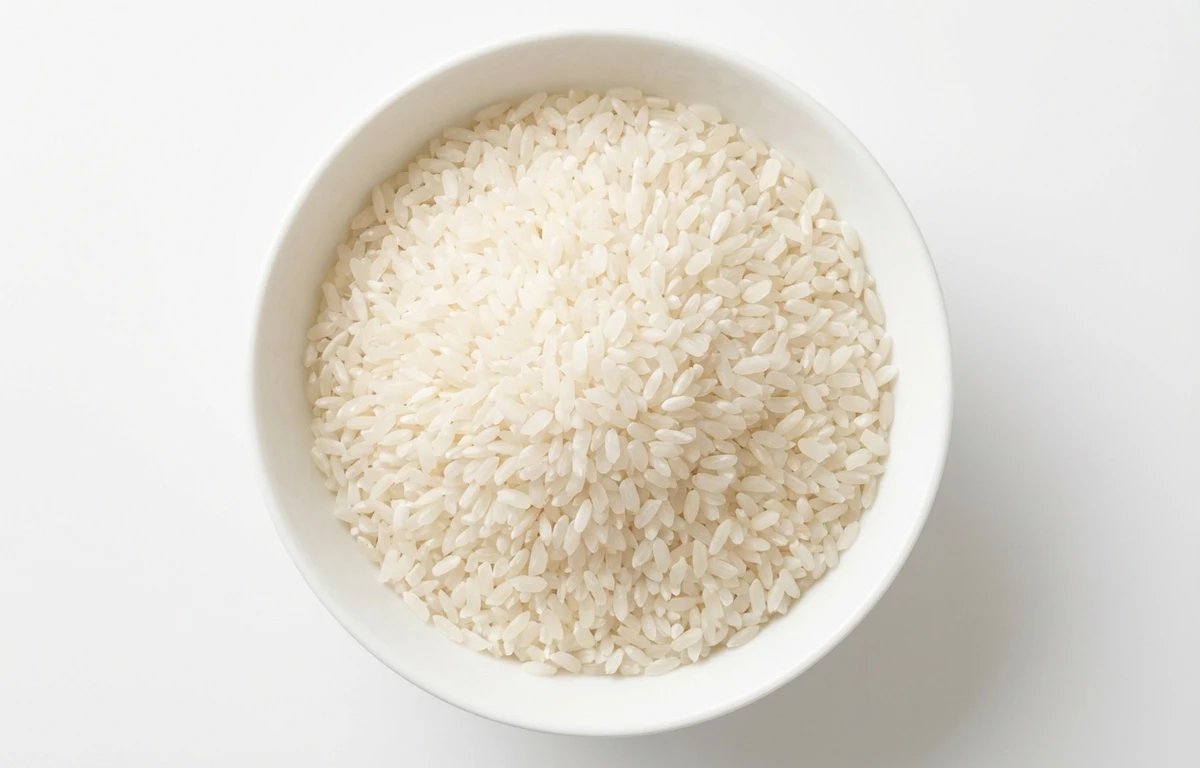
raw enriched medium-grain white rice.
VegetarianVeganGluten-freeDairy-freeNut-freePeanut-freeSoy-freeEgg-freeShellfish-freeHoney-freeAlcohol-free
SERVING
CALORIES
360
PROTEIN
6.6g
CARBS
79.1g
FAT
0.60g
FIBER
1.3g
NUTRITION PROFILE · per 100 g
Everything in this ingredient.
MACRONUTRIENTS
Calories360kcal—
Protein6.6g13%
Carbohydrates79.1g29%
Fiber1.3g5%
Sugar0.10g0%
Total fat0.60g1%
Saturated fat0.18g1%
Trans fat0g—
Cholesterol0mg0%
Water12.9g—
MINERALS
Sodium1.0mg0%
Potassium115mg2%
Calcium9.0mg1%
Iron4.4mg24%
Magnesium25mg6%
Phosphorus115mg9%
Zinc1.1mg10%
Copper0.20mg22%
Manganese1.1mg48%
Selenium15.1µg27%
VITAMINS
Vitamin A0µg0%
Vitamin C0mg0%
Vitamin D0µg0%
Vitamin E0.10mg1%
Vitamin K0.10µg0%
Thiamin (B1)0.58mg48%
Riboflavin (B2)0.05mg4%
Niacin (B3)4.1mg26%
Pantothenic acid (B5)1.0mg20%
Vitamin B60.16mg9%
Folate (B9)231µg58%
Vitamin B120µg0%
%DV based on a 2,000 cal diet. Source: USDA FoodData Central. A dash in the %DV column means there’s no established Daily Value for that nutrient.
MEASUREMENT CONVERSIONS
How much is what.
1 cup195g
1 tablespoon12.2g
1 teaspoon4.1g
1 ml0.8g
1 liter812.5g
HEALTH BENEFITS
Why eat it.
- ✓Provides a quick source of energy due to its easily digestible carbohydrates.
- ✓Enriched with B-vitamins like thiamin, niacin, and folic acid, which are important for metabolism and cell health.
- ✓Fortified with iron, which is crucial for preventing anemia and supporting oxygen transport in the blood.
- ✓Naturally gluten-free, making it a safe and staple grain for individuals with celiac disease or gluten sensitivity.
COOKING TIPS
In the kitchen.
- 1Rinse the rice under cold water before cooking to remove excess surface starch, which helps prevent clumping and results in more separate grains.
- 2Use a typical water-to-rice ratio of 1.5:1. Bring to a boil, then cover and simmer on low heat for about 15-20 minutes, or until the water is fully absorbed.
- 3After cooking, let the rice stand covered and off the heat for 5-10 minutes to allow the steam to finish the cooking process and create a fluffier texture.
- 4Medium-grain rice has a tender, moist, and slightly sticky texture, making it ideal for dishes like risotto, paella, and rice bowls.
STORAGE
Keep it fresh.
- Store raw white rice in a cool, dark, and dry place in an airtight container to prevent moisture and pest contamination.
- For optimal quality, use within 1-2 years, although it can be stored almost indefinitely under ideal conditions.
FAQ
Frequently asked questions.
Is enriched medium-grain white rice healthy?
Yes, it is a healthy source of quick energy and essential nutrients. Because it is enriched, it provides important B-vitamins and iron that are often lost during processing, supporting metabolism and blood health.
How many calories and carbs are in 100g of raw medium-grain white rice?
100g of raw medium-grain white rice contains approximately 360 calories and 79.1g of carbohydrates. It is a high-carbohydrate food, making it an efficient fuel source for physical activity.
Is this rice good for weight loss?
It can be part of a weight loss diet if portion sizes are controlled, as it is very low in fat. However, because it is lower in fiber than brown rice, it is best paired with fiber-rich vegetables and lean proteins to increase satiety.
Is medium-grain white rice gluten-free?
Yes, all natural rice varieties, including medium-grain white rice, are naturally gluten-free. This makes it a safe and reliable staple grain for individuals with celiac disease or gluten sensitivity.
Is medium-grain white rice keto-friendly?
No, it is not keto-friendly. With over 79g of carbohydrates per 100g, it exceeds the daily carb limit for most ketogenic diets, which require very low carbohydrate intake.
How do you cook medium-grain white rice?
The standard ratio is 1.5 cups of water for every 1 cup of rice. Bring to a boil, then simmer covered for 15-20 minutes until water is absorbed, and let it sit for 5 minutes before fluffing.
What is the texture and taste of medium-grain rice?
Medium-grain rice is shorter and wider than long-grain rice, resulting in a tender, moist, and slightly sticky texture when cooked. It has a mild, neutral flavor that easily absorbs the flavors of sauces and seasonings.
Should I wash enriched rice before cooking?
Generally, you should avoid rinsing enriched rice. Rinsing can wash away the added vitamins and minerals, such as iron and B-vitamins, which are applied to the surface of the grains during the enrichment process.
How should I store raw white rice and how long does it last?
Store raw white rice in a cool, dry place in an airtight container to protect it from moisture and pests. If kept dry, white rice has a nearly indefinite shelf life, though it is best used within 1-2 years for peak quality.
What are the benefits of 'enriched' white rice specifically?
Enrichment adds back nutrients lost during milling, specifically thiamin, niacin, folic acid, and iron. These nutrients are vital for energy production, healthy cell growth, and supporting oxygen transport in the blood.



















