
Herb
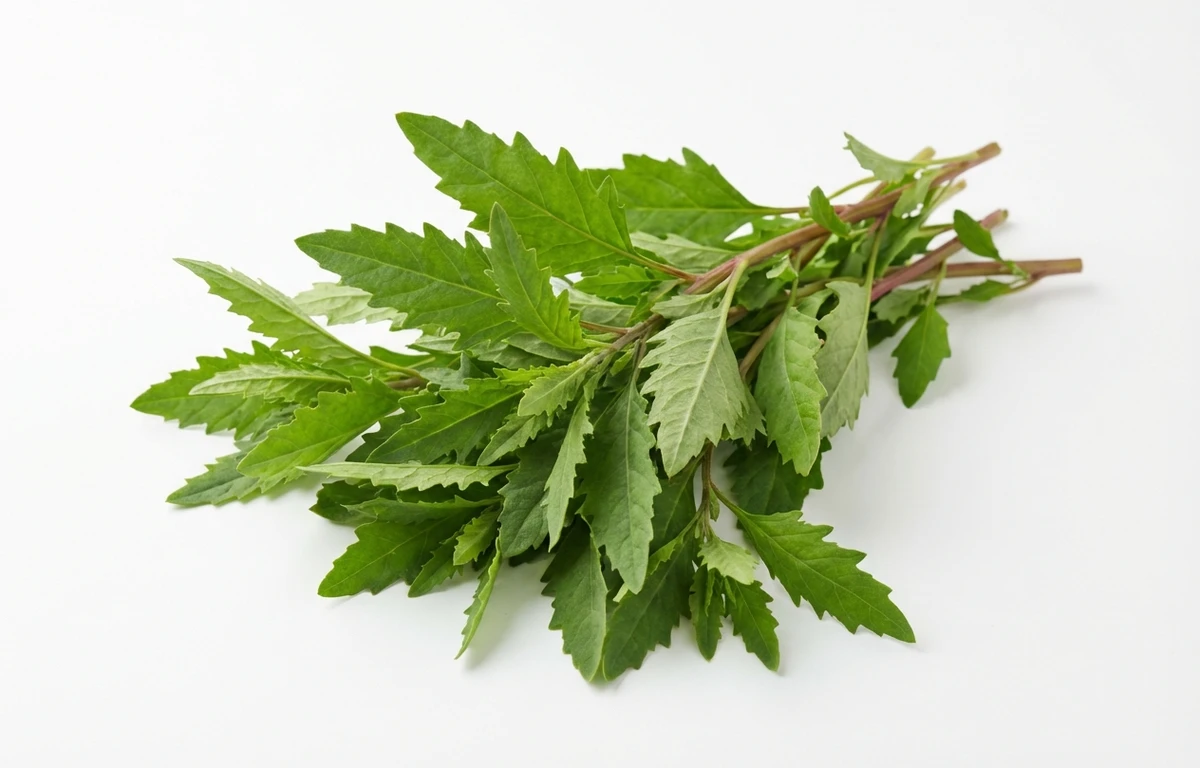
raw epazote.
VegetarianVeganGluten-freeDairy-freeNut-freePeanut-freeSoy-freeEgg-freeShellfish-freeHoney-freeAlcohol-freeHalalKosher
ALSO KNOWN AS
epazote
SERVING
CALORIES
32
PROTEIN
0.33g
CARBS
7.4g
FAT
0.52g
FIBER
3.8g
NUTRITION PROFILE · per 100 g
Everything in this ingredient.
MACRONUTRIENTS
Calories32kcal—
Protein0.33g1%
Carbohydrates7.4g3%
Fiber3.8g14%
Total fat0.52g1%
Saturated fat0.09g0%
Trans fat0g—
Cholesterol0mg0%
Water89.2g—
MINERALS
Sodium43mg2%
Potassium633mg13%
Calcium275mg21%
Iron1.9mg10%
Magnesium121mg29%
Phosphorus86mg7%
Zinc1.1mg10%
Copper0.19mg21%
Manganese3.1mg135%
Selenium0.90µg2%
VITAMINS
Vitamin A3.0µg0%
Vitamin C3.6mg4%
Vitamin D0µg0%
Thiamin (B1)0.03mg3%
Riboflavin (B2)0.35mg27%
Niacin (B3)0.64mg4%
Pantothenic acid (B5)0.18mg4%
Vitamin B60.15mg9%
Folate (B9)215µg54%
Vitamin B120µg0%
%DV based on a 2,000 cal diet. Source: USDA FoodData Central. A dash in the %DV column means there’s no established Daily Value for that nutrient.
MEASUREMENT CONVERSIONS
How much is what.
1 cup12.8g
1 tablespoon0.8g
1 teaspoon0.3g
1 ml0.1g
1 liter53.3g
HEALTH BENEFITS
Why eat it.
- ✓Traditionally used as a carminative to reduce intestinal gas and bloating, making it a classic addition to bean dishes.
- ✓Contains antioxidants, including monoterpenes and carotenoids, which help protect the body against oxidative stress.
- ✓Provides small amounts of essential minerals such as calcium, manganese, and iron, as well as vitamins A and C.
- ✓Historically used in traditional medicine as an anthelmintic to help expel intestinal parasites, though it should be used with caution and in culinary amounts only.
COOKING TIPS
In the kitchen.
- 1Add epazote leaves, whole or chopped, during the last 15-20 minutes of cooking to preserve its distinct flavor, as prolonged heat can make it bitter.
- 2Use sparingly due to its strong, pungent flavor, often described as a mix of oregano, anise, and mint. One or two sprigs are usually sufficient for a large pot of beans or soup.
- 3It is the traditional herb for flavoring black beans (frijoles de la olla) and is also excellent in stews, soups, moles, and quesadillas.
- 4The compound responsible for its flavor and effects, ascaridole, can be toxic in very large quantities. It should be avoided by pregnant women and used only in small, culinary amounts.
STORAGE
Keep it fresh.
- Store fresh epazote stems in a jar of water on the countertop like a bouquet of flowers, or wrap the leaves in a damp paper towel and place in a plastic bag in the refrigerator for up to a week.
- For long-term storage, hang the sprigs upside down in a cool, dark, well-ventilated area to dry. Crumble the dried leaves and store in an airtight container.
FAQ
Frequently asked questions.
Is epazote healthy?
Yes, epazote is a healthy culinary herb that is very low in calories, providing only 32 calories per 100g. It contains essential minerals like calcium, manganese, and iron, as well as vitamins A and C, which support overall immune and bone health.
What are the primary health benefits of epazote?
Epazote is best known as a carminative, which helps reduce intestinal gas and bloating when cooked with legumes. It also contains antioxidants like monoterpenes and carotenoids that protect cells from oxidative stress and has been used traditionally to help expel intestinal parasites.
Why is epazote commonly added to bean dishes?
Epazote contains compounds that help break down the complex sugars in beans that cause flatulence. Adding a few sprigs to the cooking liquid makes the beans significantly easier to digest and reduces the discomfort of bloating.
What does epazote taste like?
Epazote has a very distinct, pungent flavor profile that is often described as a mix of citrus, mint, and savory notes with a hint of petroleum or turpentine. Because of its intensity, it is usually used as a background note rather than a primary ingredient.
Is epazote vegan and gluten-free?
Yes, epazote is a natural plant-based herb and is both vegan and gluten-free. It is also keto-friendly, as it contains only about 7.44g of carbohydrates per 100g, most of which is consumed in very small quantities.
Can I eat epazote raw?
While epazote can be eaten raw in small amounts, such as in salads or as a garnish, it is most frequently cooked. Cooking mellows its strong flavor and helps release the oils that aid in digestion, which is its primary culinary purpose.
How do you store fresh epazote?
To store fresh epazote, wrap the stems in a damp paper towel and place them in a plastic bag in the refrigerator's crisper drawer for up to one week. You can also freeze the leaves in a single layer on a baking sheet before transferring them to a freezer bag for longer storage.
What can I use as a substitute for epazote?
There is no exact substitute for its unique flavor, but a mixture of flat-leaf parsley, cilantro, and a pinch of dried oregano can provide a similar herbal complexity. Some cooks also use savory or a combination of lemon and mint to mimic its bright yet earthy profile.
Are there any safety concerns with eating epazote?
Epazote is safe when used in normal culinary amounts, but the concentrated essential oil and large medicinal doses can be toxic. It should be avoided in high concentrations by pregnant or nursing women and young children due to the presence of ascaridole.
How do you know if epazote has gone bad?
Fresh epazote should have vibrant green leaves and a very strong, pungent aroma. If the leaves become slimy, turn dark brown or black, or lose their characteristic scent, the herb has spoiled and should be discarded.



















