
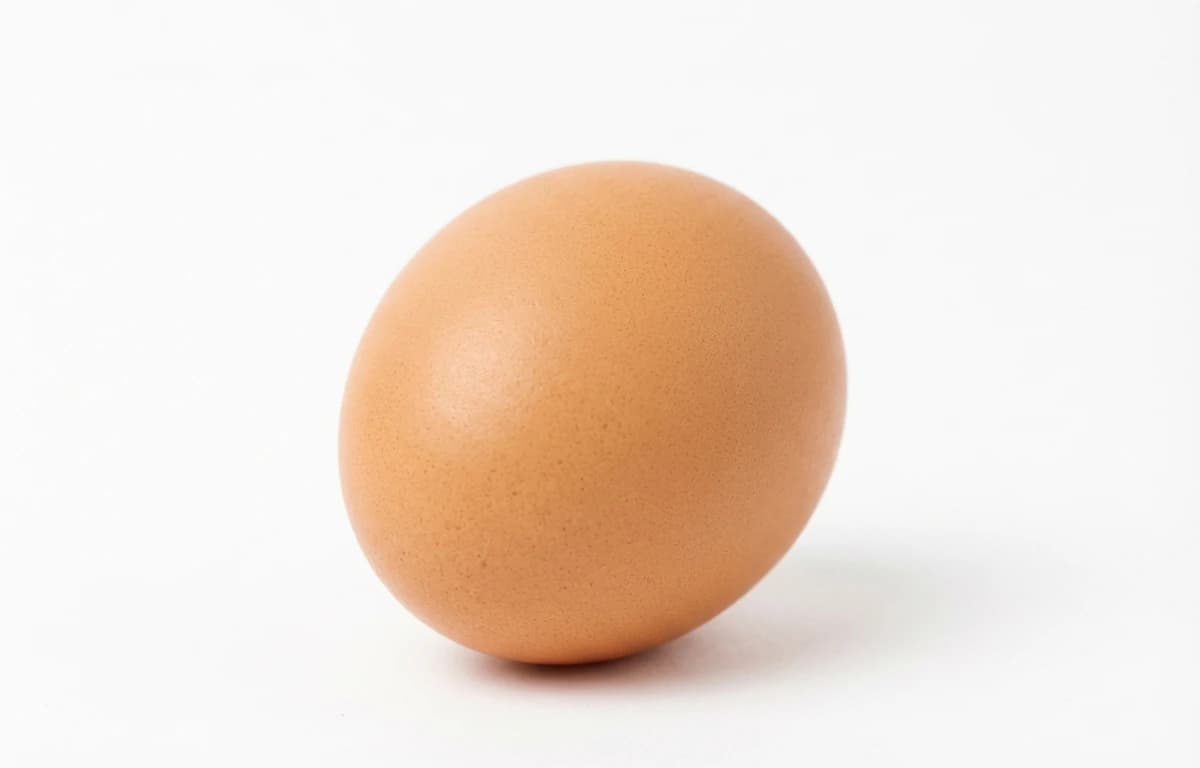
raw fresh egg
Also known as: raw egg
Loading...
Also known as: raw egg
Per 100g
Nutrition data source: USDA FoodData Central
Common measurement equivalents in grams
Yes, eggs are highly nutritious, providing 12.56g of protein per 100g and essential nutrients like choline for brain health and Vitamin D for bones. They also contain antioxidants like lutein and zeaxanthin which support eye health and may reduce the risk of macular degeneration.
A standard large raw egg contains about 6 grams of high-quality complete protein. Per 100g, eggs provide approximately 12.56g of protein, containing all essential amino acids necessary for muscle repair and overall body function.
Yes, eggs are an ideal food for the ketogenic diet because they contain only 0.72g of carbohydrates per 100g. Their high fat (9.51g) and protein content help maintain ketosis while providing essential vitamins and minerals.
Eggs are considered vegetarian (specifically ovo-vegetarian) as they do not involve the consumption of animal flesh. However, they are not vegan because they are an animal byproduct.
While raw eggs are used in some recipes like mayonnaise or mousse, there is a risk of Salmonella food poisoning. It is generally recommended to cook eggs until the yolks and whites are firm, or use pasteurized eggs if a recipe specifically calls for raw ones.
You can use the 'float test' by placing the egg in a bowl of water. Fresh eggs sink to the bottom and lay flat on their side, while older eggs stand upright or float because the air cell inside the shell expands over time.
Eggs should be stored in their original carton on an inside shelf of the refrigerator, rather than the door, to maintain a consistent temperature. This helps prevent moisture loss and protects the porous shells from absorbing strong odors from other foods.
raw fresh egg is a versatile ingredient found in cuisines around the world. With 143 calories per 100g and 12.56 grams of protein, it's a nutritious addition to many dishes.
Explore more ingredients in the egg category with complete nutrition information.
View all egg →Discover 0 recipes featuring raw fresh egg with step-by-step instructions.
Browse recipes →When refrigerated properly at 40°F (4°C) or below, raw shell eggs can stay fresh for 3 to 5 weeks. If you crack an egg but don't use it immediately, the raw yolk or white should be stored in a sealed container and used within 2 to 4 days.
No, there is no significant nutritional difference between white and brown eggs. The color of the shell is determined by the breed of the hen, while the nutritional quality is primarily influenced by the hen's diet and living conditions.
Yes, but you should never freeze them in their shells as they will expand and crack. To freeze, crack the eggs into a bowl, beat them until just blended, and store them in a sealed container for up to one year.