
Other
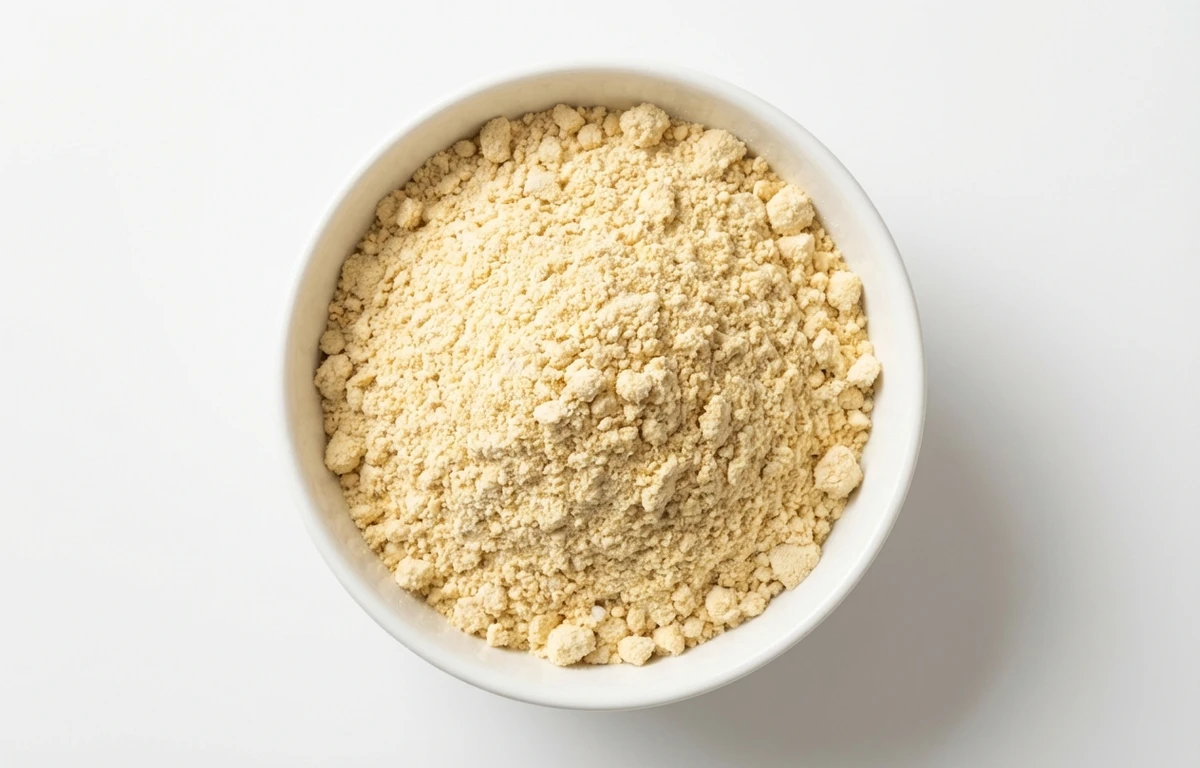
raw full-fat soy flour.
VegetarianVeganGluten-freeDairy-freeNut-freePeanut-freeSoy-freeEgg-freeShellfish-freeHoney-freeAlcohol-free
ALSO KNOWN AS
soy flour
SERVING
CALORIES
434
PROTEIN
37.8g
CARBS
31.9g
FAT
20.6g
FIBER
9.6g
This ingredient is flagged as naturally gluten-free. Per 100 g, it provides 70 µg of vitamin K.
NUTRITION PROFILE · per 100 g
Everything in this ingredient.
MACRONUTRIENTS
Calories434kcal—
Protein37.8g76%
Carbohydrates31.9g12%
Fiber9.6g34%
Sugar7.5g15%
Total fat20.6g26%
Saturated fat3.0g15%
Trans fat0g—
Cholesterol0mg0%
Water5.2g—
MINERALS
Sodium13mg1%
Potassium2515mg54%
Calcium206mg16%
Iron6.4mg35%
Magnesium429mg102%
Phosphorus494mg40%
Zinc3.9mg36%
Copper2.9mg324%
Manganese2.3mg99%
Selenium7.5µg14%
VITAMINS
Vitamin A6.0µg1%
Vitamin C0mg0%
Vitamin D0µg0%
Vitamin E1.9mg13%
Vitamin K70µg58%
Thiamin (B1)0.58mg48%
Riboflavin (B2)1.2mg89%
Niacin (B3)4.3mg27%
Pantothenic acid (B5)1.6mg32%
Vitamin B60.46mg27%
Folate (B9)345µg86%
Vitamin B120µg0%
%DV based on a 2,000 cal diet. Source: USDA FoodData Central. A dash in the %DV column means there’s no established Daily Value for that nutrient.
MEASUREMENT CONVERSIONS
How much is what.
1 cup84g
1 tablespoon5.2g
1 teaspoon1.7g
1 ml0.3g
1 liter346.7g
HEALTH BENEFITS
Why eat it.
- ✓Excellent source of complete plant-based protein, containing all essential amino acids for muscle building and repair.
- ✓Contains healthy unsaturated fats, including omega-3 and omega-6 fatty acids, which are beneficial for heart health.
COOKING TIPS
In the kitchen.
- 1Raw soy flour must be cooked thoroughly before consumption to neutralize trypsin inhibitors and reduce its strong 'beany' flavor. Toasting it in a dry skillet over medium heat until fragrant is a common first step.
- 2Use as a thickener for soups, gravies, and stews. It adds a creamy texture and boosts protein content.
- 3In baking, substitute up to 25% of the wheat flour with soy flour to add moisture, protein, and richness. It works well in quick breads, muffins, and cookies.
- 4Can be mixed with water to create a high-protein slurry for enriching dishes or as a base for homemade soy milk.
STORAGE
Keep it fresh.
- Store in an airtight container in a cool, dark place like a pantry for up to 3 months.
- For longer-term storage (up to 1 year), place the airtight container in the refrigerator or freezer to prevent the natural oils from becoming rancid.
FAQ
Frequently asked questions.
How much protein is in raw full-fat soy flour?
Raw full-fat soy flour is very high in protein, containing approximately 37.81g per 100g. This makes it an excellent choice for muscle building, tissue repair, and meeting protein needs on a vegetarian or vegan diet.
How do I use raw full-fat soy flour in baking?
It is best used as a partial replacement for wheat flour, typically substituting about 15-25% of the total flour in a recipe. Because it lacks gluten, using it at 100% can result in a dense, crumbly texture, but it adds moisture and browning to baked goods.
What is the difference between full-fat and defatted soy flour?
Full-fat soy flour retains the natural oils of the soybean, providing about 20.65g of fat per 100g and a richer flavor. Defatted soy flour has the oils removed, resulting in a higher protein concentration but a drier texture and lower calorie count.
How should I store raw full-fat soy flour?
Due to its high fat content, full-fat soy flour can go rancid quickly if exposed to heat or light. Store it in an airtight container in the refrigerator for up to 6 months, or in the freezer for up to a year to maintain freshness.
What does raw full-fat soy flour taste like?
It has a mild, nutty, and slightly earthy flavor. When toasted or baked, the 'beany' notes diminish, leaving a pleasant richness that complements both sweet and savory dishes.



















