
Loading...
Per 100g
Nutrition data source: USDA FoodData Central
Common measurement equivalents in grams
Unpeeled fresh ginger lasts about 3 weeks in the refrigerator and up to 6 months in the freezer.
Look for roots that are firm to the touch, have smooth skin, and feel heavy for their size. Avoid ginger that is soft, wrinkled, or moldy.
Yes, but the flavor is different. Use 1/4 teaspoon of ground ginger for every 1 tablespoon of freshly grated ginger.
If the ginger is young and the skin is very thin, peeling is optional. For older ginger with tough, papery skin, it is best to peel it.
Yes, ginger freezes exceptionally well. You can freeze it whole, sliced, or minced. Grating frozen ginger is actually easier than grating fresh ginger.
Ginger is low in calories but rich in potassium, magnesium, and Vitamin C, along with bioactive compounds like gingerol.
Botanically it is a rhizome (an underground stem), but in culinary and dietary contexts like Jain or Sattvic diets, it is categorized as a root vegetable.
After peeling, you can use a microplane or a fine grater for a paste-like consistency, or finely chop it with a sharp knife for texture.
Yes, ginger is well-known for speeding up the emptying of the stomach, which can be beneficial for people with indigestion and stomach discomfort.
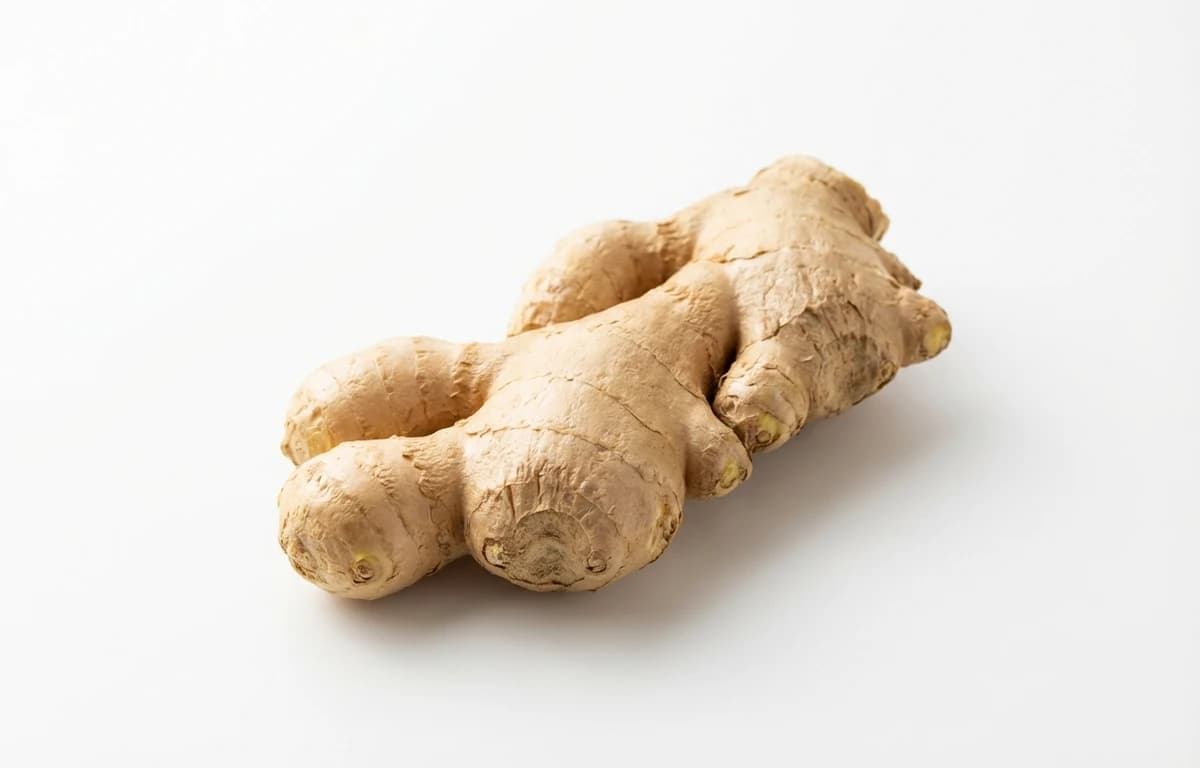
raw ginger root is a versatile ingredient found in cuisines around the world. With 80 calories per 100g and 1.82 grams of protein, it's a nutritious addition to many dishes.
Explore more ingredients in the vegetable category with complete nutrition information.
View all vegetable →Discover 0 recipes featuring raw ginger root with step-by-step instructions.
Browse recipes →