
Egg
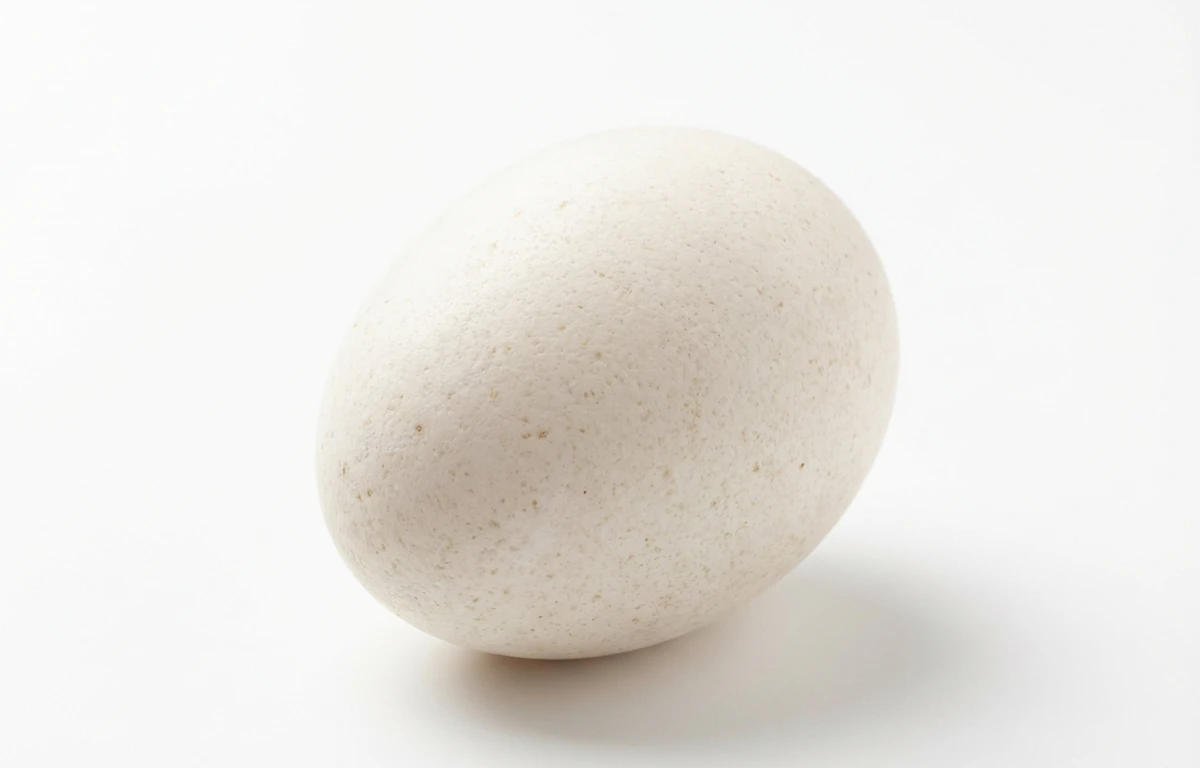
raw goose egg.
VegetarianVeganGluten-freeDairy-freeNut-freePeanut-freeSoy-freeEgg-freeShellfish-freeHoney-freeAlcohol-freeHalalKosher
ALSO KNOWN AS
goose egg
SERVING
CALORIES
185
PROTEIN
13.9g
CARBS
1.4g
FAT
13.3g
FIBER
0g
NUTRITION PROFILE · per 100 g
Everything in this ingredient.
MACRONUTRIENTS
Calories185kcal—
Protein13.9g28%
Carbohydrates1.4g0%
Fiber0g0%
Sugar0.94g2%
Total fat13.3g17%
Saturated fat3.6g18%
Cholesterol852mg284%
Water70.4g—
MINERALS
Sodium138mg6%
Potassium210mg4%
Calcium60mg5%
Iron3.6mg20%
Magnesium16mg4%
Phosphorus208mg17%
Zinc1.3mg12%
Copper0.06mg7%
Manganese0.04mg2%
Selenium36.9µg67%
VITAMINS
Vitamin A187µg21%
Vitamin C0mg0%
Vitamin D1.7µg9%
Vitamin E1.3mg9%
Vitamin K0.40µg0%
Thiamin (B1)0.15mg13%
Riboflavin (B2)0.38mg29%
Niacin (B3)0.19mg1%
Pantothenic acid (B5)1.8mg35%
Vitamin B60.24mg14%
Folate (B9)76µg19%
Vitamin B125.1µg213%
%DV based on a 2,000 cal diet. Source: USDA FoodData Central. A dash in the %DV column means there’s no established Daily Value for that nutrient.
MEASUREMENT CONVERSIONS
How much is what.
1 cup247.2g
1 tablespoon15.5g
1 teaspoon5.2g
1 ml1g
1 liter1030g
1 piece160g
HEALTH BENEFITS
Why eat it.
- ✓Excellent source of complete protein, providing all essential amino acids for muscle repair and growth.
- ✓Extremely rich in choline, a nutrient vital for brain health, memory, and nervous system function.
- ✓High in essential vitamins and minerals, including Vitamin B12 for energy metabolism, Vitamin D for bone health, and selenium for antioxidant defense.
- ✓Contains lutein and zeaxanthin, antioxidants that accumulate in the retina and help protect eyes from harmful light and age-related macular degeneration.
COOKING TIPS
In the kitchen.
- 1One goose egg is equivalent to about 2-3 large chicken eggs, so adjust recipes accordingly.
- 2Due to their size, cooking times are longer. A hard-boiled goose egg may take 15-20 minutes, and a soft-boiled one around 9-11 minutes.
- 3The large, rich yolk has a higher fat content, resulting in exceptionally creamy scrambled eggs, custards, and rich sauces like hollandaise or carbonara.
- 4When frying, use a lower heat to ensure the large white cooks through without the yolk becoming overdone.
STORAGE
Keep it fresh.
- Refrigerate promptly at or below 40°F (4°C) in their original carton to maintain freshness and prevent absorption of odors.
- For best quality, use within 3 to 4 weeks of purchase. The thick shell helps preserve them longer than chicken eggs.
- Store with the pointed end down to keep the yolk centered and the air cell intact, which helps maintain quality.
FAQ
Frequently asked questions.
Are goose eggs healthy?
Yes, goose eggs are highly nutritious and nutrient-dense. They are an excellent source of complete protein, Vitamin B12, and selenium, and they contain significantly more choline and Vitamin D than chicken eggs, supporting brain and bone health.
How much protein and fat are in a goose egg?
Per 100g, a goose egg contains approximately 13.87g of protein and 13.27g of fat. Because a single goose egg is much larger than a chicken egg, one egg can provide nearly 20g of protein and about 185 calories.
Are goose eggs keto-friendly?
Yes, goose eggs are very keto-friendly as they are high in healthy fats and protein while being very low in carbohydrates (only 1.35g per 100g). They are an ideal choice for those following a low-carb or ketogenic lifestyle.
What do goose eggs taste like?
Goose eggs have a much richer and creamier flavor than chicken eggs due to their higher yolk-to-white ratio. The taste is more intense and savory, often described as 'extra eggy' with a denser, more substantial texture.
Can I eat goose eggs raw?
While some people consume them raw, it is generally recommended to cook goose eggs to eliminate the risk of Salmonella. Additionally, cooking improves the bioavailability of certain nutrients and neutralizes avidin, which can otherwise block biotin absorption.
How do you cook a goose egg?
Goose eggs can be fried, scrambled, or boiled just like chicken eggs, but they require more time due to their size. For a soft-boiled goose egg, cook for about 10 minutes; for hard-boiled, allow 13 to 15 minutes.
Can I substitute chicken eggs with goose eggs in baking?
Yes, you can substitute them, usually at a ratio of 1 goose egg for every 2 to 3 large chicken eggs. Because goose eggs have more yolk and less water, they produce richer, moister, and denser baked goods.
How long do goose eggs last and how should they be stored?
Fresh goose eggs can last up to 6 weeks when stored in the refrigerator. It is best to keep them in their carton or a sealed container to protect the shells and prevent them from absorbing strong odors from other foods.
Are goose eggs gluten-free and dairy-free?
Yes, goose eggs are naturally gluten-free and dairy-free. They are an excellent protein alternative for individuals with celiac disease, gluten intolerance, or lactose intolerance.
What are the benefits of the choline found in goose eggs?
Goose eggs are extremely rich in choline, a nutrient vital for brain development, memory, and nervous system function. It also plays a critical role in maintaining the structural integrity of cell membranes and supporting liver health.



















