
Meat
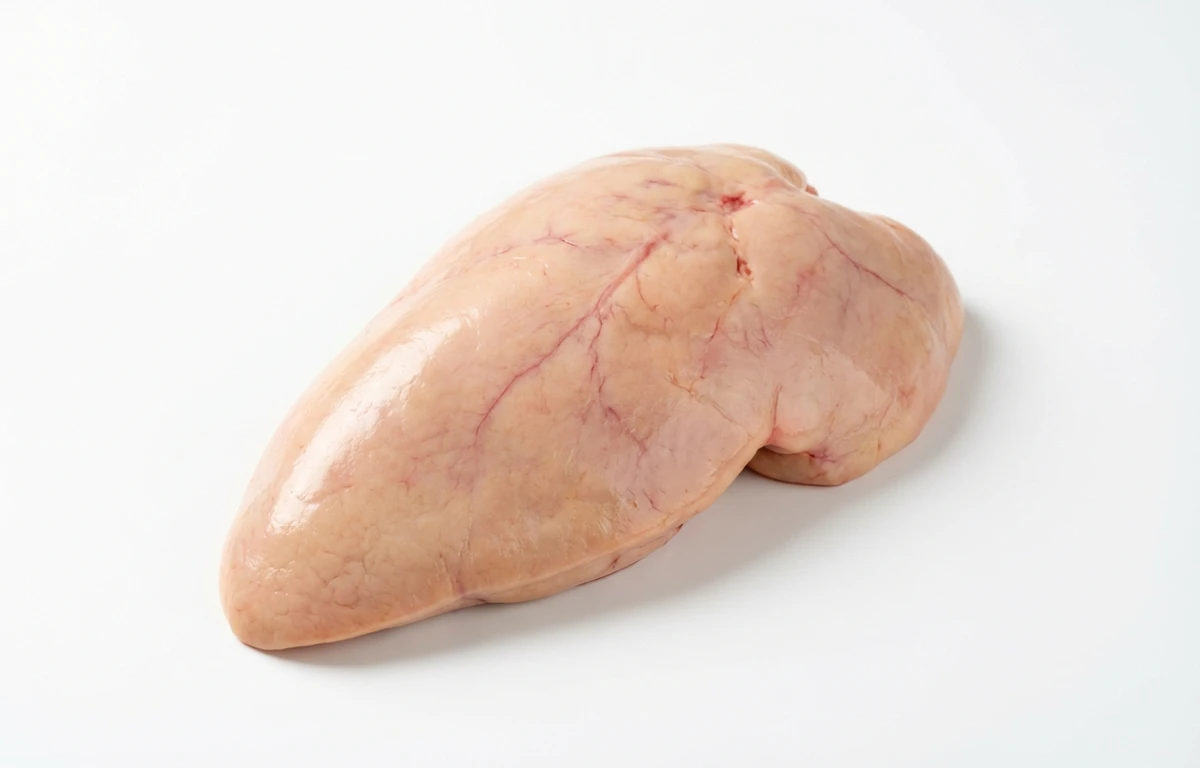
raw goose liver.
VegetarianVeganGluten-freeDairy-freeNut-freePeanut-freeSoy-freeEgg-freeShellfish-freeHoney-freeAlcohol-free
SERVING
CALORIES
133
PROTEIN
16.4g
CARBS
6.3g
FAT
4.4g
FIBER
0g
NUTRITION PROFILE · per 100 g
Everything in this ingredient.
MACRONUTRIENTS
Calories133kcal—
Protein16.4g33%
Carbohydrates6.3g2%
Fiber0g0%
Sugar0g0%
Total fat4.4g6%
Saturated fat1.5g8%
Trans fat0g—
Cholesterol515mg172%
Water71.3g—
MINERALS
Sodium140mg6%
Potassium230mg5%
Calcium8.0mg1%
Iron30.5mg169%
Magnesium19mg5%
Phosphorus310mg25%
Zinc3.2mg29%
Copper0.40mg44%
Manganese0.20mg9%
Selenium68.1µg124%
VITAMINS
Vitamin A9330µg1037%
Vitamin C15mg17%
Vitamin D1.2µg6%
Vitamin E0.70mg5%
Vitamin K3.1µg3%
Thiamin (B1)0.10mg8%
Riboflavin (B2)1.8mg138%
Niacin (B3)13.2mg83%
Pantothenic acid (B5)6.2mg124%
Vitamin B60.70mg41%
Folate (B9)560µg140%
Vitamin B1254µg2250%
%DV based on a 2,000 cal diet. Source: USDA FoodData Central. A dash in the %DV column means there’s no established Daily Value for that nutrient.
MEASUREMENT CONVERSIONS
How much is what.
1 cup170g
1 tablespoon11g
1 teaspoon4g
1 oz28.4g
1 lb453.6g
1 piece70g
HEALTH BENEFITS
Why eat it.
- ✓Extremely rich in Vitamin A, which is crucial for vision health, immune function, and cellular growth.
- ✓An excellent source of highly bioavailable heme iron, essential for producing red blood cells and preventing anemia.
- ✓High in Vitamin B12, which supports nerve function and the formation of DNA and red blood cells.
- ✓Provides a significant amount of folate (Vitamin B9), important for cell growth and metabolism.
COOKING TIPS
In the kitchen.
- 1Before cooking, gently rinse the liver under cold water and pat it completely dry. Carefully remove any visible membranes or veins.
- 2For a classic preparation (foie gras), slice the liver into thick medallions, score one side, and sear quickly in a very hot, dry pan for 1-2 minutes per side until a deep golden-brown crust forms.
- 3Avoid overcooking goose liver, as it will melt away its fat and become tough. The inside should remain pink and creamy.
- 4Pair with sweet and acidic ingredients like fruit compotes, balsamic reductions, or sweet wines to cut through the liver's rich, buttery flavor.
STORAGE
Keep it fresh.
- Store fresh, raw goose liver in the coldest part of the refrigerator (at or below 40°F / 4°C) and cook within 1-2 days of purchase.
- For longer storage, wrap tightly in plastic wrap and then place in a freezer-safe bag, removing as much air as possible. It can be frozen for up to 3 months.
FAQ
Frequently asked questions.
Is goose liver healthy?
Yes, goose liver is a nutrient-dense organ meat. It is exceptionally high in Vitamin A for vision and immune health, Vitamin B12 for nerve function, and heme iron, which is highly bioavailable and helps prevent anemia.
How much protein and calories are in goose liver?
A 100g serving of raw goose liver contains approximately 133 calories and 16.4g of protein. It is relatively low in fat (4.4g) and carbohydrates (6.3g) compared to other organ meats, making it a lean, high-protein choice.
Is goose liver keto-friendly?
Yes, goose liver is keto-friendly. With only 6.3g of carbohydrates per 100g and a high protein content, it fits well into a low-carb or ketogenic lifestyle while providing essential micronutrients often lacking in restrictive diets.
Can I eat goose liver raw?
It is not recommended to eat goose liver raw due to the risk of foodborne illnesses like Salmonella or Campylobacter. To ensure safety, it should be cooked to an internal temperature of at least 160°F (71°C).
How do you cook raw goose liver?
Goose liver is best prepared by pan-searing it quickly over medium-high heat for 2-3 minutes per side. This keeps the center tender and creamy; overcooking can result in a grainy texture and a bitter metallic taste.
What does goose liver taste like?
Goose liver has a rich, earthy, and slightly sweet flavor with a very smooth, buttery texture. It is generally considered milder and more delicate than beef or chicken liver, which is why it is prized as a gourmet ingredient.
How should I store raw goose liver?
Raw goose liver is highly perishable and should be kept in the coldest part of the refrigerator for no more than 1 to 2 days. If you do not plan to use it immediately, wrap it tightly in plastic wrap and freeze it for up to 4 months.
How can I tell if goose liver has spoiled?
Fresh goose liver should be firm, moist, and reddish-brown. If it develops a slimy film, a greyish or greenish tint, or a pungent, sour, or ammonia-like odor, it has spoiled and must be discarded.
Is goose liver the same as foie gras?
Not exactly. While foie gras is made from goose or duck liver, it specifically comes from birds that have been specially fattened. Standard goose liver is smaller, lower in fat, and has a firmer texture than the buttery, high-fat foie gras.
Is goose liver halal or kosher?
Goose liver can be halal or kosher if the bird was slaughtered according to religious guidelines. For it to be kosher, the liver must also undergo a specific broiling process to remove blood, as it is a highly vascular organ.



















