
Meat
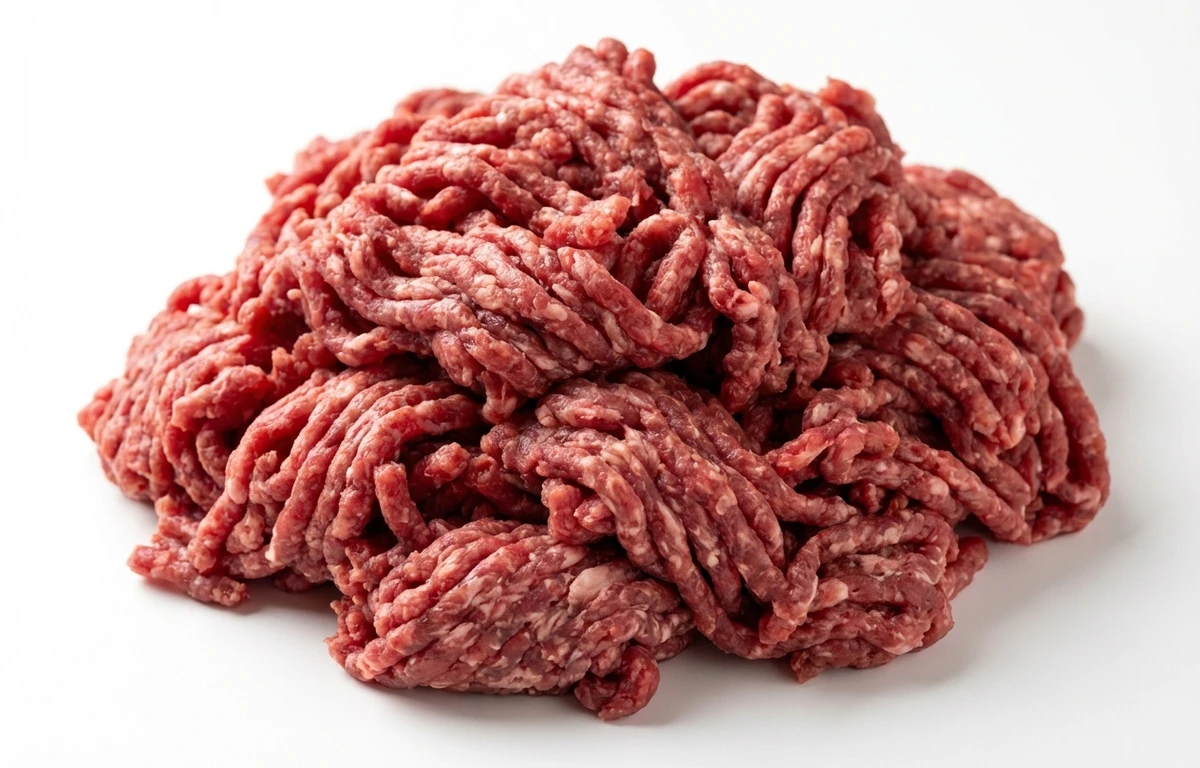
raw grass-fed ground beef.
VegetarianVeganGluten-freeDairy-freeNut-freePeanut-freeSoy-freeEgg-freeShellfish-freeHoney-freeAlcohol-free
SERVING
CALORIES
198
PROTEIN
19.4g
CARBS
0g
FAT
12.7g
FIBER
0g
NUTRITION PROFILE · per 100 g
Everything in this ingredient.
MACRONUTRIENTS
Calories198kcal—
Protein19.4g39%
Carbohydrates0g0%
Fiber0g0%
Sugar0g0%
Total fat12.7g16%
Saturated fat5.5g28%
Trans fat0.50g—
Cholesterol62mg21%
Water66.5g—
MINERALS
Sodium66mg3%
Potassium280mg6%
Calcium12mg1%
Iron2.1mg12%
Magnesium18mg4%
Phosphorus170mg14%
Zinc4.5mg41%
Copper0.07mg8%
Manganese0.01mg0%
Selenium16.2µg29%
VITAMINS
Vitamin A2.0µg0%
Vitamin C0mg0%
Vitamin D0.10µg1%
Vitamin E0.40mg3%
Vitamin K1.1µg1%
Thiamin (B1)0.05mg4%
Riboflavin (B2)0.16mg12%
Niacin (B3)4.5mg28%
Pantothenic acid (B5)0.60mg12%
Vitamin B60.35mg21%
Folate (B9)7.0µg2%
Vitamin B122.2µg92%
%DV based on a 2,000 cal diet. Source: USDA FoodData Central. A dash in the %DV column means there’s no established Daily Value for that nutrient.
MEASUREMENT CONVERSIONS
How much is what.
1 cup226g
1 tablespoon14.1g
1 teaspoon4.7g
1 ml0.9g
1 liter941.7g
1 piece113g
HEALTH BENEFITS
Why eat it.
- ✓Rich source of high-quality complete protein, essential for muscle building and repair.
- ✓Excellent source of highly bioavailable heme iron and Vitamin B12, crucial for preventing anemia and supporting neurological function.
- ✓Contains higher levels of beneficial Omega-3 fatty acids and Conjugated Linoleic Acid (CLA) compared to grain-fed beef, which support heart health and may reduce inflammation.
- ✓Provides significant amounts of zinc and selenium, minerals vital for immune system function and antioxidant defense.
COOKING TIPS
In the kitchen.
- 1For the best flavor and texture, bring the meat to room temperature for about 15-20 minutes before cooking.
- 2To achieve a good brown crust (Maillard reaction) for crumbles or patties, use a hot pan and do not overcrowd it, as this will cause the meat to steam instead of sear.
- 3When forming patties or meatballs, handle the meat as little as possible to avoid a tough, dense final product.
- 4Always cook ground beef to a safe internal temperature of 160°F (71°C), using a meat thermometer to ensure it's cooked through and safe to eat.
STORAGE
Keep it fresh.
- Refrigerate immediately at 40°F (4°C) or below and use within 1-2 days of purchase. Store on the bottom shelf to prevent drips from contaminating other foods.
- For longer storage, freeze at 0°F (-18°C) in an airtight freezer bag or container. For best quality, use within 3-4 months.
- Thaw frozen ground beef safely in the refrigerator overnight, in a sealed bag submerged in cold water, or in the microwave. Never thaw at room temperature.
FAQ
Frequently asked questions.
Is grass-fed ground beef healthy?
Yes, it is highly nutritious, providing high-quality protein, heme iron, and Vitamin B12. Compared to grain-fed beef, it contains more Omega-3 fatty acids and Conjugated Linoleic Acid (CLA), which support heart health and help reduce inflammation.
How much protein is in 100g of grass-fed ground beef?
A 100g serving of raw grass-fed ground beef contains approximately 19.4g of protein. It is a complete protein source, meaning it provides all the essential amino acids necessary for muscle building and tissue repair.
Is grass-fed ground beef keto-friendly?
Yes, it is excellent for keto and low-carb diets because it contains 0g of carbohydrates. With 12.7g of fat and 19.4g of protein per 100g, it fits well within the macronutrient requirements for maintaining ketosis.
Is grass-fed ground beef good for weight loss?
It can be beneficial for weight loss due to its high protein content, which increases satiety and helps preserve lean muscle mass. However, at 198 calories per 100g, it should be consumed in moderation as part of a calorie-controlled diet.
Does grass-fed beef taste different than grain-fed beef?
Yes, grass-fed beef typically has a leaner texture and a more distinct, 'earthy' or 'gamey' flavor profile. Because it is leaner, it can dry out more quickly, so it is often recommended to cook it at a slightly lower temperature or for less time.
What is the best way to cook grass-fed ground beef?
It is best cooked over medium heat in a skillet or on a grill. Since it is leaner than grain-fed beef, you should aim for medium-rare to medium doneness to prevent it from becoming tough, though safety guidelines recommend an internal temperature of 160°F (71°C).
How long does raw grass-fed ground beef last in the refrigerator?
Raw ground beef should be stored in the coldest part of your refrigerator and used within 1 to 2 days of purchase. If you do not plan to cook it within this window, it should be wrapped tightly and moved to the freezer.
Can I freeze grass-fed ground beef?
Yes, you can freeze it for 3 to 4 months for optimal quality. While it remains safe to eat indefinitely if kept at 0°F, the flavor and texture may begin to decline after several months in the freezer.
Is grass-fed ground beef gluten-free?
Pure raw grass-fed ground beef is naturally gluten-free. However, always check the packaging if you are buying pre-made patties or seasoned mixes, as some fillers or spice blends may contain gluten-derived ingredients.
What are the specific mineral benefits of grass-fed beef?
Grass-fed beef is an excellent source of zinc and selenium, which are vital for a healthy immune system and antioxidant defense. It also provides highly bioavailable heme iron, which is more easily absorbed by the body than plant-based iron.



















