
Fruit
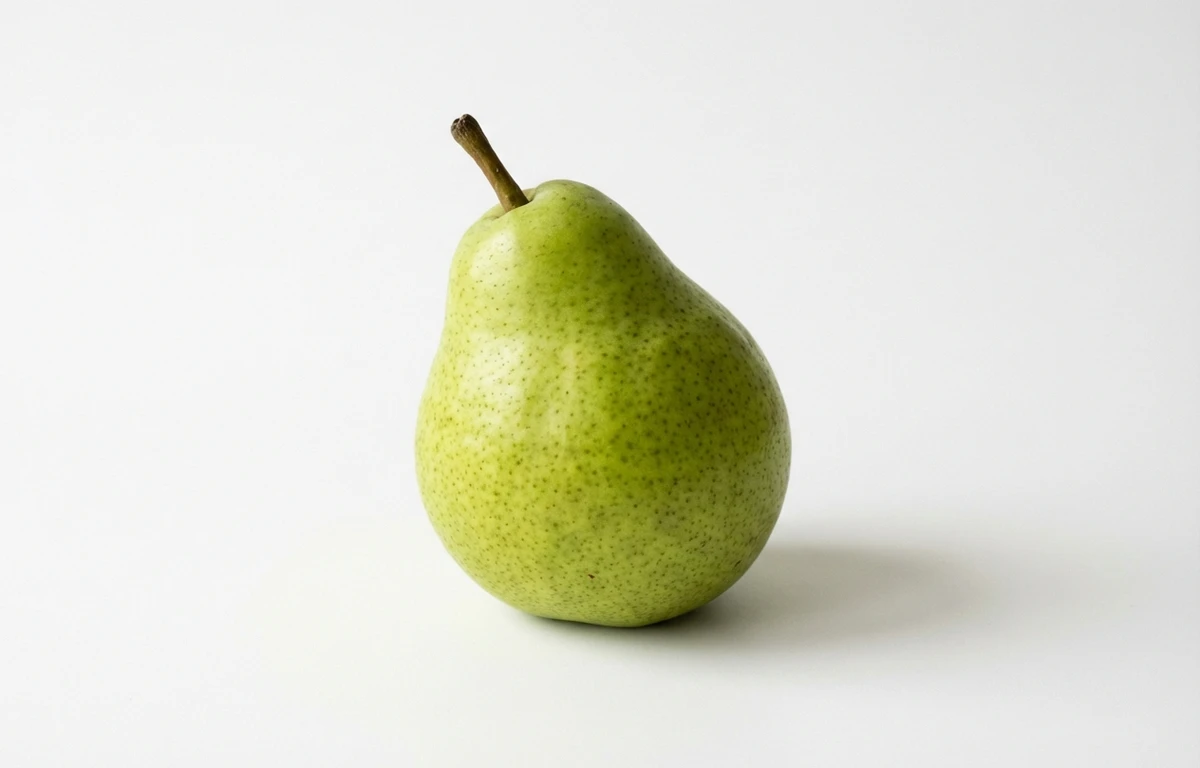
raw green anjou pear.
VegetarianVeganGluten-freeDairy-freeNut-freePeanut-freeSoy-freeEgg-freeShellfish-freeHoney-freeAlcohol-free
SERVING
CALORIES
57
PROTEIN
0.36g
CARBS
15.2g
FAT
0.14g
FIBER
3.1g
NUTRITION PROFILE · per 100 g
Everything in this ingredient.
MACRONUTRIENTS
Calories57kcal—
Protein0.36g1%
Carbohydrates15.2g6%
Fiber3.1g11%
Sugar9.8g20%
Total fat0.14g0%
Saturated fat0.02g0%
Trans fat0g—
Cholesterol0mg0%
Water84g—
MINERALS
Sodium1.0mg0%
Potassium116mg2%
Calcium9.0mg1%
Iron0.18mg1%
Magnesium7.0mg2%
Phosphorus12mg1%
Zinc0.10mg1%
Copper0.08mg9%
Manganese0.05mg2%
Selenium0.10µg0%
VITAMINS
Vitamin A1.0µg0%
Vitamin C4.3mg5%
Vitamin D0µg0%
Vitamin E0.12mg1%
Vitamin K4.4µg4%
Thiamin (B1)0.01mg1%
Riboflavin (B2)0.03mg2%
Niacin (B3)0.16mg1%
Pantothenic acid (B5)0.05mg1%
Vitamin B60.03mg2%
Folate (B9)7.0µg2%
Vitamin B120µg0%
%DV based on a 2,000 cal diet. Source: USDA FoodData Central. A dash in the %DV column means there’s no established Daily Value for that nutrient.
MEASUREMENT CONVERSIONS
How much is what.
1 cup160g
1 oz28.4g
1 lb453.6g
1 piece178g
HEALTH BENEFITS
Why eat it.
- ✓High in dietary fiber which supports digestive health
- ✓Contains Vitamin C and copper for immune system support
- ✓Low glycemic index helps in managing blood sugar levels
- ✓Rich in antioxidants like flavonoids to reduce inflammation
- ✓Provides potassium which is essential for heart health
COOKING TIPS
In the kitchen.
- 1Anjou pears hold their shape well, making them ideal for poaching or baking
- 2Brush sliced pears with lemon juice to prevent browning (oxidation)
- 3Leave the skin on when possible to maximize fiber and nutrient intake
STORAGE
Keep it fresh.
- Store at room temperature until the flesh near the stem yields to gentle pressure
- Once ripe, refrigerate in a plastic bag to maintain freshness for up to 5 days
- Keep away from strong-smelling foods as pears can absorb odors
FAQ
Frequently asked questions.
How do I know when a green Anjou pear is ripe?
Unlike some other pears, Anjou pears do not change color as they ripen. Check for ripeness by 'testing the neck': apply gentle thumb pressure to the stem end. If it yields slightly, it is ripe.
How long do green Anjou pears last?
Unripe pears can last several weeks in the refrigerator. Once ripened at room temperature, they should be eaten within 3 to 5 days.
Can I freeze raw Anjou pears?
Yes, but they should be peeled, cored, and sliced first. For best results, coat them in a sugar syrup or lemon juice to prevent browning before freezing.
What is a good substitute for Anjou pears?
Bosc or Bartlett pears are the best substitutes. Bosc pears are similarly firm for cooking, while Bartletts are better for raw eating.
Do I need to peel the pear before eating?
No, the skin is completely edible and contains a significant portion of the pear's total fiber and antioxidants.
Are green Anjou pears good for salads?
Yes, their firm texture and sweet-tart flavor pair exceptionally well with bitter greens, walnuts, and blue cheese.
Why did my pear turn brown after cutting?
This is called oxidation. It happens when the enzymes in the fruit react with oxygen. You can prevent this by dipping slices in a mixture of water and lemon juice.
Are Anjou pears available year-round?
Green Anjou pears have a long season, typically available from late September through the following summer.



















