
Vegetable8 recipes
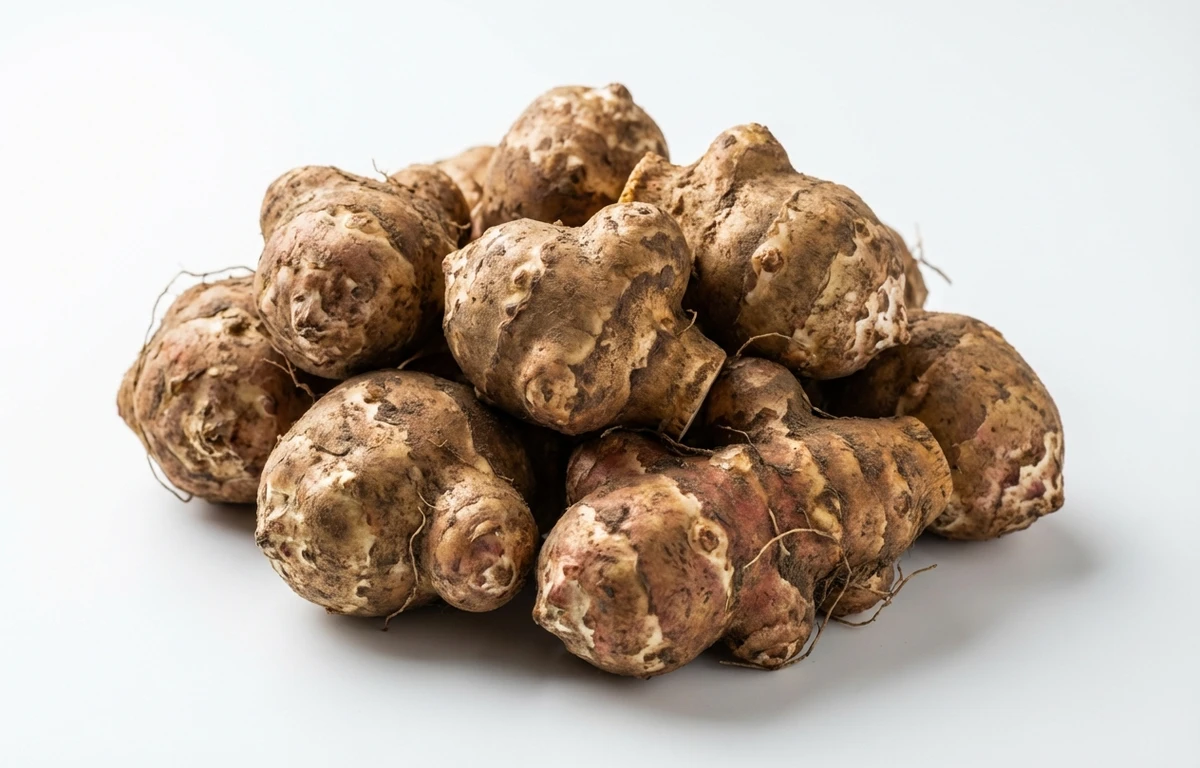
raw jerusalem artichoke.
VegetarianVeganGluten-freeDairy-freeNut-freePeanut-freeSoy-freeEgg-freeShellfish-freeHoney-freeAlcohol-freeHalalKosher
ALSO KNOWN AS
sunchoke
SERVING
CALORIES
73
PROTEIN
2.0g
CARBS
17.4g
FAT
0.01g
FIBER
1.6g
This ingredient is flagged as naturally gluten-free. Per 100 g, it provides 0.10 µg of vitamin K.
NUTRITION PROFILE · per 100 g
Everything in this ingredient.
MACRONUTRIENTS
Calories73kcal—
Protein2.0g4%
Carbohydrates17.4g6%
Fiber1.6g6%
Sugar9.6g19%
Total fat0.01g0%
Saturated fat0g0%
Trans fat0g—
Cholesterol0mg0%
Water78g—
MINERALS
Sodium4.0mg0%
Potassium429mg9%
Calcium14mg1%
Iron3.4mg19%
Magnesium17mg4%
Phosphorus78mg6%
Zinc0.12mg1%
Copper0.14mg16%
Manganese0.06mg3%
Selenium0.70µg1%
VITAMINS
Vitamin A1.0µg0%
Vitamin C4.0mg4%
Vitamin D0µg0%
Vitamin E0.19mg1%
Vitamin K0.10µg0%
Thiamin (B1)0.20mg17%
Riboflavin (B2)0.06mg5%
Niacin (B3)1.3mg8%
Pantothenic acid (B5)0.40mg8%
Vitamin B60.08mg5%
Folate (B9)13µg3%
Vitamin B120µg0%
%DV based on a 2,000 cal diet. Source: USDA FoodData Central. A dash in the %DV column means there’s no established Daily Value for that nutrient.
MEASUREMENT CONVERSIONS
How much is what.
1 cup150g
1 tablespoon9.4g
1 teaspoon3.1g
1 ml0.6g
1 liter625g
HEALTH BENEFITS
Why eat it.
- ✓Excellent source of inulin, a prebiotic fiber that promotes gut health by nourishing beneficial bacteria.
- ✓Good source of potassium, which is vital for regulating blood pressure and heart function.
- ✓Contains iron and copper, essential minerals for red blood cell production and energy metabolism.
COOKING TIPS
In the kitchen.
- 1Scrub the tubers well under running water; peeling is optional as the skin is edible and nutritious.
- 2To prevent discoloration after cutting, place slices in a bowl of water with a splash of lemon juice or vinegar.
- 3They can be eaten raw (thinly sliced in salads for a nutty crunch) or cooked by roasting, boiling, steaming, or pureeing into soups.
- 4Introduce into your diet gradually, as the high inulin content can cause gas and digestive discomfort for some people.
STORAGE
Keep it fresh.
- Store unwashed in a paper bag or a perforated plastic bag in the crisper drawer of your refrigerator for 2-3 weeks.
- For longer storage, they can be kept in a cool, dark, and humid place like a root cellar, buried in damp sand.
FAQ
Frequently asked questions.
Are Jerusalem artichokes healthy?
Yes, Jerusalem artichokes are highly nutritious. They are an excellent source of inulin, a prebiotic fiber that supports gut health, and provide essential minerals like potassium for heart health and iron for energy metabolism.
Can you eat Jerusalem artichokes raw?
Yes, Jerusalem artichokes can be eaten raw. When raw, they have a crisp, crunchy texture similar to a water chestnut or jicama and a mildly sweet, nutty flavor that works well in salads.
Is Jerusalem artichoke keto-friendly?
With 17.44g of carbs per 100g, Jerusalem artichokes are moderately high in carbohydrates for a strict keto diet. However, because much of that carbohydrate content is fiber (inulin), they may be included in small portions depending on your daily carb limit.
Are Jerusalem artichokes gluten-free and vegan?
Yes, Jerusalem artichokes are a naturally gluten-free and vegan root vegetable. they are an excellent whole-food ingredient for plant-based diets and those with gluten sensitivities.
What do Jerusalem artichokes taste like?
Raw Jerusalem artichokes have a sweet, nutty flavor and a crunchy texture. When cooked, they soften and develop a savory, earthy taste similar to a cross between a potato and an artichoke heart.
Do I need to peel Jerusalem artichokes?
Peeling is not necessary as the skin is thin and edible. However, because they are very knobby and grow in the dirt, you must scrub them thoroughly with a vegetable brush to remove all soil before preparation.
How do you cook Jerusalem artichokes?
They are very versatile and can be roasted, sautéed, boiled, or mashed just like potatoes. They are also popular when sliced thinly and fried into chips or pureed into creamy soups.
How should I store Jerusalem artichokes?
Store them in the refrigerator in a breathable bag or wrapped in paper towels to manage moisture. They are best kept in the vegetable crisper drawer and typically last for 1 to 2 weeks.
Why do Jerusalem artichokes sometimes cause digestive upset?
Jerusalem artichokes are very high in inulin, a fiber that is fermented by gut bacteria. This process can cause significant gas or bloating in some people; it is often recommended to start with small portions to allow your digestive system to adapt.
RECIPES
Cook with raw jerusalem artichoke.
8 recipes · sorted by what’s quick
RELATED GUIDES



















