
Vegetable3 recipes
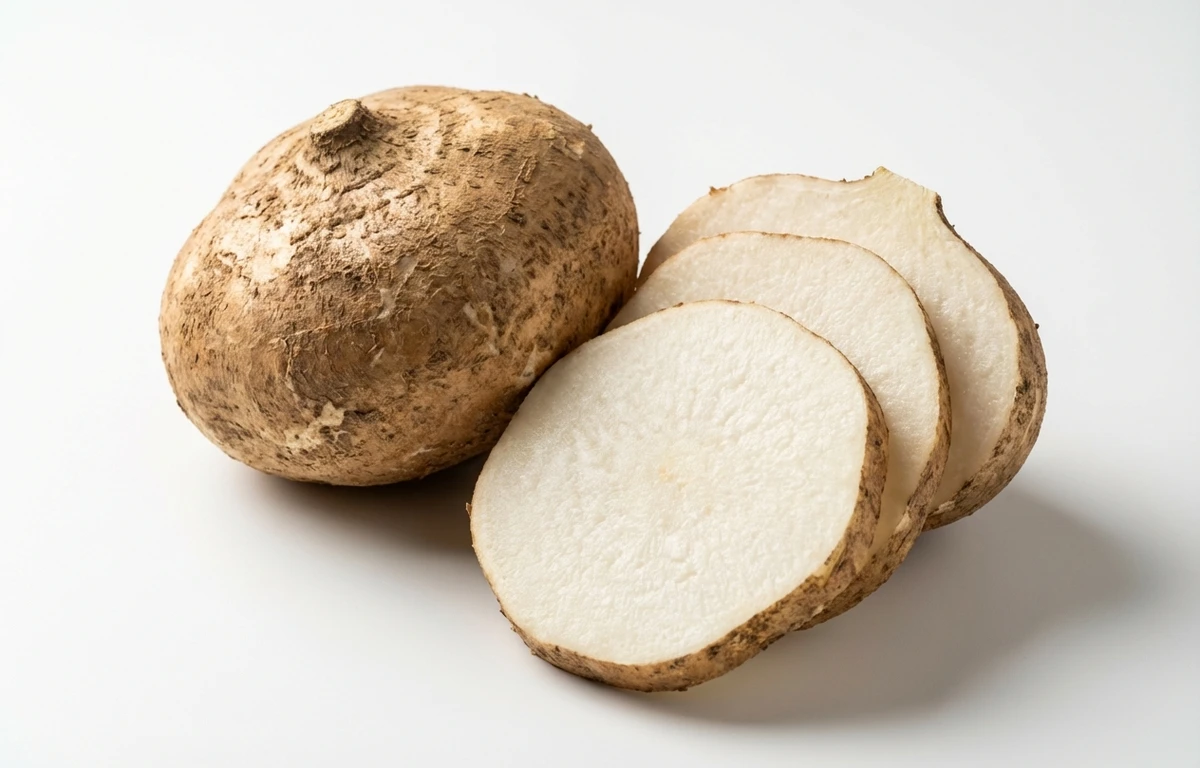
raw jicama.
VegetarianVeganGluten-freeDairy-freeNut-freePeanut-freeSoy-freeEgg-freeShellfish-freeHoney-freeAlcohol-freeHalalKosher
ALSO KNOWN AS
jicamayambeanyam beanMexican turnipsingkamashikamagicama
SERVING
CALORIES
38
PROTEIN
0.72g
CARBS
8.8g
FAT
0.09g
FIBER
4.9g
This ingredient is flagged as naturally gluten-free. Per 100 g, it provides 0.30 µg of vitamin K.
NUTRITION PROFILE · per 100 g
Everything in this ingredient.
MACRONUTRIENTS
Calories38kcal—
Protein0.72g1%
Carbohydrates8.8g3%
Fiber4.9g18%
Sugar1.8g4%
Total fat0.09g0%
Saturated fat0.02g0%
Trans fat0g—
Cholesterol0mg0%
Water90.1g—
MINERALS
Sodium4.0mg0%
Potassium150mg3%
Calcium12mg1%
Iron0.60mg3%
Magnesium12mg3%
Phosphorus18mg1%
Zinc0.16mg1%
Copper0.05mg6%
Manganese0.06mg3%
Selenium0.70µg1%
VITAMINS
Vitamin A1.0µg0%
Vitamin C20.2mg22%
Vitamin D0µg0%
Vitamin E0.46mg3%
Vitamin K0.30µg0%
Thiamin (B1)0.02mg2%
Riboflavin (B2)0.03mg2%
Niacin (B3)0.20mg1%
Pantothenic acid (B5)0.14mg3%
Vitamin B60.04mg2%
Folate (B9)12µg3%
Vitamin B120µg0%
%DV based on a 2,000 cal diet. Source: USDA FoodData Central. A dash in the %DV column means there’s no established Daily Value for that nutrient.
MEASUREMENT CONVERSIONS
How much is what.
1 cup130g
1 tablespoon8.1g
1 teaspoon2.7g
1 ml0.5g
1 liter541.7g
1 piece659g
HEALTH BENEFITS
Why eat it.
- ✓High in prebiotic fiber, particularly inulin, which promotes a healthy gut microbiome.
- ✓Low in calories and high in water content, making it a hydrating and weight-management-friendly food.
- ✓Contains potassium, which may help regulate blood pressure and support heart health.
COOKING TIPS
In the kitchen.
- 1Always peel the tough, fibrous brown skin before consumption using a sharp vegetable peeler or paring knife.
- 2Serve raw sticks or slices with lime juice, chili powder, and salt for a classic Mexican snack (jicama con chile).
- 3Add shredded or julienned jicama to salads and slaws for a refreshing, crunchy texture similar to a water chestnut.
- 4Jicama can be cooked like a potato—roasted, fried, or added to stir-fries. It retains a slight crunch even when cooked.
STORAGE
Keep it fresh.
- Store whole, unpeeled jicama in a cool, dark, and dry place for up to 2-3 weeks. Avoid refrigeration for whole jicama as it can damage the texture.
- Once peeled and cut, store in an airtight container in the refrigerator for up to one week. Submerging slices in water can help maintain crispness.
FAQ
Frequently asked questions.
Is jicama keto-friendly?
Yes, jicama can be included in a keto diet in moderation. While it contains about 8.8g of total carbs per 100g, a large portion of that is fiber, resulting in a lower net carb count compared to other root vegetables like potatoes.
What does raw jicama taste like?
Raw jicama has a crisp, crunchy texture similar to a water chestnut or a firm apple. Its flavor is mildly sweet and nutty, making it very refreshing when served chilled.
Do I need to peel jicama before eating it?
Yes, you must peel jicama. The brown, papery skin is thick, indigestible, and contains rotenone, a natural organic compound that can be toxic if consumed in large quantities.
How do you store raw jicama?
Whole, unpeeled jicama should be stored in a cool, dry place for up to two weeks. Once it has been cut or peeled, it should be wrapped tightly and kept in the refrigerator for no more than one week.
How do you know if a jicama is fresh?
A fresh jicama should feel heavy for its size and be firm to the touch. Avoid any roots that have soft spots, shriveled skin, or visible mold, as these indicate the vegetable is starting to spoil.
What are common ways to serve raw jicama?
Raw jicama is most popular when sliced into sticks and seasoned with lime juice and chili powder or tajin. It is also frequently used to add a refreshing crunch to salads, salsas, and slaws.
RECIPES
Cook with raw jicama.
3 recipes · sorted by what’s quick



















