
Vegetable
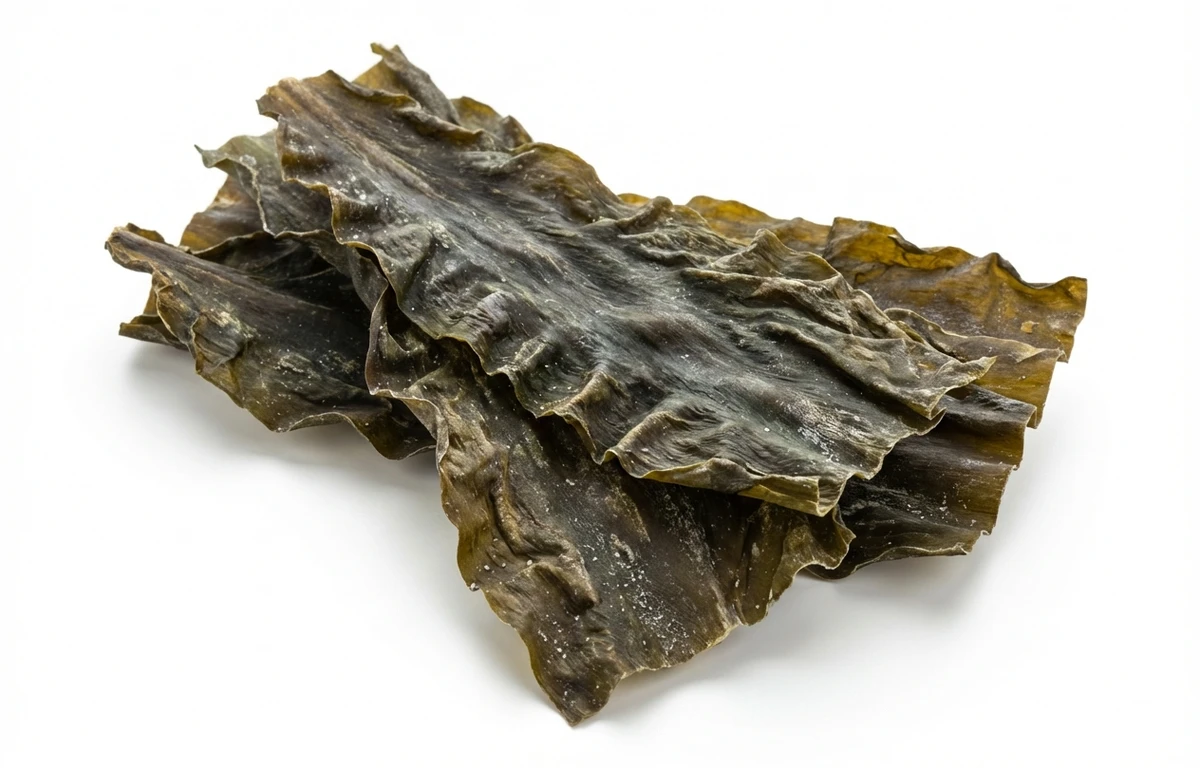
raw kelp seaweed.
VegetarianVeganGluten-freeDairy-freeNut-freePeanut-freeSoy-freeEgg-freeShellfish-freeHoney-freeAlcohol-free
ALSO KNOWN AS
kelp seaweedraw laminaria
SERVING
CALORIES
43
PROTEIN
1.7g
CARBS
9.6g
FAT
0.56g
FIBER
1.3g
This ingredient is flagged as naturally gluten-free. Per 100 g, it provides 66 µg of vitamin K.
NUTRITION PROFILE · per 100 g
Everything in this ingredient.
MACRONUTRIENTS
Calories43kcal—
Protein1.7g3%
Carbohydrates9.6g3%
Fiber1.3g5%
Sugar0.60g1%
Total fat0.56g1%
Saturated fat0.25g1%
Trans fat0g—
Cholesterol0mg0%
Water81.6g—
MINERALS
Sodium233mg10%
Potassium89mg2%
Calcium168mg13%
Iron2.9mg16%
Magnesium121mg29%
Phosphorus42mg3%
Zinc1.2mg11%
Copper0.13mg14%
Manganese0.20mg9%
Selenium0.70µg1%
VITAMINS
Vitamin A6.0µg1%
Vitamin C3.0mg3%
Vitamin D0µg0%
Vitamin E0.87mg6%
Vitamin K66µg55%
Thiamin (B1)0.05mg4%
Riboflavin (B2)0.15mg12%
Niacin (B3)0.47mg3%
Pantothenic acid (B5)0.64mg13%
Vitamin B60mg0%
Folate (B9)180µg45%
Vitamin B120µg0%
%DV based on a 2,000 cal diet. Source: USDA FoodData Central. A dash in the %DV column means there’s no established Daily Value for that nutrient.
MEASUREMENT CONVERSIONS
How much is what.
1 cup80g
1 tablespoon5g
1 teaspoon2g
1 oz28.4g
1 lb453.6g
HEALTH BENEFITS
Why eat it.
- ✓Extremely high in iodine which supports thyroid health
- ✓Contains alginate which may help block fat absorption in the gut
- ✓Good source of folate (Vitamin B9) for cell growth and metabolism
COOKING TIPS
In the kitchen.
- 1Rinse thoroughly in cold water multiple times to remove excess salt and sand
- 2Blanch quickly in boiling water for 30 seconds to brighten the color and soften the texture
- 3Thinly slice and use raw in salads for a crunchy, salty ocean flavor
STORAGE
Keep it fresh.
- Store fresh raw kelp in the refrigerator in an airtight container for up to 4 days
- Keep it submerged in a light brine if you want to extend its freshness slightly
- Can be frozen for up to 6 months, though texture may become softer upon thawing
FAQ
Frequently asked questions.
How long does raw kelp last in the fridge?
Fresh raw kelp typically lasts between 3 to 4 days when stored in an airtight container in the refrigerator.
Can raw kelp be frozen?
Yes, raw kelp can be frozen. It is best to blanch it quickly first, then seal it in a freezer-safe bag for up to 6 months.
What should I look for when buying fresh raw kelp?
Look for kelp that is firm, slippery (but not excessively slimy), and has a deep green or brownish color with a fresh ocean scent.
What is a good substitute for raw kelp?
Raw wakame or arame are the best substitutes, though they have slightly different textures and iodine levels.
How do you prepare raw kelp for a salad?
Rinse it well to remove grit, slice it into thin ribbons, and toss with a dressing of sesame oil, rice vinegar, and soy sauce.
What does raw kelp taste like?
It has a salty, briny flavor with a strong 'umami' profile and a crunchy, slightly rubbery texture.
Can you eat kelp straight from the beach?
It is not recommended unless you are certain the water is unpolluted; it can absorb heavy metals and bacteria from contaminated water.
Is raw kelp the same as kombu?
Kombu is a specific type of kelp, but the term 'kombu' almost always refers to the dried form used for dashi, whereas 'raw kelp' refers to the fresh, hydrated state.



















