
Grain
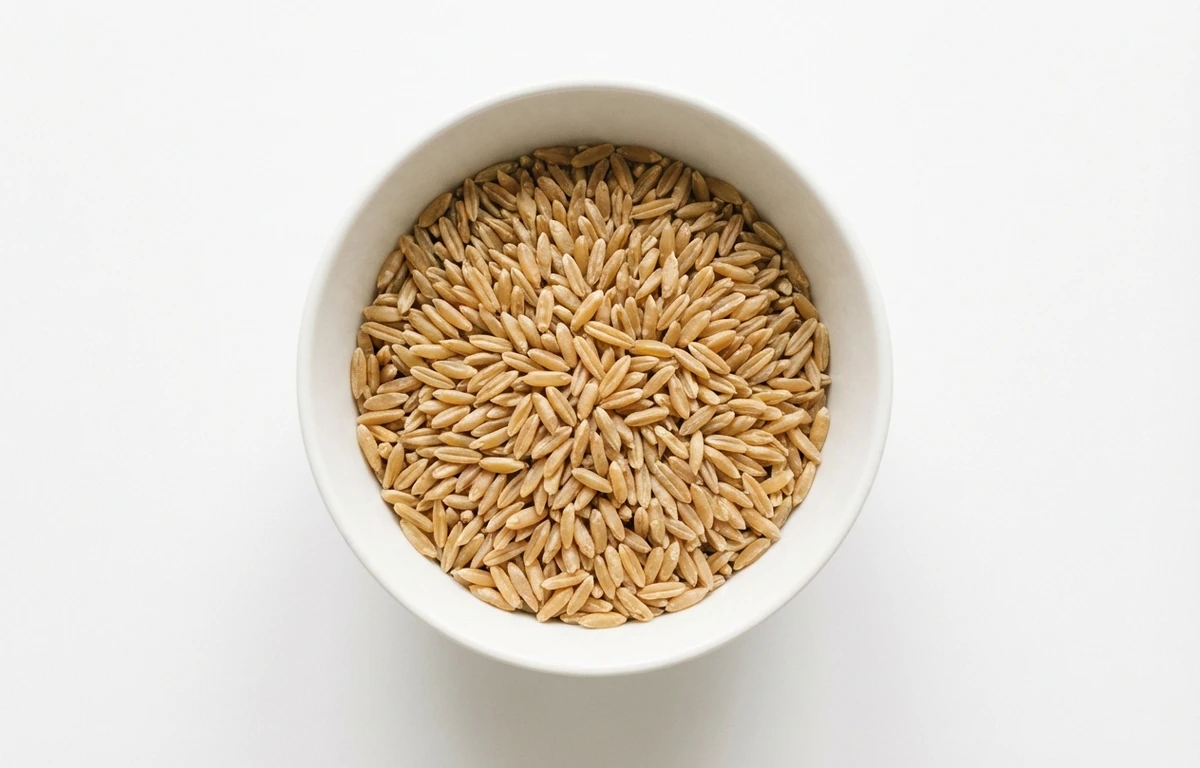
raw khorasan grain.
VegetarianVeganGluten-freeDairy-freeNut-freePeanut-freeSoy-freeEgg-freeShellfish-freeHoney-freeAlcohol-freeWhole grain
ALSO KNOWN AS
khorasan
SERVING
CALORIES
337
PROTEIN
14.5g
CARBS
70.6g
FAT
2.1g
FIBER
11.1g
NUTRITION PROFILE · per 100 g
Everything in this ingredient.
MACRONUTRIENTS
Calories337kcal—
Protein14.5g29%
Carbohydrates70.6g26%
Fiber11.1g40%
Sugar0g0%
Total fat2.1g3%
Saturated fat0.20g1%
Trans fat0g—
Cholesterol0mg0%
Water11g—
MINERALS
Sodium5.0mg0%
Potassium403mg9%
Calcium22mg2%
Iron3.8mg21%
Magnesium130mg31%
Phosphorus364mg29%
Zinc3.7mg34%
Copper0.50mg56%
Manganese2.7mg117%
Selenium81.5µg148%
VITAMINS
Vitamin A0µg0%
Vitamin C0mg0%
Vitamin D0µg0%
Vitamin E0.60mg4%
Vitamin K1.9µg2%
Thiamin (B1)0.60mg50%
Riboflavin (B2)0.20mg15%
Niacin (B3)6.4mg40%
Pantothenic acid (B5)0.90mg18%
Vitamin B60.20mg12%
Folate (B9)38µg10%
Vitamin B120µg0%
%DV based on a 2,000 cal diet. Source: USDA FoodData Central. A dash in the %DV column means there’s no established Daily Value for that nutrient.
MEASUREMENT CONVERSIONS
How much is what.
1 cup190g
1 tablespoon11.9g
1 teaspoon4g
1 ml0.8g
1 liter793.3g
HEALTH BENEFITS
Why eat it.
- ✓High in protein and dietary fiber, which aids in digestion and promotes satiety.
- ✓Rich source of essential minerals such as selenium, zinc, and magnesium, supporting immune function and antioxidant activity.
- ✓Contains complex carbohydrates that provide sustained energy and help regulate blood sugar levels.
- ✓May have anti-inflammatory properties and be easier to digest for some individuals with non-celiac wheat sensitivities.
COOKING TIPS
In the kitchen.
- 1Soak the grains for several hours or overnight to reduce cooking time and improve digestibility.
- 2To cook, use a ratio of 1 part grain to 3 parts water or broth. Bring to a boil, then reduce heat, cover, and simmer for 40-60 minutes until tender and chewy.
- 3The cooked grains have a nutty, buttery flavor and are excellent in salads, soups, pilafs, or as a substitute for rice.
- 4Raw khorasan grains can be milled at home to produce fresh whole-grain flour for baking breads and pasta.
STORAGE
Keep it fresh.
- Store raw khorasan grains in an airtight container in a cool, dark, and dry place like a pantry for up to 6 months.
- For long-term storage (over a year), place the airtight container in the freezer to prevent the oils in the germ from going rancid and to protect against pests.
FAQ
Frequently asked questions.
Is Khorasan grain healthy?
Yes, Khorasan grain is highly nutritious, providing 14.5g of protein and significant dietary fiber per 100g. It is a rich source of essential minerals like selenium, zinc, and magnesium, which support immune function and provide antioxidant benefits.
How much protein is in Khorasan grain?
Raw Khorasan grain contains approximately 14.5g of protein per 100g. This is notably higher than most modern wheat varieties, making it an excellent plant-based protein source for muscle maintenance and satiety.
Is Khorasan grain gluten-free?
No, Khorasan is an ancient variety of wheat and contains gluten. While some people with non-celiac wheat sensitivities find it easier to digest, it is not safe for individuals with Celiac disease.
Is Khorasan grain keto-friendly?
No, it is not keto-friendly as it contains approximately 70.6g of carbohydrates per 100g. It is a high-carb, complex grain best suited for balanced diets rather than low-carb or ketogenic lifestyles.
How do you cook raw Khorasan grain?
To cook the whole grains, it is best to soak them overnight to reduce cooking time. Simmer one part grain in three parts water or broth for 45 to 60 minutes until the grains are tender but still have a firm, chewy texture.
What does Khorasan grain taste like?
Khorasan grain has a distinctively rich, nutty, and slightly buttery flavor. Its texture is firm and hearty, similar to farro or wheat berries, which allows it to hold up well in soups and salads.
Is Khorasan grain good for weight loss?
Yes, its high fiber and protein content can aid weight loss by promoting a feeling of fullness and reducing overall calorie intake. The complex carbohydrates also provide sustained energy, helping to regulate blood sugar levels.
Can I substitute Khorasan grain for rice?
Absolutely. Khorasan grain makes an excellent nutrient-dense substitute for brown or white rice in pilafs, grain bowls, and side dishes. Note that it has a chewier texture and requires a longer cooking time than most rice varieties.
How should I store raw Khorasan grain?
Store raw grains in an airtight container in a cool, dry, and dark pantry for up to 6 months. For extended freshness, you can store the grains in the refrigerator or freezer to prevent the natural oils from becoming rancid.
Is Khorasan grain easier to digest than modern wheat?
Many individuals with non-celiac wheat sensitivities find Khorasan easier to digest, likely due to its ancient, non-hybridized genetic structure. It may also possess anti-inflammatory properties that are gentler on the digestive tract for some people.



















