
Meat
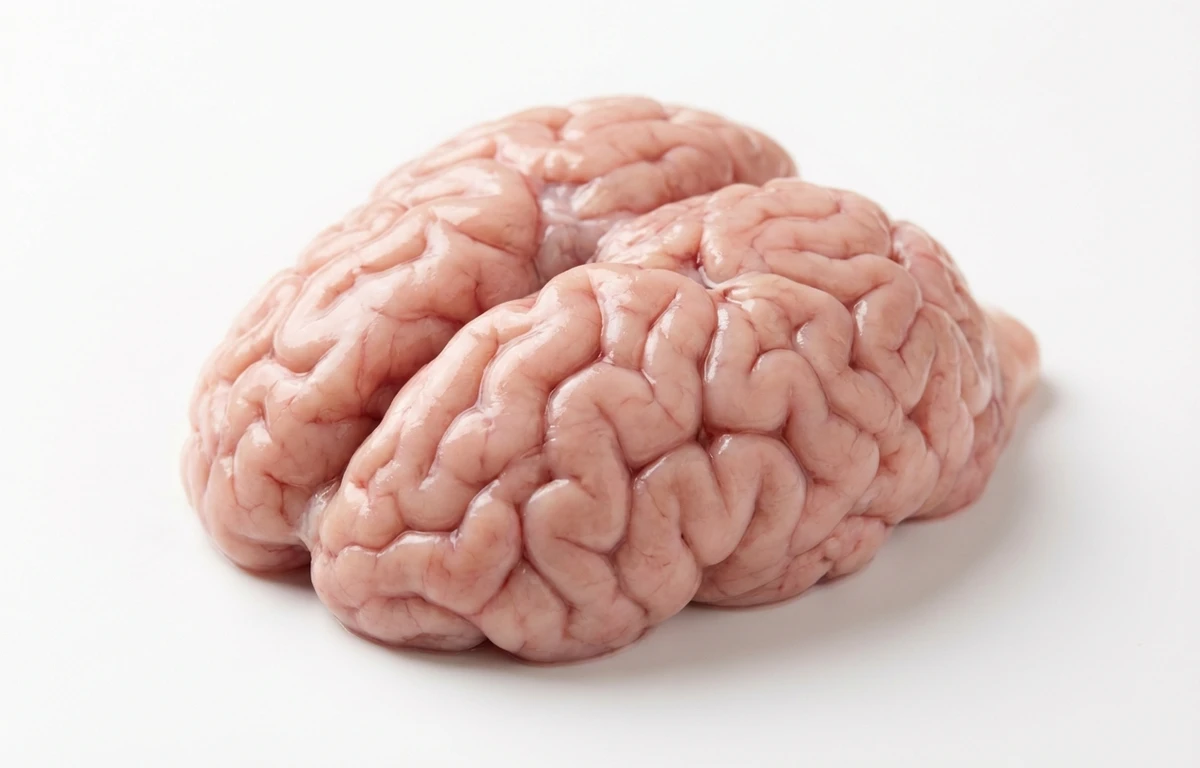
raw lamb brain.
VegetarianVeganGluten-freeDairy-freeNut-freePeanut-freeSoy-freeEgg-freeShellfish-freeHoney-freeAlcohol-free
ALSO KNOWN AS
lamb brainbhejamutton brain
SERVING
CALORIES
135
PROTEIN
10.4g
CARBS
0g
FAT
9.5g
FIBER
0g
NUTRITION PROFILE · per 100 g
Everything in this ingredient.
MACRONUTRIENTS
Calories135kcal—
Protein10.4g21%
Carbohydrates0g0%
Fiber0g0%
Sugar0g0%
Total fat9.5g12%
Saturated fat2.2g11%
Trans fat0g—
Cholesterol2040mg680%
Water78.5g—
MINERALS
Sodium126mg5%
Potassium258mg5%
Calcium9.0mg1%
Iron1.7mg9%
Magnesium13mg3%
Phosphorus337mg27%
Zinc1.2mg11%
Copper0.20mg22%
Manganese0.02mg1%
Selenium21.8µg40%
VITAMINS
Vitamin A0µg0%
Vitamin C10.7mg12%
Vitamin D0.10µg1%
Vitamin E1.5mg10%
Vitamin K0µg0%
Thiamin (B1)0.10mg8%
Riboflavin (B2)0.25mg19%
Niacin (B3)3.4mg21%
Pantothenic acid (B5)2.3mg46%
Vitamin B60.20mg12%
Folate (B9)5.0µg1%
Vitamin B1210.2µg425%
%DV based on a 2,000 cal diet. Source: USDA FoodData Central. A dash in the %DV column means there’s no established Daily Value for that nutrient.
MEASUREMENT CONVERSIONS
How much is what.
1 oz28.4g
1 lb453.6g
1 piece120g
HEALTH BENEFITS
Why eat it.
- ✓Extremely rich in omega-3 fatty acids, particularly DHA, which is crucial for brain development and cognitive function.
- ✓Excellent source of Vitamin B12, essential for healthy nerve function and the formation of red blood cells.
- ✓Provides high levels of phosphorus and selenium, minerals important for bone health and antioxidant defense systems.
- ✓Contains unique neuroprotective compounds like phosphatidylserine and other phospholipids that support cell membrane integrity.
COOKING TIPS
In the kitchen.
- 1Before cooking, soak the brain in cold, salted water for at least 2 hours, changing the water periodically, to help firm the texture and remove any blood.
- 2Gently peel off the thin outer membrane after soaking for a more pleasant, less chewy texture.
- 3Cook gently using methods like poaching, scrambling with eggs, or pan-frying after coating in flour or breadcrumbs to avoid it breaking apart.
- 4Pair with acidic and strong flavors like lemon juice, capers, garlic, and fresh parsley to complement its rich, delicate taste.
STORAGE
Keep it fresh.
- Store immediately in the coldest part of the refrigerator (at or below 40°F / 4°C) and use within 1-2 days due to its high perishability.
- For longer storage, freeze at 0°F (-18°C) in an airtight container or vacuum-sealed bag for up to 3 months for best quality.
FAQ
Frequently asked questions.
Is lamb brain healthy?
Yes, lamb brain is highly nutritious, providing a dense source of Vitamin B12 and omega-3 fatty acids like DHA. It supports cognitive function and nerve health, though it should be consumed in moderation due to its high cholesterol content.
What is the nutritional profile of 100g of lamb brain?
A 100g serving contains approximately 135 calories, 10.4g of protein, 9.5g of fat, and 0g of carbohydrates. It is also an excellent source of essential minerals like selenium and phosphorus.
Is lamb brain keto-friendly?
Yes, lamb brain is excellent for keto and low-carb diets because it contains zero carbohydrates. Its high healthy fat content and nutrient density make it a popular choice for those following a nose-to-tail carnivorous or ketogenic lifestyle.
What does lamb brain taste like?
Lamb brain has a very mild, delicate, and slightly sweet flavor. Its texture is the most defining characteristic, being exceptionally creamy and soft, similar to a firm custard or silken tofu.
How do you prepare raw lamb brain for cooking?
First, soak the brain in cold salted water or milk for about an hour to remove excess blood. Gently peel away the thin outer membrane and any visible veins before poaching or pan-frying to ensure a clean flavor and smooth texture.
Can I eat lamb brain raw?
It is not recommended to eat lamb brain raw due to the risk of foodborne illnesses or parasites. Cooking the ingredient thoroughly is necessary to ensure it is safe for consumption while still retaining its beneficial phospholipids.
How should raw lamb brain be stored?
Raw lamb brain is extremely perishable and should be kept in the coldest part of the refrigerator and used within 24 hours. If you cannot use it immediately, it can be frozen for up to two months in an airtight container.
Is lamb brain halal?
Yes, lamb brain is considered halal provided the lamb was slaughtered according to Islamic dietary laws. It is a traditional ingredient in many Middle Eastern and South Asian cuisines.
Does lamb brain help with brain health?
Yes, it contains unique neuroprotective compounds like phosphatidylserine and DHA. These phospholipids are essential for maintaining the integrity of human cell membranes and supporting overall cognitive development.
Is lamb brain high in cholesterol?
Yes, lamb brain is one of the highest sources of dietary cholesterol. While many modern studies show dietary cholesterol has a minimal impact on blood cholesterol for most people, those with specific medical conditions should monitor their intake.



















