
Meat
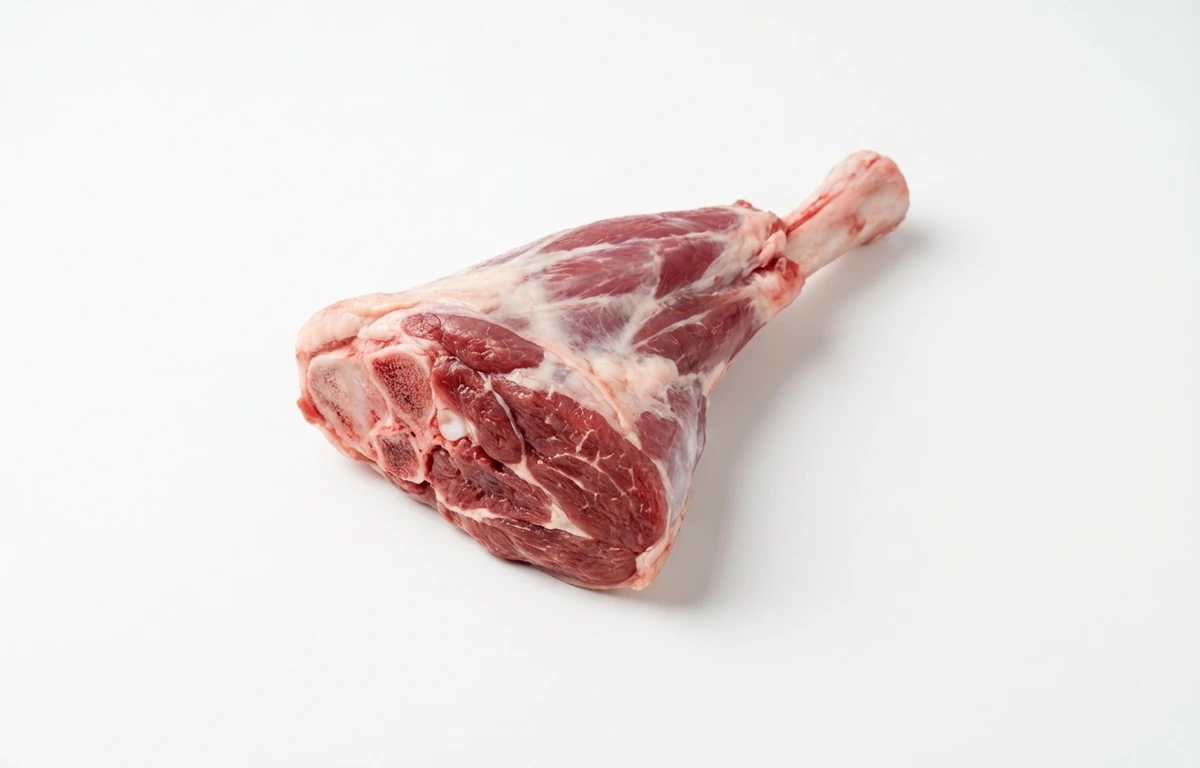
raw lamb foreshank.
VegetarianVeganGluten-freeDairy-freeNut-freePeanut-freeSoy-freeEgg-freeShellfish-freeHoney-freeAlcohol-free
ALSO KNOWN AS
raw lamb shankuncooked lamb foreshank
SERVING
CALORIES
156
PROTEIN
18.5g
CARBS
0g
FAT
9.1g
FIBER
0g
NUTRITION PROFILE · per 100 g
Everything in this ingredient.
MACRONUTRIENTS
Calories156kcal—
Protein18.5g37%
Carbohydrates0g0%
Fiber0g0%
Sugar0g0%
Total fat9.1g12%
Saturated fat3.8g19%
Trans fat0.50g—
Cholesterol72mg24%
Water71.5g—
MINERALS
Sodium64mg3%
Potassium245mg5%
Calcium10mg1%
Iron1.9mg11%
Magnesium21mg5%
Phosphorus175mg14%
Zinc4.2mg38%
Copper0.12mg13%
Manganese0.02mg1%
Selenium22.4µg41%
VITAMINS
Vitamin A0µg0%
Vitamin C0mg0%
Vitamin D0.10µg1%
Vitamin E0.20mg1%
Vitamin K0µg0%
Thiamin (B1)0.11mg9%
Riboflavin (B2)0.22mg17%
Niacin (B3)5.8mg36%
Pantothenic acid (B5)0.65mg13%
Vitamin B60.14mg8%
Folate (B9)3.0µg1%
Vitamin B122.1µg88%
%DV based on a 2,000 cal diet. Source: USDA FoodData Central. A dash in the %DV column means there’s no established Daily Value for that nutrient.
MEASUREMENT CONVERSIONS
How much is what.
1 oz28.4g
1 lb453.6g
1 piece400g
HEALTH BENEFITS
Why eat it.
- ✓Excellent source of high-quality complete protein for muscle repair
- ✓Rich in Vitamin B12 which supports nervous system health
- ✓High Zinc content boosts immune system function
- ✓Contains bioavailable Heme Iron to help prevent anemia
- ✓Provides Selenium, a powerful antioxidant for cellular health
COOKING TIPS
In the kitchen.
- 1Best suited for low-and-slow cooking methods like braising to break down tough connective tissue
- 2Sear the meat on high heat before braising to develop deep flavor through the Maillard reaction
- 3Leave the bone in during cooking to add richness and body to the resulting sauce or gravy
STORAGE
Keep it fresh.
- Store in the coldest part of the refrigerator for up to 3-5 days
- Keep in original vacuum-sealed packaging or wrap tightly in plastic wrap and foil
- Freeze for long-term storage for up to 6-9 months for best quality
FAQ
Frequently asked questions.
How long does raw lamb foreshank last in the fridge?
Raw lamb foreshank typically stays fresh for 3 to 5 days when kept in the coldest part of the refrigerator.
Can I freeze lamb foreshank?
Yes, it freezes very well. Wrap it tightly in moisture-proof freezer paper or plastic wrap and it will maintain quality for 6 to 9 months.
What is the difference between a lamb foreshank and a hindshank?
The foreshank comes from the front leg and is generally smaller and leaner than the hindshank, which comes from the back leg and is meatier.
What is the best way to cook lamb foreshank?
Braising is the ideal method. Cooking it slowly in liquid (like wine or stock) for 2.5 to 3 hours makes the meat fall-off-the-bone tender.
What can I substitute for lamb foreshank?
Lamb hindshanks are the best substitute. Beef shanks or veal shanks can also be used, though they may require longer cooking times.
How do I know if the lamb shank is of good quality?
Look for meat that is fine-grained and pinkish-red in color with firm, white fat. Avoid meat that looks grey or has a slimy texture.
Do I need to remove the bone before cooking?
No, it is recommended to cook the shank with the bone in. The marrow and bone contribute significant flavor and gelatin to the dish.
Is lamb foreshank a lean cut of meat?
While it contains connective tissue, the muscle meat itself is relatively lean compared to cuts like the shoulder or breast.
What are common flavor pairings for lamb shank?
It pairs excellently with rosemary, garlic, red wine, tomatoes, thyme, and root vegetables like carrots and parsnips.
Should I trim the fat off the shank before cooking?
You can trim large, thick layers of external fat, but leave some fat and all the connective tissue, as they provide flavor and texture during the slow cook.



















