
Meat
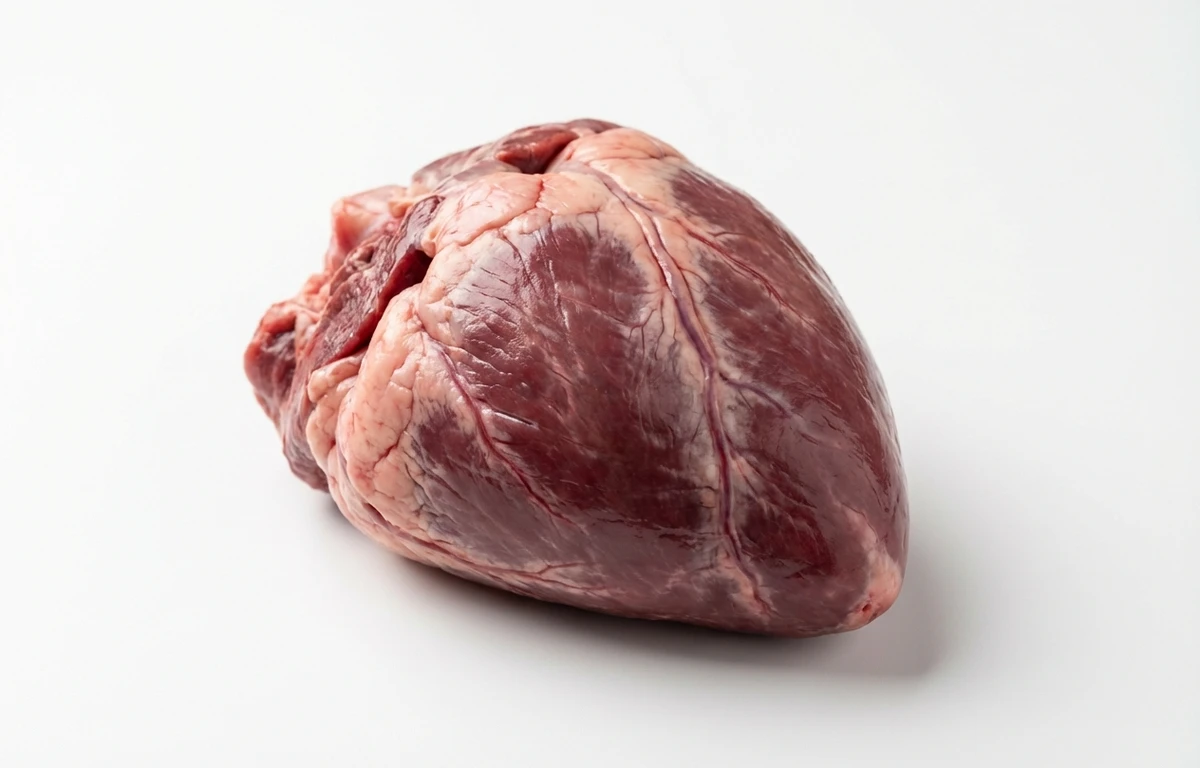
raw lamb heart.
VegetarianVeganGluten-freeDairy-freeNut-freePeanut-freeSoy-freeEgg-freeShellfish-freeHoney-freeAlcohol-free
ALSO KNOWN AS
raw sheep heartraw mutton heartuncooked lamb heartuncooked sheep heart
SERVING
CALORIES
122
PROTEIN
16.5g
CARBS
0.10g
FAT
5.6g
FIBER
0g
NUTRITION PROFILE · per 100 g
Everything in this ingredient.
MACRONUTRIENTS
Calories122kcal—
Protein16.5g33%
Carbohydrates0.10g0%
Fiber0g0%
Sugar0g0%
Total fat5.6g7%
Saturated fat1.8g9%
Trans fat0g—
Cholesterol135mg45%
Water76.4g—
MINERALS
Sodium98mg4%
Potassium287mg6%
Calcium7.0mg1%
Iron4.3mg24%
Magnesium18mg4%
Phosphorus185mg15%
Zinc1.7mg15%
Copper0.35mg39%
Manganese0.03mg1%
Selenium35.8µg65%
VITAMINS
Vitamin A8.0µg1%
Vitamin C5.0mg6%
Vitamin D0.10µg1%
Vitamin E0.20mg1%
Vitamin K0µg0%
Thiamin (B1)0.45mg38%
Riboflavin (B2)0.91mg70%
Niacin (B3)6.5mg41%
Pantothenic acid (B5)2.4mg48%
Vitamin B60.30mg18%
Folate (B9)3.0µg1%
Vitamin B127.5µg313%
%DV based on a 2,000 cal diet. Source: USDA FoodData Central. A dash in the %DV column means there’s no established Daily Value for that nutrient.
MEASUREMENT CONVERSIONS
How much is what.
1 oz28.4g
1 lb453.6g
1 piece175g
HEALTH BENEFITS
Why eat it.
- ✓Excellent source of Vitamin B12 for nerve function
- ✓High in bioavailable iron to prevent anemia
- ✓Rich in Coenzyme Q10 (CoQ10) for heart health
- ✓High protein content for muscle repair
- ✓Contains selenium which supports thyroid function
COOKING TIPS
In the kitchen.
- 1Trim away any tough connective tissue or large surface fat before cooking
- 2Slice thinly and sear quickly over high heat to keep it tender
- 3Braise slowly in liquid for 1.5 to 2 hours for a very soft texture
STORAGE
Keep it fresh.
- Store in the coldest part of the refrigerator for up to 2 days
- Freeze in airtight packaging for up to 4 months
- Keep raw heart separate from cooked foods to prevent cross-contamination
FAQ
Frequently asked questions.
How long does raw lamb heart last in the fridge?
Raw lamb heart is highly perishable and should be used within 1 to 2 days of purchase if kept refrigerated.
Can lamb heart be frozen?
Yes, it freezes very well. Wrap it tightly in plastic wrap and then place it in a freezer bag to prevent freezer burn; it will last 3-4 months.
What does lamb heart taste like?
It has a rich, beefy flavor with a slightly gamey undertone. The texture is more dense and muscular than regular steak but not as soft as liver.
How do I select a high-quality lamb heart?
Look for hearts that are firm to the touch, have a deep red color, and a fresh, clean smell. Avoid any with a greyish tint or a strong 'off' odor.
What is the best way to prepare lamb heart?
It is best either cooked very quickly (seared/grilled) or very slowly (stewed). Overcooking it with medium heat for a moderate time will make it tough.
Is lamb heart healthy?
Yes, it is a nutrient-dense organ meat, exceptionally high in B vitamins, iron, and phosphorus while being relatively lean.
What can I use as a substitute for lamb heart?
Beef heart is the closest substitute, though it is larger and may require more trimming. Venison heart or even lean beef steak can also work in some recipes.
Do I need to soak lamb heart before cooking?
Soaking is not strictly necessary, but some people prefer to soak it in cold salted water or milk for 30 minutes to remove excess blood and mellow the flavor.
Is lamb heart high in cholesterol?
Yes, like most organ meats, lamb heart is relatively high in cholesterol (about 135mg per 100g), so it should be consumed in moderation by those monitoring cholesterol levels.



















