
Meat
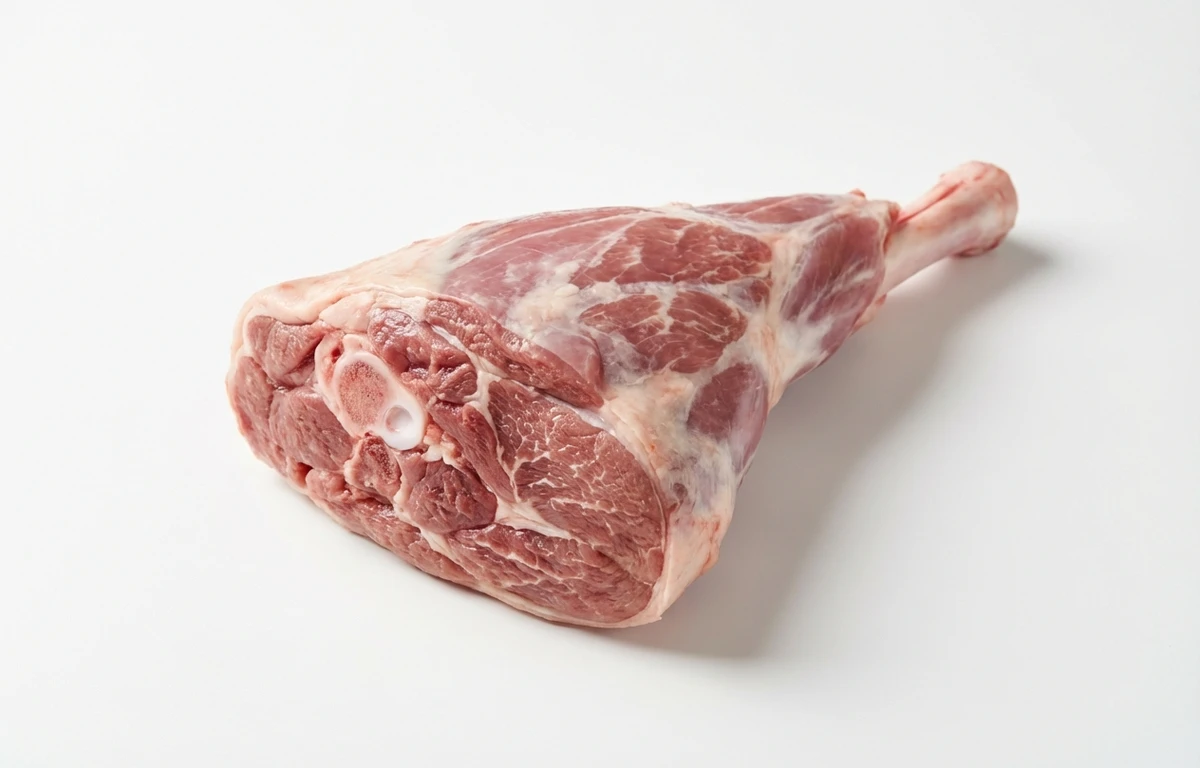
raw lamb hind-shank.
VegetarianVeganGluten-freeDairy-freeNut-freePeanut-freeSoy-freeEgg-freeShellfish-freeHoney-freeAlcohol-free
ALSO KNOWN AS
lamb shankhindshankleg shanknallilamb leg shank
SERVING
CALORIES
180
PROTEIN
18.2g
CARBS
0g
FAT
11.8g
FIBER
0g
NUTRITION PROFILE · per 100 g
Everything in this ingredient.
MACRONUTRIENTS
Calories180kcal—
Protein18.2g36%
Carbohydrates0g0%
Fiber0g0%
Sugar0g0%
Total fat11.8g15%
Saturated fat5.1g26%
Trans fat0.50g—
Cholesterol75mg25%
Water69g—
MINERALS
Sodium65mg3%
Potassium285mg6%
Calcium10mg1%
Iron1.9mg11%
Magnesium21mg5%
Phosphorus175mg14%
Zinc4.3mg39%
Copper0.12mg13%
Manganese0.02mg1%
Selenium22.5µg41%
VITAMINS
Vitamin A0µg0%
Vitamin C0mg0%
Vitamin D0.10µg1%
Vitamin E0.20mg1%
Vitamin K0µg0%
Thiamin (B1)0.11mg9%
Riboflavin (B2)0.22mg17%
Niacin (B3)5.8mg36%
Pantothenic acid (B5)0.65mg13%
Vitamin B60.14mg8%
Folate (B9)3.0µg1%
Vitamin B122.2µg92%
%DV based on a 2,000 cal diet. Source: USDA FoodData Central. A dash in the %DV column means there’s no established Daily Value for that nutrient.
MEASUREMENT CONVERSIONS
How much is what.
1 cup246g
1 tablespoon15.6g
1 teaspoon5.2g
1 oz28.4g
1 lb453.6g
1 ml1g
1 liter1040g
1 piece450g
HEALTH BENEFITS
Why eat it.
- ✓Excellent source of high-quality complete protein for muscle repair
- ✓Rich in Vitamin B12 which is essential for red blood cell formation
- ✓High Zinc content supports a healthy immune system
- ✓Contains bioavailable heme iron to help prevent anemia
- ✓Provides Selenium, a powerful antioxidant that protects cells
COOKING TIPS
In the kitchen.
- 1Braise slowly in liquid at low temperatures to break down tough connective tissue
- 2Sear the exterior in a hot pan before slow cooking to develop deep flavor
- 3Do not remove the silver skin or connective tissue as it melts into gelatin during cooking
STORAGE
Keep it fresh.
- Store in the coldest part of the refrigerator for up to 3-5 days
- Keep in original vacuum-sealed packaging or wrap tightly in plastic wrap and foil
- Freeze for long-term storage for up to 6-12 months for best quality
FAQ
Frequently asked questions.
How long does raw lamb shank last in the fridge?
Raw lamb shank typically lasts 3 to 5 days in the refrigerator if kept at or below 40°F (4°C).
Can I freeze lamb shanks?
Yes, lamb shanks freeze very well. Wrap them tightly to prevent freezer burn; they will maintain best quality for 6 to 12 months.
What is the difference between a fore-shank and a hind-shank?
The hind-shank comes from the back leg and is generally larger, meatier, and contains more marrow than the fore-shank.
What is the best way to cook lamb shank?
Braising is the best method. Slow-cooking in a flavorful liquid (like wine or stock) for 2.5 to 4 hours makes the meat fall-off-the-bone tender.
How do I choose a good quality lamb shank?
Look for meat that is fine-grained and pinkish-red with creamy white fat. Avoid meat that looks grey or has yellowing fat.
What can I substitute for lamb shank?
Beef shanks (Osso Buco cut), veal shanks, or lamb shoulder (cut into large chunks) are the best substitutes.
Do I need to trim the fat before cooking?
You can trim thick external fat caps, but leave the internal connective tissue as it provides the characteristic silky texture when braised.
Is lamb shank a lean cut of meat?
While the meat itself is relatively lean, the cut contains significant connective tissue and some external fat, making it moderately caloric.
How many shanks should I serve per person?
Usually, one hind-shank is a generous serving for one person, as the bone accounts for a significant portion of the weight.
What are common flavor pairings for lamb shank?
Lamb shank pairs excellently with rosemary, garlic, red wine, tomatoes, cumin, and root vegetables.



















