
Meat2 recipes
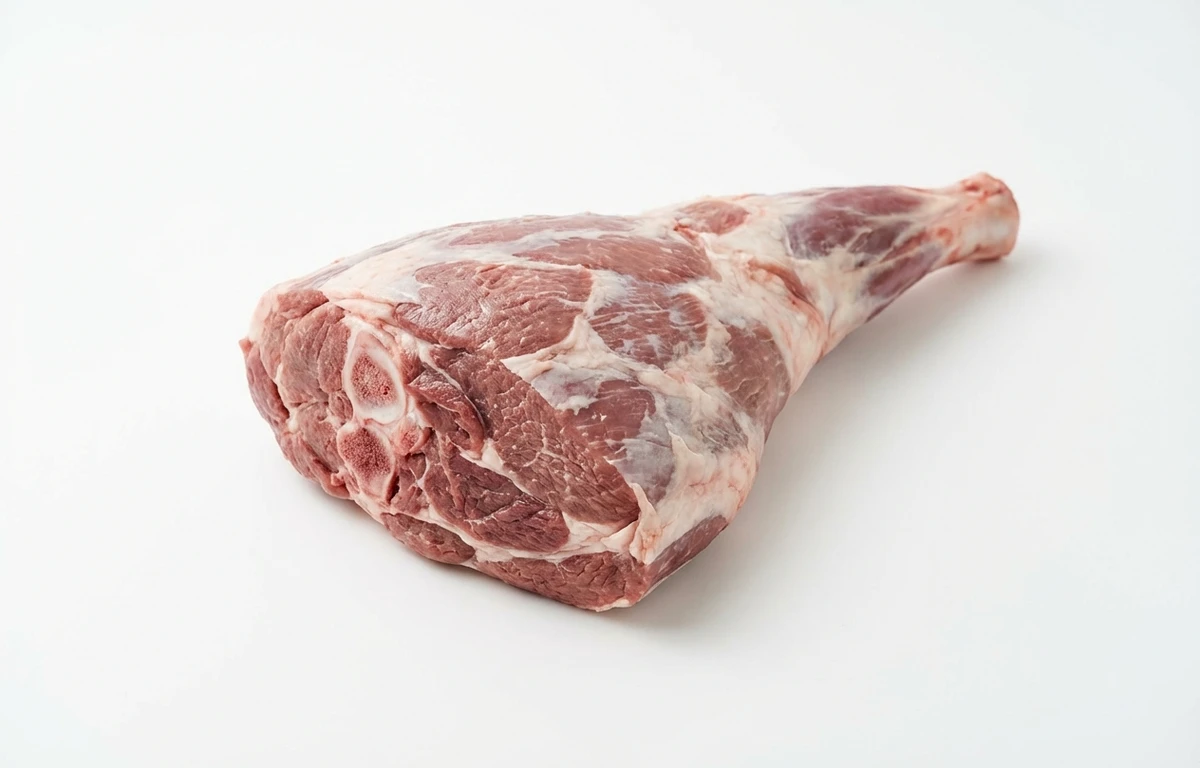
raw lamb leg.
VegetarianVeganGluten-freeDairy-freeNut-freePeanut-freeSoy-freeEgg-freeShellfish-freeHoney-freeAlcohol-free
ALSO KNOWN AS
raw leg of lamb
SERVING
CALORIES
162
PROTEIN
20.2g
CARBS
0g
FAT
8.8g
FIBER
0g
NUTRITION PROFILE · per 100 g
Everything in this ingredient.
MACRONUTRIENTS
Calories162kcal—
Protein20.2g40%
Carbohydrates0g0%
Fiber0g0%
Sugar0g0%
Total fat8.8g11%
Saturated fat3.5g17%
Trans fat0.50g—
Cholesterol70mg23%
Water70.1g—
MINERALS
Sodium64mg3%
Potassium310mg7%
Calcium10mg1%
Iron1.9mg10%
Magnesium23mg5%
Phosphorus188mg15%
Zinc4.5mg41%
Copper0.12mg13%
Manganese0.02mg1%
Selenium26.2µg48%
VITAMINS
Vitamin A0µg0%
Vitamin C0mg0%
Vitamin D0.10µg1%
Vitamin E0.20mg1%
Vitamin K0µg0%
Thiamin (B1)0.11mg9%
Riboflavin (B2)0.21mg16%
Niacin (B3)6.0mg37%
Pantothenic acid (B5)0.65mg13%
Vitamin B60.13mg8%
Folate (B9)2.0µg1%
Vitamin B122.3µg96%
%DV based on a 2,000 cal diet. Source: USDA FoodData Central. A dash in the %DV column means there’s no established Daily Value for that nutrient.
MEASUREMENT CONVERSIONS
How much is what.
1 oz28.4g
1 lb453.6g
HEALTH BENEFITS
Why eat it.
- ✓Excellent source of high-quality complete protein
- ✓Rich in Vitamin B12 for nervous system health
- ✓High bioavailable zinc content for immune support
- ✓Contains heme iron which is easily absorbed by the body
- ✓Source of CLA (Conjugated Linoleic Acid) which may support metabolic health
COOKING TIPS
In the kitchen.
- 1Remove from the refrigerator 30-60 minutes before cooking to ensure even roasting
- 2Use a meat thermometer to reach an internal temperature of 145°F (63°C) for medium-rare
- 3Always let the meat rest for at least 15-20 minutes after cooking to retain juices
STORAGE
Keep it fresh.
- Store in the coldest part of the refrigerator for 3 to 5 days
- Keep in original vacuum-sealed packaging or wrap tightly in plastic wrap and foil
- Freeze for long-term storage for up to 6 to 12 months for best quality
FAQ
Frequently asked questions.
How long does raw lamb leg last in the refrigerator?
Raw lamb leg typically stays fresh for 3 to 5 days when stored properly in the refrigerator.
Can I freeze a raw lamb leg?
Yes, you can freeze it for 6 to 12 months. Ensure it is wrapped airtight to prevent freezer burn.
How do I choose a high-quality lamb leg?
Look for meat that is fine-textured and pinkish-red in color with firm, white fat. Avoid meat that looks grey or has yellowing fat.
What is a good substitute for lamb leg?
Goat leg is the closest substitute. For a different flavor profile, a beef round roast or venison leg can be used.
Should I remove the 'fell' (thin papery membrane) before cooking?
For a whole leg of lamb, the fell should usually be left on to help the roast retain its shape and juices, though some prefer to remove it to reduce the 'gamey' flavor.
What are the best cooking methods for lamb leg?
Roasting is the most common method for whole legs, while cubed leg meat is excellent for slow-braising, stews, or grilling as kebabs.
Is lamb leg a lean cut of meat?
Compared to the shoulder, the leg is relatively lean, especially when the external fat cap is trimmed.
How much lamb leg should I buy per person?
Estimate about 1/2 pound (225g) per person for a bone-in leg, or 1/3 pound (150g) for a boneless leg.
RECIPES
Cook with raw lamb leg.
2 recipes · sorted by what’s quick



















