
Meat
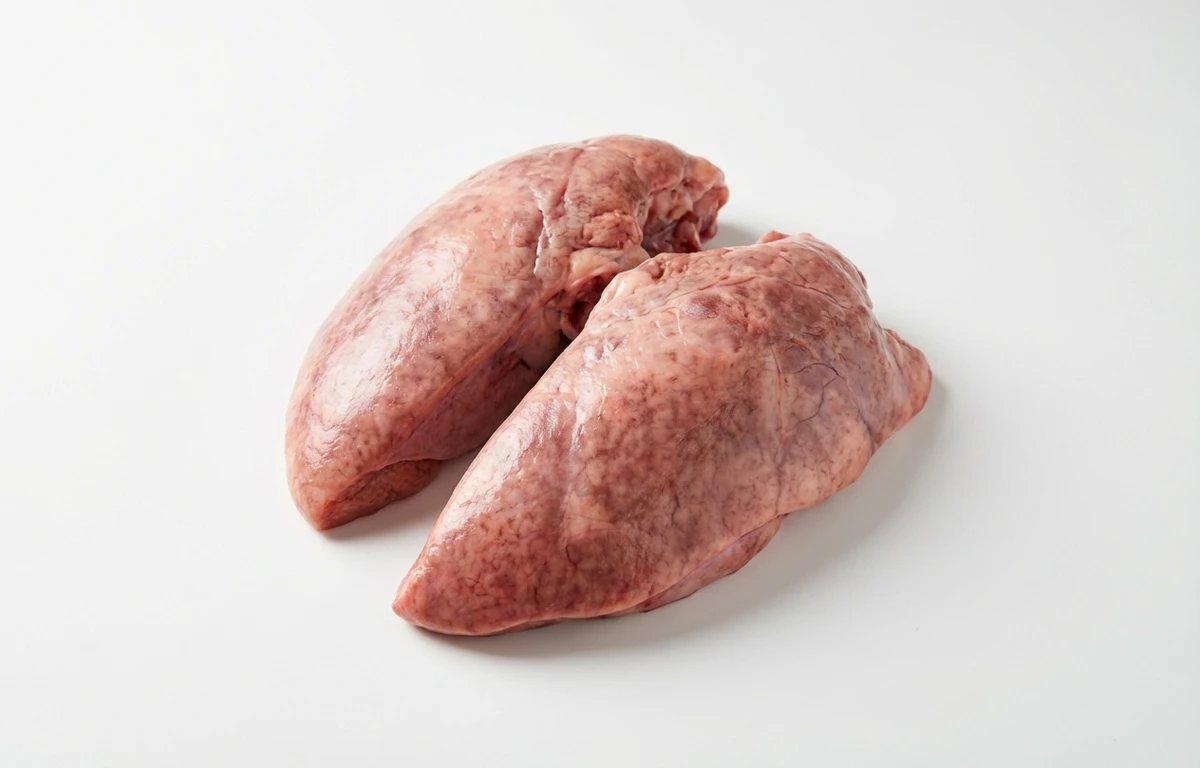
raw lamb lungs.
VegetarianVeganGluten-freeDairy-freeNut-freePeanut-freeSoy-freeEgg-freeShellfish-freeHoney-freeAlcohol-free
ALSO KNOWN AS
lamb lungs
SERVING
CALORIES
96
PROTEIN
16.2g
CARBS
0g
FAT
2.9g
FIBER
0g
NUTRITION PROFILE · per 100 g
Everything in this ingredient.
MACRONUTRIENTS
Calories96kcal—
Protein16.2g32%
Carbohydrates0g0%
Fiber0g0%
Sugar0g0%
Total fat2.9g4%
Saturated fat1.0g5%
Trans fat0g—
Cholesterol240mg80%
Water79.5g—
MINERALS
Sodium185mg8%
Potassium260mg6%
Calcium10mg1%
Iron6.4mg36%
Magnesium14mg3%
Phosphorus180mg14%
Zinc1.6mg15%
Copper0.20mg22%
Manganese0.02mg1%
Selenium35µg64%
VITAMINS
Vitamin A0µg0%
Vitamin C38mg42%
Vitamin D0.10µg1%
Vitamin E0.20mg1%
Vitamin K0µg0%
Thiamin (B1)0.05mg4%
Riboflavin (B2)0.35mg27%
Niacin (B3)3.5mg22%
Pantothenic acid (B5)0.80mg16%
Vitamin B60.10mg6%
Folate (B9)8.0µg2%
Vitamin B123.8µg158%
%DV based on a 2,000 cal diet. Source: USDA FoodData Central. A dash in the %DV column means there’s no established Daily Value for that nutrient.
MEASUREMENT CONVERSIONS
How much is what.
1 oz28.4g
1 lb453.6g
1 piece450g
HEALTH BENEFITS
Why eat it.
- ✓Rich source of highly bioavailable heme iron, crucial for preventing anemia and supporting oxygen transport.
- ✓Excellent source of Vitamin B12, which is vital for nerve function, DNA synthesis, and red blood cell formation.
- ✓Provides complete protein, containing all essential amino acids necessary for muscle building and tissue repair.
- ✓Contains significant amounts of minerals like phosphorus for bone health and selenium, a powerful antioxidant.
COOKING TIPS
In the kitchen.
- 1Thoroughly clean the lungs before cooking by rinsing under cold water and removing the windpipe and any large blood vessels.
- 2It is common to first boil or poach the lungs to firm their spongy texture, making them easier to handle, chop, or mince for subsequent cooking.
- 3Lungs absorb flavors well; they are ideal for slow-cooked dishes like stews, curries, or as a key ingredient in traditional recipes like Scottish haggis.
- 4Mince the cooked lungs and combine with other ground meats and strong spices to create savory fillings for pies, sausages, or dumplings.
STORAGE
Keep it fresh.
- Store raw lamb lungs in the coldest part of the refrigerator (at or below 40°F / 4°C) in a sealed container and use within 1-2 days.
- For longer storage, wrap tightly in plastic wrap and a freezer-safe bag and freeze at 0°F (-18°C) for up to 3 months. Thaw in the refrigerator before use.
FAQ
Frequently asked questions.
Are lamb lungs healthy?
Yes, lamb lungs are highly nutritious, offering a rich source of heme iron for oxygen transport and Vitamin B12 for nerve function. They are low in fat and calories while providing high-quality complete protein and essential minerals like selenium and phosphorus.
How much protein is in lamb lungs?
Lamb lungs contain approximately 16.2 grams of protein per 100-gram serving. As a complete protein source, they provide all the essential amino acids necessary for muscle repair and overall tissue health.
Are lamb lungs good for weight loss?
Yes, they are excellent for weight management because they are very low in calories (96 kcal per 100g) and fat (2.9g). Their high protein content helps promote satiety, making you feel full longer while maintaining muscle mass.
Are lamb lungs keto-friendly?
Absolutely. Lamb lungs contain 0 grams of carbohydrates, making them an ideal food for ketogenic and other low-carb diets. They provide essential nutrients without impacting blood sugar or insulin levels.
Are lamb lungs gluten-free?
Yes, raw lamb lungs are naturally gluten-free as they are an animal organ. However, if you are buying them pre-prepared or in a dish like haggis, check the ingredients as fillers like oats or barley may contain gluten.
How do you cook lamb lungs?
Lamb lungs have a spongy texture and are often boiled first to firm them up before being sliced and sautéed, stewed, or fried. They are commonly used in traditional dishes or spicy stir-fries where they can absorb the flavors of aromatic herbs and sauces.
What do lamb lungs taste like?
Lamb lungs have a very mild, slightly earthy flavor compared to stronger organ meats like liver. Their most distinctive feature is their unique, airy, and spongy texture, which becomes more tender when simmered or braised.
Can I feed raw lamb lungs to my dog?
Yes, lamb lungs are a popular choice for raw pet diets because they are lean and nutrient-dense. They provide essential vitamins and minerals, though they should be served as part of a balanced diet alongside other muscle meats and bone.
How do you store raw lamb lungs?
Raw lamb lungs should be kept in the coldest part of the refrigerator and used within 1-2 days. For longer storage, they can be frozen in airtight packaging or vacuum-sealed bags for up to 4 months.
How do you know if lamb lungs are fresh?
Fresh lamb lungs should have a bright pink or reddish color and a clean, slightly metallic scent. Avoid lungs that appear grey, feel excessively slimy, or have a strong, sour, or ammonia-like odor, as these are signs of spoilage.



















