
Vegetable
raw laver seaweed.
VegetarianVeganGluten-freeDairy-freeNut-freePeanut-freeSoy-freeEgg-freeShellfish-freeHoney-freeAlcohol-free
ALSO KNOWN AS
raw noriraw gimpurple laversloke
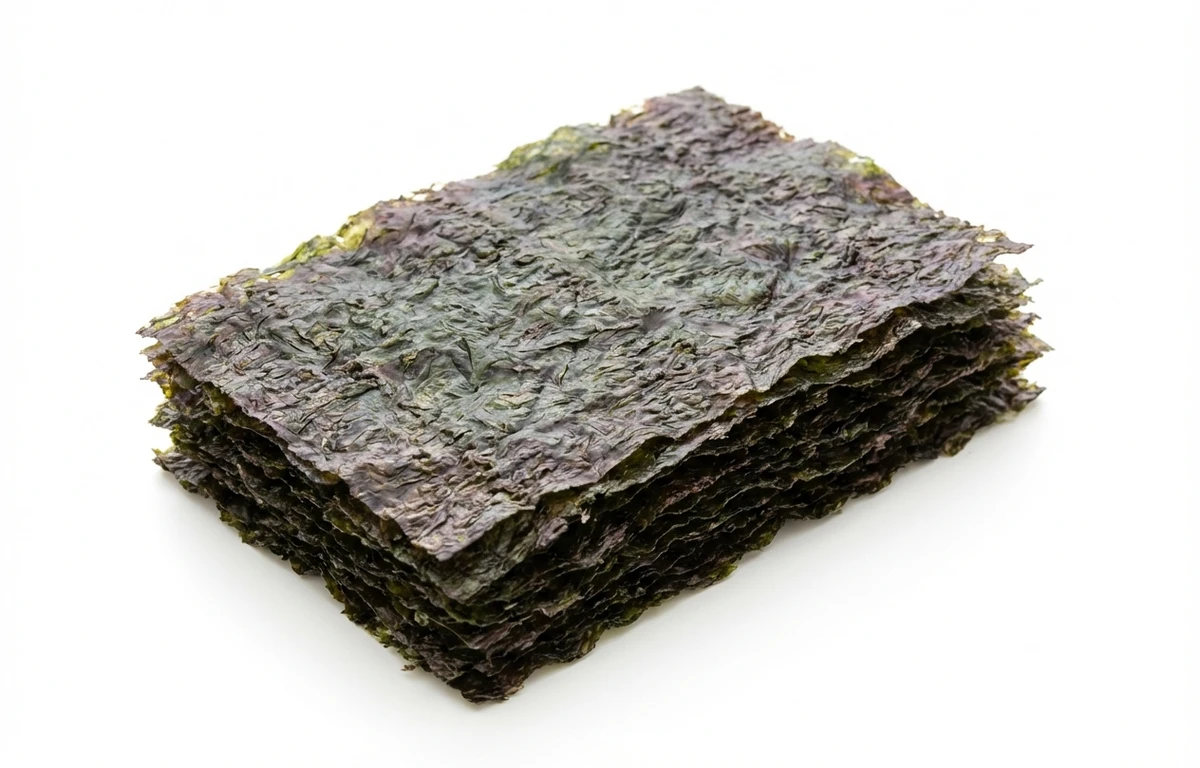
SERVING
CALORIES
35
PROTEIN
4.0g
CARBS
4.0g
FAT
0.30g
FIBER
1.5g
This ingredient is flagged as naturally gluten-free. Per 100 g, it provides 4.0 µg of vitamin K.
NUTRITION PROFILE · per 100 g
Everything in this ingredient.
MACRONUTRIENTS
Calories35kcal—
Protein4.0g8%
Carbohydrates4.0g1%
Fiber1.5g5%
Sugar0.20g0%
Total fat0.30g0%
Saturated fat0.05g0%
Trans fat0g—
Cholesterol0mg0%
Water90g—
MINERALS
Sodium48mg2%
Potassium356mg8%
Calcium70mg5%
Iron1.8mg10%
Magnesium20mg5%
Phosphorus58mg5%
Zinc1.0mg9%
Copper0.10mg11%
Manganese0.50mg22%
Selenium0.70µg1%
VITAMINS
Vitamin A260µg29%
Vitamin C39mg43%
Vitamin D0µg0%
Vitamin E1.0mg7%
Vitamin K4.0µg3%
Thiamin (B1)0.10mg8%
Riboflavin (B2)0.40mg31%
Niacin (B3)1.5mg9%
Pantothenic acid (B5)0.20mg4%
Vitamin B60.15mg9%
Folate (B9)146µg37%
Vitamin B121.2µg50%
%DV based on a 2,000 cal diet. Source: USDA FoodData Central. A dash in the %DV column means there’s no established Daily Value for that nutrient.
MEASUREMENT CONVERSIONS
How much is what.
1 cup40g
1 tablespoon2.5g
1 teaspoon0.8g
1 oz28.4g
1 lb453.6g
1 ml1g
1 liter1000g
HEALTH BENEFITS
Why eat it.
- ✓Excellent source of iodine for thyroid health
- ✓Contains bioavailable Vitamin B12, rare for plant sources
- ✓High folate content supports cell division
- ✓Provides dietary fiber for digestive health
COOKING TIPS
In the kitchen.
- 1Rinse thoroughly in cold water multiple times to remove sand and grit
- 2Add to soups at the very end of cooking to preserve texture and nutrients
- 3Can be lightly toasted in a dry pan to create a crispy texture
STORAGE
Keep it fresh.
- Store fresh raw laver in the refrigerator in an airtight container
- Use within 2-3 days for optimal freshness and flavor
- Can be frozen for up to 3 months if tightly sealed
FAQ
Frequently asked questions.
How long does raw laver seaweed last?
Fresh raw laver is highly perishable and should be consumed within 2 to 3 days when kept in the refrigerator.
Can raw laver be frozen?
Yes, you can freeze raw laver. Squeeze out excess water and seal it in an airtight freezer bag for up to 3 months.
How do I select high-quality raw laver?
Look for seaweed that has a deep purple or dark green color, a fresh sea-like aroma, and no signs of sliminess or wilting.
What are the best substitutes for raw laver?
Dulse or wakame are the best fresh substitutes. If fresh is unavailable, dried nori sheets can be used, though the texture differs.
How do I clean raw laver?
Place the seaweed in a large bowl of cold water, swish it around to let sand settle, then lift the seaweed out. Repeat 2-3 times.
Is raw laver high in iodine?
Yes, like most seaweeds, laver is very high in iodine. It should be consumed in moderation to avoid excessive iodine intake.
What is the difference between raw laver and nori?
Laver is the raw, unprocessed seaweed. Nori is the Japanese term for the processed, dried, and toasted sheets made from laver.
How is raw laver typically used in cooking?
It is commonly used in soups (like Korean Miyeok-guk variants), salads, or processed into 'laver bread' in Welsh cuisine.
Is raw laver suitable for vegans?
Yes, it is a 100% plant-based (algae) food and is an excellent source of nutrients like B12 for those on a vegan diet.



















