
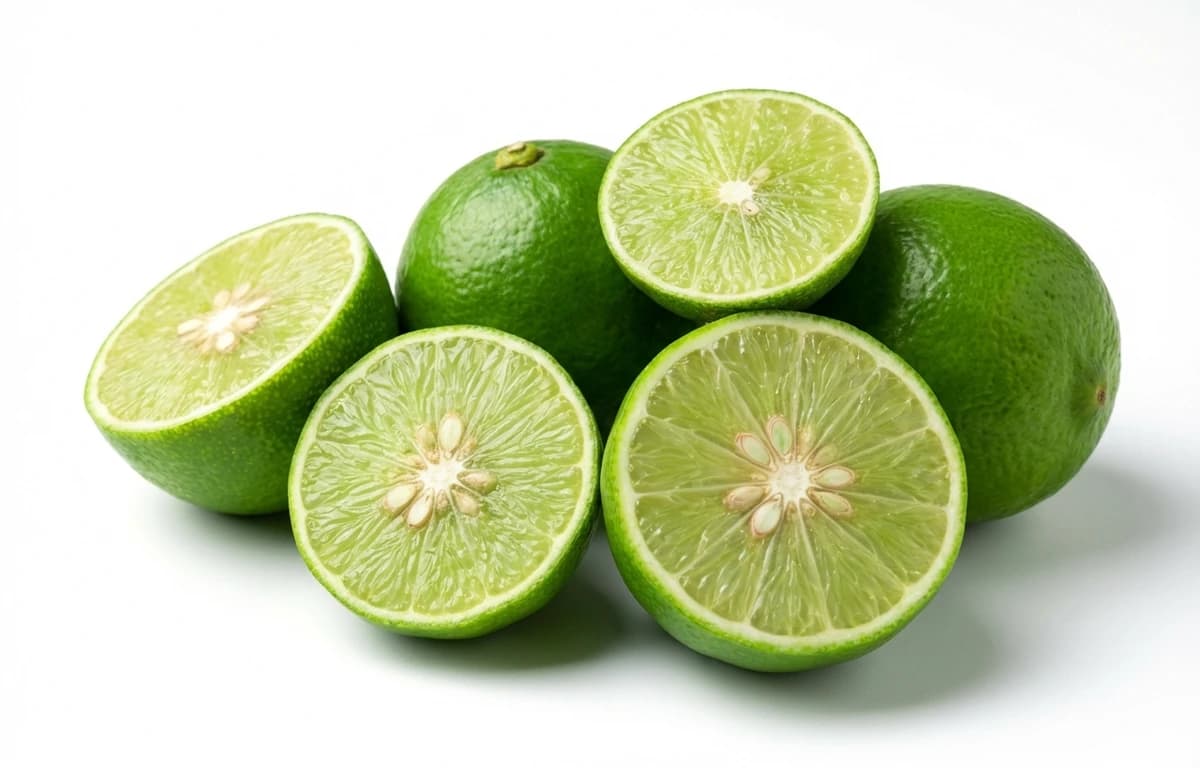
raw lime
Also known as:
Loading...
Also known as:
Per 100g
Nutrition data source: USDA FoodData Central
Common measurement equivalents in grams
Yes, raw limes are highly nutritious. They are an excellent source of Vitamin C, which supports the immune system and skin health, and they contain antioxidants like flavonoids and limonoids that help protect cells from damage.
Limes are very low in calories, providing approximately 30 calories per 100g. They contain about 10.54g of carbohydrates, 0.7g of protein, and 0.2g of fat, making them a light addition to any meal.
Yes, limes are keto-friendly. While they contain some carbohydrates, the amount used for flavoring or juice is typically very small, fitting easily within the daily carb limits of a ketogenic or low-carb diet.
Limes contain citric acid, which may help increase urine citrate levels. This process can help prevent the formation of certain types of kidney stones by making the urine less favorable for stone crystallization.
To maximize juice yield, roll the lime firmly against a countertop with your palm before cutting. You can also microwave the lime for 10 to 15 seconds to soften the internal membranes before squeezing.
Yes, the outer green part of the peel, known as the zest, is edible and packed with aromatic oils. It is commonly used to add intense citrus flavor to desserts, marinades, and cocktails, though the white pith underneath is quite bitter.
Limes can be kept at room temperature for about a week. For longer storage, place them in a sealed plastic bag in the refrigerator's crisper drawer, where they can stay fresh for up to a month.
raw lime is a versatile ingredient found in cuisines around the world. With 30 calories per 100g and 0.7 grams of protein, it's a nutritious addition to many dishes.
Explore more ingredients in the fruit category with complete nutrition information.
View all fruit →Choose limes that feel heavy for their size, as this indicates a high juice content. Look for smooth, thin skin and a slight give when squeezed; very hard or shriveled limes are often dry inside.
Yes, the high Vitamin C content in lime juice significantly improves the absorption of non-heme iron from plant-based foods. Squeezing lime over lentils, beans, or spinach helps your body utilize the iron more effectively.
Lemon juice is the best substitute for lime juice as it has a similar acidity and citrus profile. For specific recipes like marinades, vinegar or white wine can sometimes work, though the flavor profile will change.