
Vegetable1 recipes
raw lotus root.
VegetarianVeganGluten-freeDairy-freeNut-freePeanut-freeSoy-freeEgg-freeShellfish-freeHoney-freeAlcohol-freeHalalKosher
ALSO KNOWN AS
raw nadruraw kamal kakdiraw renkonraw lian ouraw lotus stem
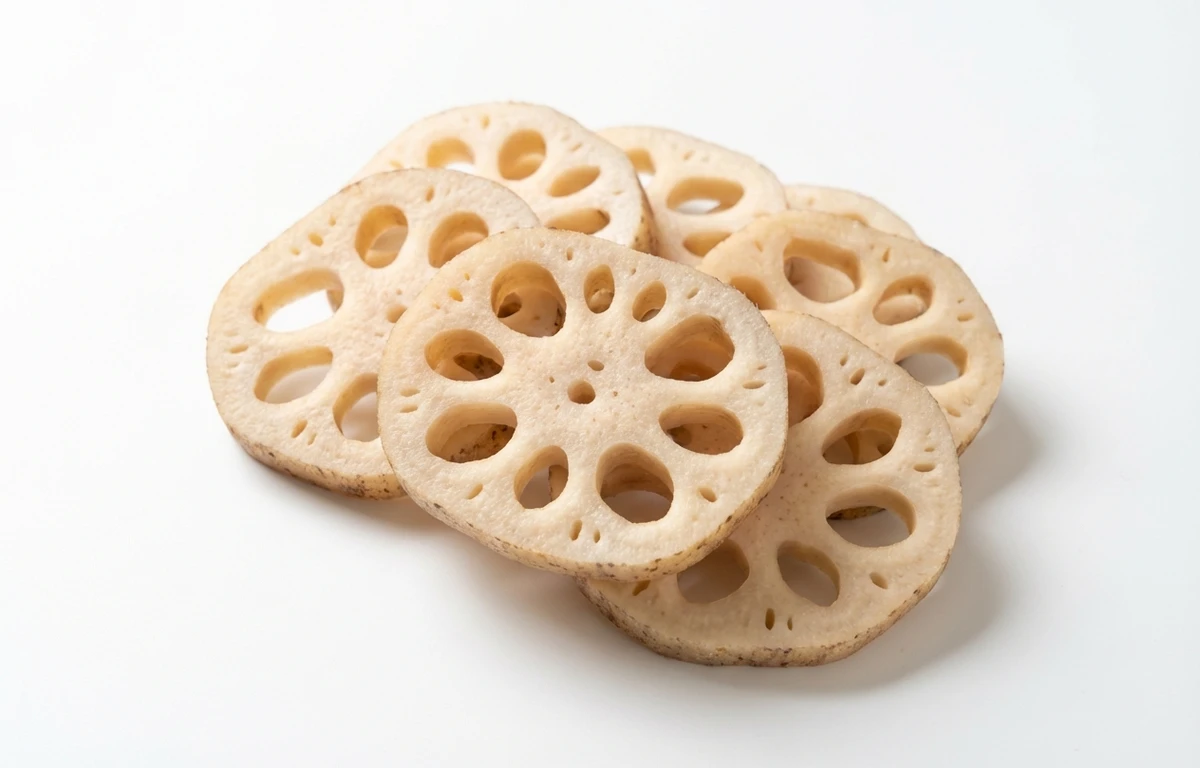
SERVING
CALORIES
74
PROTEIN
2.6g
CARBS
17.2g
FAT
0.10g
FIBER
4.9g
This ingredient is flagged as naturally gluten-free. Per 100 g, it provides 0 µg of vitamin K.
NUTRITION PROFILE · per 100 g
Everything in this ingredient.
MACRONUTRIENTS
Calories74kcal—
Protein2.6g5%
Carbohydrates17.2g6%
Fiber4.9g18%
Sugar0.50g1%
Total fat0.10g0%
Saturated fat0.03g0%
Trans fat0g—
Cholesterol0mg0%
Water79.1g—
MINERALS
Sodium40mg2%
Potassium556mg12%
Calcium45mg3%
Iron1.2mg6%
Magnesium23mg5%
Phosphorus100mg8%
Zinc0.39mg4%
Copper0.26mg29%
Manganese0.26mg11%
Selenium0.70µg1%
VITAMINS
Vitamin A0µg0%
Vitamin C44mg49%
Vitamin D0µg0%
Vitamin E0mg0%
Vitamin K0µg0%
Thiamin (B1)0.13mg11%
Riboflavin (B2)0.22mg17%
Niacin (B3)0.40mg3%
Pantothenic acid (B5)0.30mg6%
Vitamin B60.26mg15%
Folate (B9)13µg3%
Vitamin B120µg0%
%DV based on a 2,000 cal diet. Source: USDA FoodData Central. A dash in the %DV column means there’s no established Daily Value for that nutrient.
MEASUREMENT CONVERSIONS
How much is what.
1 oz3.5g
1 lb0.2g
1 piece250g
HEALTH BENEFITS
Why eat it.
- ✓Excellent source of dietary fiber for digestive health
- ✓Contains potassium which helps regulate blood pressure
- ✓Rich in B-vitamins for energy metabolism
COOKING TIPS
In the kitchen.
- 1Always peel the outer skin before cooking to remove bitterness
- 2Soak sliced pieces in water with lemon or vinegar to prevent browning
- 3Slice thinly for a crunchy texture in stir-fries or chips
STORAGE
Keep it fresh.
- Store unwashed in a damp paper towel inside a plastic bag in the refrigerator
- Best used within 1 to 2 weeks of purchase
- If already sliced, store in water with a splash of vinegar in the fridge for up to 3 days
FAQ
Frequently asked questions.
How long does raw lotus root last?
When stored properly in the refrigerator wrapped in damp paper towels, it can last up to 2 weeks.
How do I pick a good lotus root?
Look for roots that are heavy, firm, and light brown. Avoid any with soft spots, cracks, or dark blemishes.
What is a good substitute for lotus root?
Jicama or water chestnuts are the best substitutes as they provide a similar crunchy texture.
Do I need to peel lotus root?
Yes, the outer skin is tough and can be bitter, so it should be peeled with a vegetable peeler before use.
Can you eat lotus root raw?
While technically edible raw, it is rarely eaten that way due to its bitter taste and potential for parasites; it is almost always blanched, boiled, or fried.
How do you clean the holes in lotus root?
After peeling and slicing, rinse the pieces thoroughly under cold running water to remove any mud or silt trapped in the canals.
Can lotus root be frozen?
Yes, it can be frozen. It is best to peel, slice, and blanch them for 2 minutes before freezing in airtight bags.
What does lotus root taste like?
It has a mild, slightly sweet flavor and a crunchy texture similar to a water chestnut or a raw potato.
RECIPES
Cook with raw lotus root.
1 recipes · sorted by what’s quick



















