
Fruit
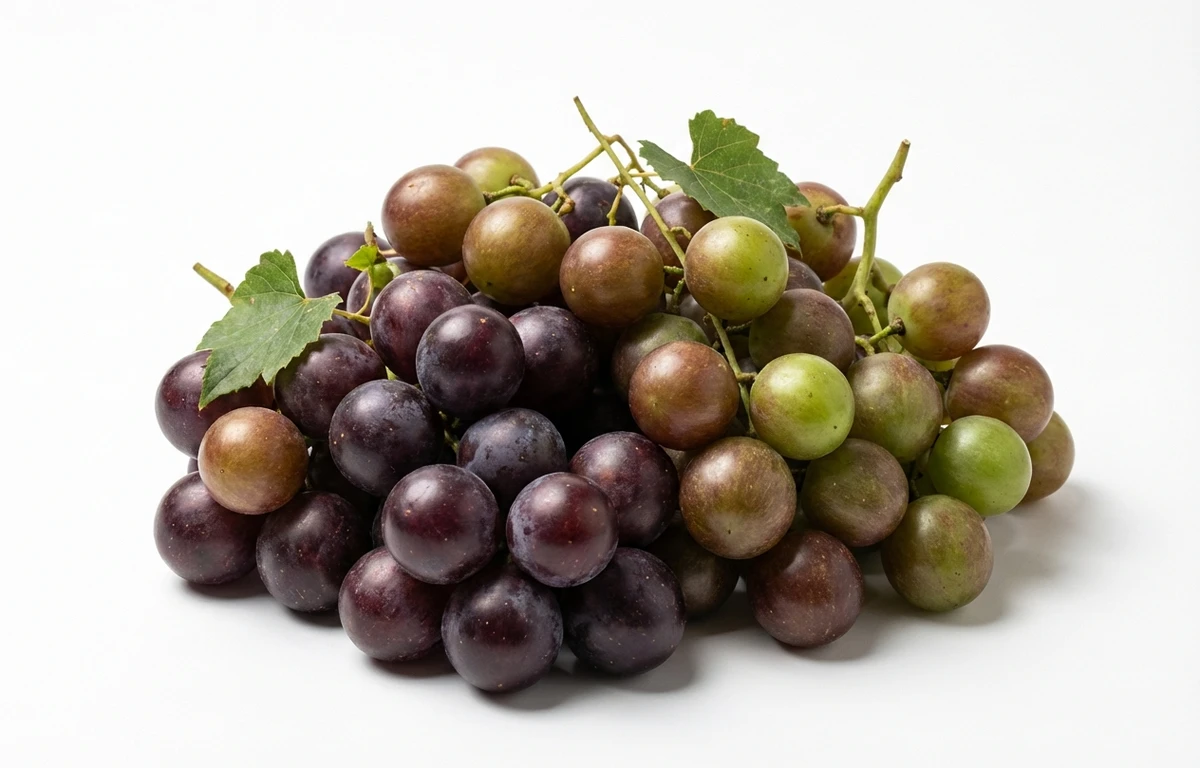
raw muscadine grapes.
VegetarianVeganGluten-freeDairy-freeNut-freePeanut-freeSoy-freeEgg-freeShellfish-freeHoney-freeAlcohol-freeHalalKosher
SERVING
CALORIES
57
PROTEIN
0.81g
CARBS
13.9g
FAT
0.47g
FIBER
3.9g
NUTRITION PROFILE · per 100 g
Everything in this ingredient.
MACRONUTRIENTS
Calories57kcal—
Protein0.81g2%
Carbohydrates13.9g5%
Fiber3.9g14%
Sugar10.5g21%
Total fat0.47g1%
Saturated fat0.05g0%
Trans fat0g—
Cholesterol0mg0%
Water84.3g—
MINERALS
Sodium1.0mg0%
Potassium203mg4%
Calcium37mg3%
Iron0.26mg1%
Magnesium14mg3%
Phosphorus24mg2%
Zinc0.11mg1%
Copper0.05mg6%
Manganese2.0mg86%
Selenium0.10µg0%
VITAMINS
Vitamin A3.0µg0%
Vitamin C6.5mg7%
Vitamin D0µg0%
Vitamin E0.19mg1%
Vitamin K14.6µg12%
Thiamin (B1)0.05mg4%
Riboflavin (B2)0.03mg2%
Niacin (B3)0.20mg1%
Pantothenic acid (B5)0.05mg1%
Vitamin B60.08mg5%
Folate (B9)2.0µg1%
Vitamin B120µg0%
%DV based on a 2,000 cal diet. Source: USDA FoodData Central. A dash in the %DV column means there’s no established Daily Value for that nutrient.
MEASUREMENT CONVERSIONS
How much is what.
1 cup151g
1 tablespoon9.4g
1 teaspoon3.1g
1 ml0.6g
1 liter629.2g
1 piece9g
HEALTH BENEFITS
Why eat it.
- ✓Exceptionally rich in antioxidants, particularly polyphenols like resveratrol and ellagic acid found in the thick skins and seeds, which help combat cellular damage.
- ✓Supports cardiovascular health by potentially improving blood flow, reducing inflammation, and lowering LDL cholesterol levels.
- ✓High in dietary fiber, especially when skins are consumed, which aids digestion and promotes gut health.
- ✓May support immune function due to its content of Vitamin C and other powerful antioxidants.
COOKING TIPS
In the kitchen.
- 1The thick skins and seeds are edible but can be tough. To use in recipes, you can squeeze the pulp out, cook the skins until tender, and strain the pulp to remove seeds.
- 2Muscadines are excellent for making jams, jellies, and pies due to their intense, unique flavor and high natural pectin content.
- 3Press fresh muscadines to create a robust, flavorful juice that can be used in beverages, sauces, or marinades.
- 4Roast muscadine grapes with savory dishes like pork or chicken to add a sweet and tangy flavor contrast.
STORAGE
Keep it fresh.
- Store unwashed grapes in a breathable bag or container in the refrigerator's crisper drawer for up to one week.
- For long-term storage, wash, dry, and freeze grapes on a baking sheet in a single layer before transferring to a freezer-safe bag for up to a year.
FAQ
Frequently asked questions.
Are muscadine grapes healthy?
Yes, muscadine grapes are exceptionally healthy. They are famous for their high concentration of antioxidants, particularly resveratrol and ellagic acid, which help protect cells from damage and support heart health.
How many calories and carbs are in muscadine grapes?
A 100g serving of raw muscadine grapes contains approximately 57 calories and 13.93g of carbohydrates. They are a low-fat fruit option with less than 0.5g of fat per serving.
Can you eat the skins and seeds of muscadine grapes?
Yes, the skins and seeds are edible and contain the highest concentration of fiber and antioxidants. While the skins are much thicker and tougher than standard grapes, consuming them provides the most significant health benefits.
Are muscadine grapes keto-friendly?
Muscadine grapes are moderately high in natural sugars, containing about 14g of carbs per 100g. While they can be enjoyed in small portions, they may not be ideal for a strict ketogenic diet compared to lower-carb fruits like berries.
What do muscadine grapes taste like?
Muscadine grapes have a unique, bold, and 'musky' sweetness that is much more intense than common table grapes. The inner pulp is very sweet and juicy, while the thick skin can be slightly tart.
How do you properly eat a raw muscadine grape?
The traditional way to eat them is to place the grape in your mouth and bite it to pop the sweet pulp out of the skin. You can then swallow the pulp and seeds, or choose to chew the nutritious skin if you don't mind the tough texture.
How should muscadine grapes be stored?
Store raw muscadine grapes in the refrigerator in a breathable container or a perforated plastic bag. When kept cold, they can stay fresh for up to one to two weeks.
Are muscadine grapes good for digestion?
Yes, they are an excellent source of dietary fiber, especially if you consume the skins. Fiber helps regulate digestion, prevents constipation, and supports a healthy gut microbiome.
How can you tell if muscadine grapes are ripe?
Look for grapes that are firm, plump, and have a consistent color—either deep purple-black or a warm bronze depending on the variety. Avoid grapes that are shriveled, mushy, or have broken skins.
Are muscadine grapes vegan and gluten-free?
Yes, raw muscadine grapes are a natural plant-based food. They are 100% vegan and naturally gluten-free, making them suitable for most dietary restrictions.



















