
Fruit
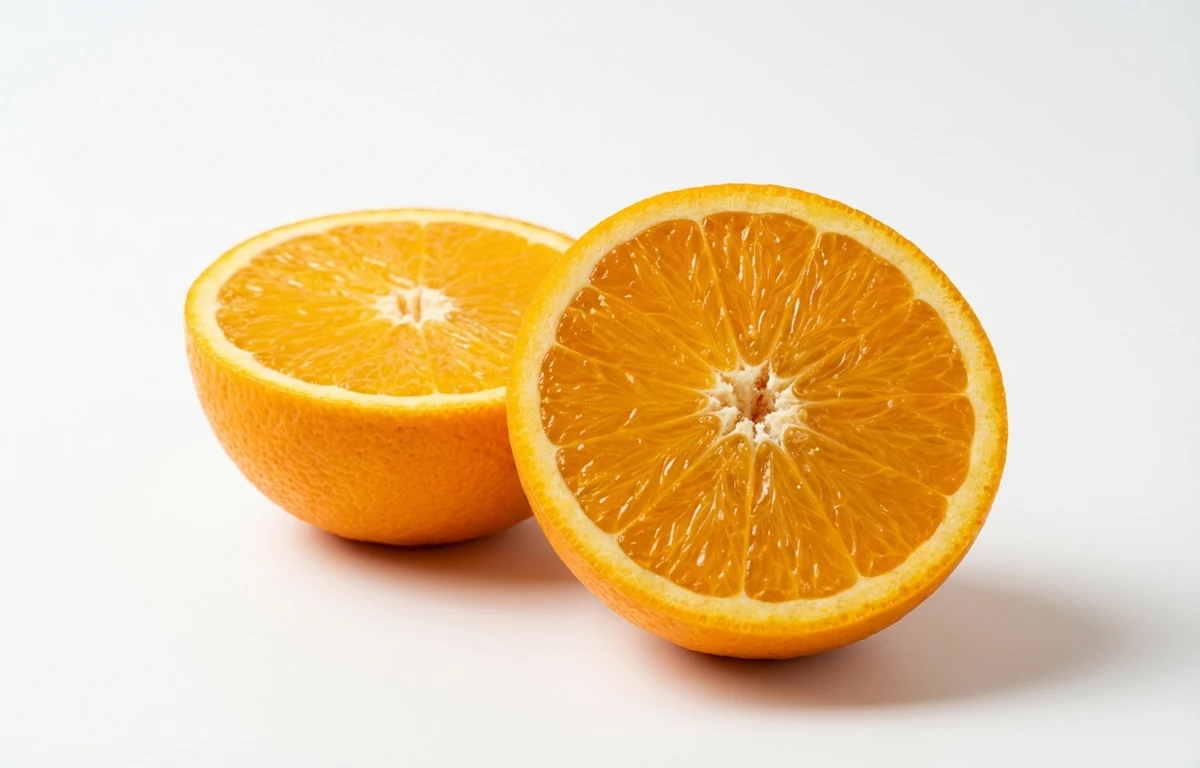
raw navel orange.
VegetarianVeganGluten-freeDairy-freeNut-freePeanut-freeSoy-freeEgg-freeShellfish-freeHoney-freeAlcohol-free
ALSO KNOWN AS
navel orange
SERVING
CALORIES
49
PROTEIN
0.91g
CARBS
12.5g
FAT
0.15g
FIBER
2.2g
NUTRITION PROFILE · per 100 g
Everything in this ingredient.
MACRONUTRIENTS
Calories49kcal—
Protein0.91g2%
Carbohydrates12.5g5%
Fiber2.2g8%
Sugar8.5g17%
Total fat0.15g0%
Saturated fat0.02g0%
Trans fat0g—
Cholesterol0mg0%
Water86.3g—
MINERALS
Sodium1.0mg0%
Potassium166mg4%
Calcium43mg3%
Iron0.13mg1%
Magnesium11mg3%
Phosphorus23mg2%
Zinc0.08mg1%
Copper0.04mg4%
Manganese0.02mg1%
Selenium0.50µg1%
VITAMINS
Vitamin A11µg1%
Vitamin C59.1mg66%
Vitamin D0µg0%
Vitamin E0.18mg1%
Vitamin K0µg0%
Thiamin (B1)0.08mg7%
Riboflavin (B2)0.04mg3%
Niacin (B3)0.40mg3%
Pantothenic acid (B5)0.25mg5%
Vitamin B60.06mg4%
Folate (B9)30µg8%
Vitamin B120µg0%
%DV based on a 2,000 cal diet. Source: USDA FoodData Central. A dash in the %DV column means there’s no established Daily Value for that nutrient.
MEASUREMENT CONVERSIONS
How much is what.
1 cup180g
1 tablespoon11.3g
1 teaspoon3.8g
1 ml0.8g
1 liter750g
1 piece140g
HEALTH BENEFITS
Why eat it.
- ✓Excellent source of Vitamin C, a powerful antioxidant that supports immune function and collagen production for healthy skin.
- ✓Provides dietary fiber, which aids in digestion, promotes satiety, and helps maintain stable blood sugar levels.
- ✓Contains flavonoids like hesperidin, which may help lower blood pressure and have anti-inflammatory properties.
- ✓Good source of potassium, an essential mineral for maintaining fluid balance, nerve function, and heart health.
COOKING TIPS
In the kitchen.
- 1Zest the orange before peeling to capture the aromatic oils in the rind, perfect for flavoring baked goods, marinades, and dressings.
- 2To maximize juice yield, allow the orange to come to room temperature and roll it firmly on a countertop before squeezing.
- 3Create orange supremes (segments without membrane) for elegant salads or desserts by carefully slicing off the peel and pith, then cutting between the membranes.
- 4The peel can be candied or used to infuse simple syrups, oils, or vinegars for added flavor in cocktails and dishes.
STORAGE
Keep it fresh.
- Store at cool room temperature away from direct sunlight for up to one week.
- For longer preservation (2-3 weeks), keep them loose in the crisper drawer of your refrigerator to maintain freshness and prevent moisture loss.
FAQ
Frequently asked questions.
Are navel oranges healthy?
Yes, navel oranges are highly nutritious and low in calories, providing only 49 calories per 100g. They are an excellent source of Vitamin C for immune support and dietary fiber for digestive health.
How much Vitamin C is in a navel orange?
A single medium-sized navel orange can provide over 100% of the daily recommended intake of Vitamin C. This powerful antioxidant supports collagen production for healthy skin and helps protect cells from damage.
Are navel oranges good for weight loss?
Navel oranges are great for weight loss because they are low in fat and high in fiber. The fiber promotes satiety, helping you feel full longer and reducing the likelihood of overeating.
Are navel oranges keto-friendly?
Navel oranges are generally not considered keto-friendly as they contain about 12.5g of carbohydrates per 100g. Most people on a strict ketogenic diet limit high-sugar fruits to stay within their daily carb limits.
Can diabetics eat navel oranges?
Diabetics can enjoy navel oranges in moderation. While they contain natural sugars, their high fiber content helps slow down sugar absorption, which prevents sharp spikes in blood glucose levels compared to orange juice.
What is the best way to eat a navel orange?
Navel oranges are best eaten raw and fresh as a snack. Because they are seedless and easy to peel, they are preferred for fresh consumption rather than juicing, as their juice can turn bitter if left to sit.
Can you eat the white part (pith) of a navel orange?
Yes, the white pith is completely edible and very healthy. It contains a high concentration of fiber and flavonoids like hesperidin, which have anti-inflammatory properties and support heart health.
How should I store navel oranges to keep them fresh?
Navel oranges can be kept at room temperature for about a week. For longer storage, place them in the refrigerator's crisper drawer, where they can stay fresh for up to three to four weeks.
How can I tell if a navel orange is ripe and juicy?
Choose oranges that feel heavy for their size, which indicates a high juice content. The skin should be firm and smooth, avoiding any fruits with soft spots, bruised skin, or signs of mold.
What makes navel oranges different from other oranges?
Navel oranges are distinguished by the small 'navel' at the blossom end, which is actually a second, undeveloped fruit. They are prized for being seedless, sweet, and having a lower acid content than many other varieties.



















