
Meat
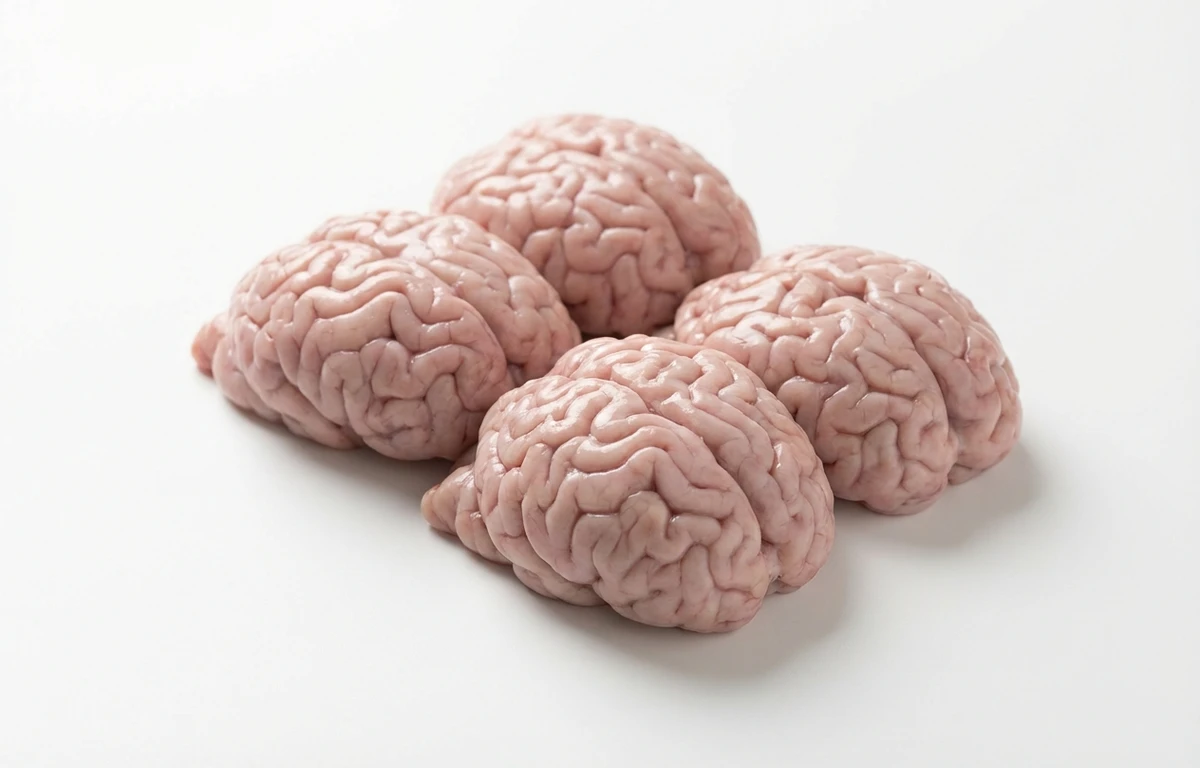
raw New Zealand lamb brains.
VegetarianVeganGluten-freeDairy-freeNut-freePeanut-freeSoy-freeEgg-freeShellfish-freeHoney-freeAlcohol-free
ALSO KNOWN AS
lamb brains
SERVING
CALORIES
118
PROTEIN
11.3g
CARBS
0g
FAT
8.0g
FIBER
0g
NUTRITION PROFILE · per 100 g
Everything in this ingredient.
MACRONUTRIENTS
Calories118kcal—
Protein11.3g23%
Carbohydrates0g0%
Fiber0g0%
Sugar0g0%
Total fat8.0g10%
Saturated fat1.0g5%
Trans fat0.03g—
Cholesterol2100mg700%
Water78.5g—
MINERALS
Sodium117mg5%
Potassium307mg7%
Calcium4.0mg0%
Iron1.1mg6%
Magnesium14mg3%
Phosphorus327mg26%
Zinc1.1mg10%
Copper0.30mg33%
Manganese0.03mg1%
Selenium13.5µg25%
VITAMINS
Vitamin A3.0µg0%
Vitamin C0mg0%
Vitamin D0µg0%
Vitamin E0.87mg6%
Thiamin (B1)0.10mg8%
Riboflavin (B2)0.20mg15%
Niacin (B3)3.8mg24%
Pantothenic acid (B5)1.9mg39%
Vitamin B60.09mg5%
Vitamin B1210.0µg416%
%DV based on a 2,000 cal diet. Source: USDA FoodData Central. A dash in the %DV column means there’s no established Daily Value for that nutrient.
MEASUREMENT CONVERSIONS
How much is what.
1 cup240g
1 tablespoon15g
1 teaspoon5g
1 ml1g
1 liter1000g
1 piece100g
HEALTH BENEFITS
Why eat it.
- ✓Extremely rich in omega-3 fatty acids, particularly DHA, which is vital for brain health, cognitive function, and nervous system development.
- ✓Excellent source of Vitamin B12, essential for red blood cell formation, neurological function, and DNA synthesis.
- ✓Provides high levels of phosphorus and selenium; phosphorus is crucial for bone and teeth formation, while selenium acts as a powerful antioxidant.
- ✓Contains high-quality, complete protein necessary for building and repairing tissues throughout the body.
COOKING TIPS
In the kitchen.
- 1Always soak brains in cold, salted water for at least 2 hours, changing the water several times, to purge any blood. Carefully peel off the thin outer membrane before cooking.
- 2A common first step is to gently poach the cleaned brains in a seasoned liquid (court bouillon) for 15-20 minutes until firm. This makes them easier to handle for other preparations.
- 3After poaching, they can be sliced, coated in flour or breadcrumbs, and pan-fried until golden and crispy. This preparation is often called 'cervelle de veau meunière' when done with veal brains.
- 4The delicate, creamy texture pairs well with acidic ingredients like lemon juice, capers, or vinegar-based sauces to cut through the richness.
STORAGE
Keep it fresh.
- Lamb brains are highly perishable. Store them in the coldest part of the refrigerator (below 40°F or 4°C) and cook within 24 hours of purchase.
- For longer storage, freeze immediately. Wrap tightly in plastic wrap and then place in a freezer-safe bag. Can be frozen for up to 3 months at 0°F (-18°C).
FAQ
Frequently asked questions.
Is lamb brain healthy?
Yes, lamb brains are highly nutritious, offering an excellent source of omega-3 fatty acids, particularly DHA, which supports brain health and cognitive function. They are also rich in Vitamin B12, phosphorus, and selenium, all vital for various bodily functions. However, they are high in cholesterol, so moderation is key.
What are the key nutritional benefits of lamb brains?
Lamb brains are exceptionally rich in DHA, a crucial omega-3 fatty acid for brain and nervous system development. They provide high levels of Vitamin B12, essential for energy and red blood cell formation, and are a good source of phosphorus for bone health and selenium, a powerful antioxidant. They also offer complete, high-quality protein.
How many calories, protein, and fat are in lamb brains?
Per 100g, raw New Zealand lamb brains contain approximately 118 calories. They provide about 11.33g of protein and 8.03g of fat, with 0g of carbohydrates. This makes them a nutrient-dense food, particularly for protein and healthy fats.
Is lamb brain keto-friendly or low-carb?
Yes, lamb brains are very keto-friendly and low-carb, as they contain 0g of carbohydrates per 100g. Their high fat and moderate protein content make them suitable for ketogenic diets, providing essential nutrients without adding carbs.
Is lamb brain gluten-free?
Yes, lamb brain is naturally gluten-free. As an unprocessed animal product, it does not contain any gluten-containing grains or ingredients. It is a safe option for individuals following a gluten-free diet.
How do you prepare and cook lamb brains?
Before cooking, lamb brains typically need to be cleaned by removing any membranes and blood vessels, then soaked in cold water or milk. They are often blanched briefly before being pan-fried, scrambled, or breaded and deep-fried. Common preparations include sautéing with butter and herbs or incorporating them into omelets.
What is the taste and texture of lamb brains?
Lamb brains have a very delicate, mild, and slightly sweet flavor, often described as subtly metallic or earthy. Their texture is remarkably soft and creamy, almost custard-like, which can be quite rich when cooked. They readily absorb the flavors of accompanying ingredients.
How should raw lamb brains be stored?
Raw lamb brains should be stored in the coldest part of your refrigerator, ideally in an airtight container or tightly wrapped, and consumed within 1-2 days. For longer storage, they can be frozen for up to 3-4 months. Thaw them slowly in the refrigerator before use.
Can you eat lamb brains raw?
It is generally not recommended to eat lamb brains raw due to potential risks of bacterial contamination. Cooking them thoroughly to an internal temperature of 160°F (71°C) is crucial to ensure safety and eliminate any harmful pathogens.
Are there any health concerns or risks associated with eating lamb brains?
While nutritious, lamb brains are very high in cholesterol, which might be a concern for individuals managing cholesterol levels. There's also a theoretical, albeit extremely low, risk of prion diseases (like BSE in cattle), but this is not a significant concern with lamb in regions like New Zealand due to strict animal health regulations.



















