
Meat
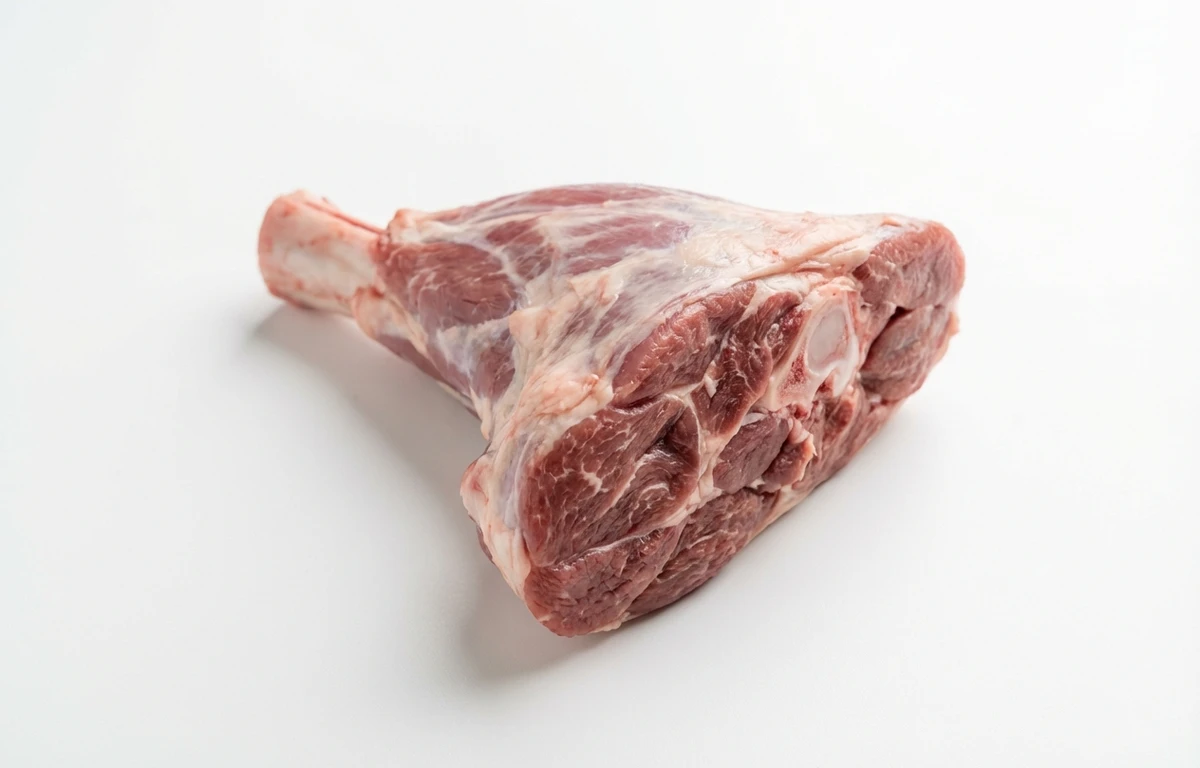
raw New Zealand lamb foreshank.
VegetarianVeganGluten-freeDairy-freeNut-freePeanut-freeSoy-freeEgg-freeShellfish-freeHoney-freeAlcohol-free
ALSO KNOWN AS
NZ lamb shanklamb forelegfront lamb shankforeshank of lamb
SERVING
CALORIES
186
PROTEIN
18.5g
CARBS
0g
FAT
12.4g
FIBER
0g
NUTRITION PROFILE · per 100 g
Everything in this ingredient.
MACRONUTRIENTS
Calories186kcal—
Protein18.5g37%
Carbohydrates0g0%
Fiber0g0%
Sugar0g0%
Total fat12.4g16%
Saturated fat5.2g26%
Trans fat0.50g—
Cholesterol72mg24%
Water68.2g—
MINERALS
Sodium65mg3%
Potassium280mg6%
Calcium12mg1%
Iron1.9mg11%
Magnesium21mg5%
Phosphorus175mg14%
Zinc4.8mg44%
Copper0.12mg13%
Manganese0.02mg1%
Selenium22.5µg41%
VITAMINS
Vitamin A0µg0%
Vitamin C0mg0%
Vitamin D0.10µg1%
Vitamin E0.20mg1%
Vitamin K0µg0%
Thiamin (B1)0.11mg9%
Riboflavin (B2)0.22mg17%
Niacin (B3)5.8mg36%
Pantothenic acid (B5)0.65mg13%
Vitamin B60.14mg8%
Folate (B9)3.0µg1%
Vitamin B122.3µg96%
%DV based on a 2,000 cal diet. Source: USDA FoodData Central. A dash in the %DV column means there’s no established Daily Value for that nutrient.
MEASUREMENT CONVERSIONS
How much is what.
1 cup240g
1 tablespoon15g
1 teaspoon5g
1 oz28.4g
1 lb453.6g
1 ml1g
1 liter1000g
1 piece400g
HEALTH BENEFITS
Why eat it.
- ✓Excellent source of high-quality complete protein
- ✓Rich in Vitamin B12 for nervous system health
- ✓High bioavailable zinc content for immune support
- ✓Contains heme iron which is easily absorbed by the body
- ✓Provides essential amino acids for muscle repair
COOKING TIPS
In the kitchen.
- 1Best suited for low and slow cooking methods like braising
- 2Do not remove the connective tissue as it transforms into silky gelatin
- 3Sear the exterior in a hot pan before braising to develop deep umami flavor
STORAGE
Keep it fresh.
- Store in the coldest part of the refrigerator for up to 3 days
- Keep in original vacuum-sealed packaging until ready to use
- Freeze for up to 9 months if wrapped tightly in freezer-proof material
FAQ
Frequently asked questions.
How long can I store raw lamb foreshank in the fridge?
Raw lamb foreshank should be stored in the refrigerator at 4°C (40°F) or below and used within 2 to 3 days of purchase.
Can I freeze lamb foreshank?
Yes, it freezes very well. Wrap it tightly in plastic wrap and then foil or a freezer bag to prevent freezer burn; it will last 6-9 months.
What is the difference between a foreshank and a hindshank?
The foreshank comes from the front legs and is generally smaller and slightly leaner than the hindshank, though both require slow cooking.
What are the best substitutes for lamb foreshank?
Lamb hindshanks are the best substitute. Beef shanks or lamb shoulder (cut into large chunks) also work well for slow-braised recipes.
Do I need to remove the bone before cooking?
No, the bone should be left in during cooking as it provides significant flavor and helps the meat retain its shape during long braises.
How do I know if the lamb is high quality?
Look for meat that is fine-grained and pinkish-red. The fat should be white and firm, not yellow or crumbly.
Is lamb foreshank a lean cut of meat?
It is moderately lean compared to the shoulder or belly, but it contains significant connective tissue (collagen) that requires long cooking to soften.
What is the best way to prepare lamb foreshank?
Braising in liquid (like wine, stock, or tomato sauce) at a low temperature for 2.5 to 3.5 hours until the meat is fork-tender.
Is New Zealand lamb different from American lamb?
New Zealand lamb is typically grass-fed, resulting in a slightly smaller size and a more pronounced, 'gamey' or earthy flavor profile.



















