
Meat
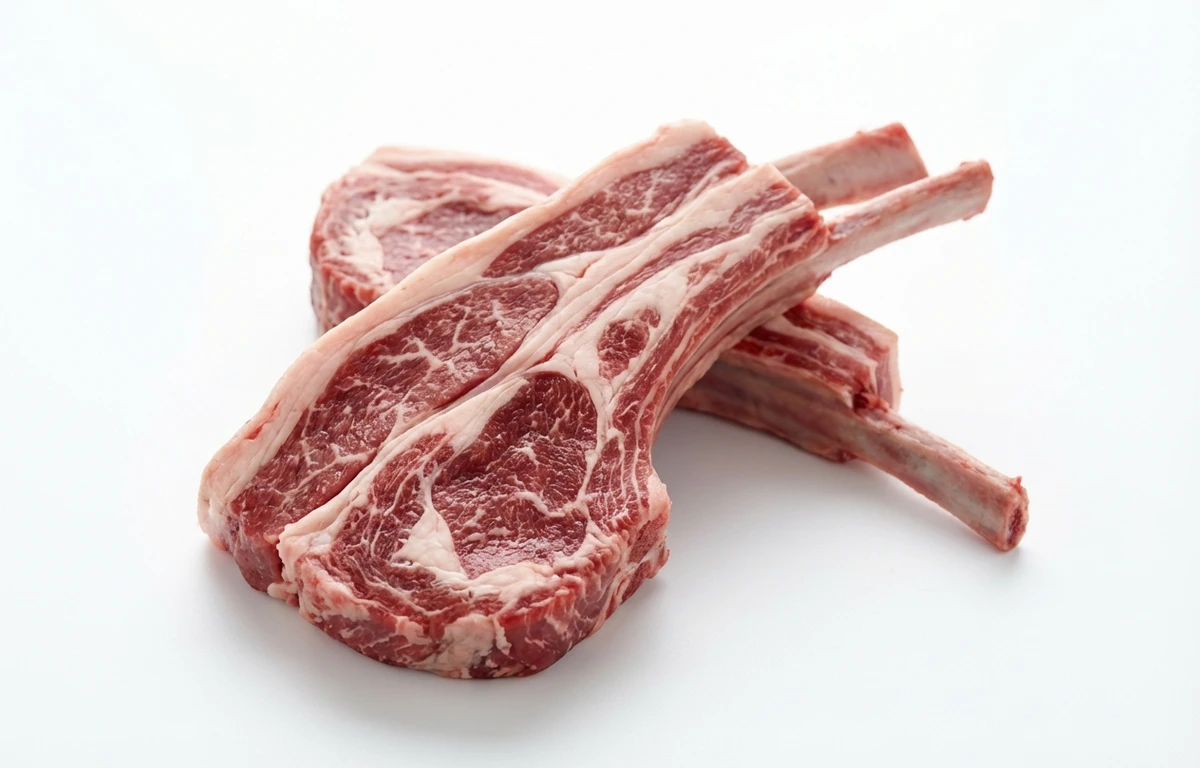
raw new zealand lamb rib.
VegetarianVeganGluten-freeDairy-freeNut-freePeanut-freeSoy-freeEgg-freeShellfish-freeHoney-freeAlcohol-free
SERVING
CALORIES
320
PROTEIN
16.5g
CARBS
0g
FAT
28g
FIBER
0g
NUTRITION PROFILE · per 100 g
Everything in this ingredient.
MACRONUTRIENTS
Calories320kcal—
Protein16.5g33%
Carbohydrates0g0%
Fiber0g0%
Sugar0g0%
Total fat28g36%
Saturated fat13.5g68%
Trans fat1.2g—
Cholesterol85mg28%
Water55g—
MINERALS
Sodium65mg3%
Potassium240mg5%
Calcium12mg1%
Iron1.6mg9%
Magnesium18mg4%
Phosphorus160mg13%
Zinc3.8mg35%
Copper0.10mg11%
Manganese0.02mg1%
Selenium22µg40%
VITAMINS
Vitamin A0µg0%
Vitamin C0mg0%
Vitamin D0.10µg1%
Vitamin E0.20mg1%
Vitamin K3.5µg3%
Thiamin (B1)0.10mg8%
Riboflavin (B2)0.20mg15%
Niacin (B3)5.2mg33%
Pantothenic acid (B5)0.60mg12%
Vitamin B60.12mg7%
Folate (B9)3.0µg1%
Vitamin B122.2µg92%
%DV based on a 2,000 cal diet. Source: USDA FoodData Central. A dash in the %DV column means there’s no established Daily Value for that nutrient.
MEASUREMENT CONVERSIONS
How much is what.
1 oz28.4g
1 lb453.6g
1 piece100g
HEALTH BENEFITS
Why eat it.
- ✓Excellent source of high-quality complete protein, essential for muscle building, maintenance, and repair.
- ✓Rich in heme iron, a highly bioavailable form that helps prevent iron-deficiency anemia and supports energy levels.
- ✓Provides significant amounts of Vitamin B12, crucial for nerve function, DNA synthesis, and red blood cell formation.
- ✓Good source of zinc, which is vital for immune system function, wound healing, and cell growth.
COOKING TIPS
In the kitchen.
- 1For tender, fall-off-the-bone meat, use a low-and-slow cooking method like braising, slow-roasting, or smoking before finishing with a high-heat sear.
- 2Season generously with classic lamb pairings such as garlic, rosemary, thyme, oregano, salt, and pepper to enhance its rich flavor.
- 3To render the fat and create a crispy exterior, score the fat cap and start cooking fat-side down in a hot pan or grill.
- 4Always allow the cooked ribs to rest for at least 5-10 minutes before slicing to allow the juices to redistribute, ensuring a more moist and flavorful result.
STORAGE
Keep it fresh.
- Refrigerate raw lamb ribs immediately at 40°F (4°C) or below in their original packaging or an airtight container. Use within 3 to 5 days.
- For long-term storage, wrap tightly in plastic wrap and heavy-duty foil or place in a freezer bag. Freeze at 0°F (-18°C) for up to 9 months for optimal quality.
- Thaw frozen lamb ribs safely in the refrigerator over 24 hours. Avoid thawing at room temperature to prevent bacterial growth.
FAQ
Frequently asked questions.
Is New Zealand lamb rib healthy?
New Zealand lamb rib is a nutrient-dense meat that provides high-quality protein, Vitamin B12, and zinc. While it offers significant health benefits for muscle repair and immune support, it is high in calories and saturated fat, so it should be enjoyed in moderation.
How much protein and fat are in lamb ribs?
A 100g serving of raw lamb rib contains approximately 16.5g of protein and 28g of fat. With 320 calories per 100g, it is a high-energy food source compared to leaner cuts like the leg or loin.
Is lamb rib keto-friendly?
Yes, lamb ribs are excellent for a ketogenic or low-carb diet as they contain 0g of carbohydrates. The high fat content (28g per 100g) makes them an ideal choice for those looking to meet their daily fat macros.
What are the specific health benefits of New Zealand lamb?
It is an excellent source of heme iron, which is highly bioavailable and helps prevent anemia. Additionally, it provides Vitamin B12 for nerve function and zinc, which is vital for wound healing and immune health.
How do you cook New Zealand lamb ribs?
Because they are high in fat and connective tissue, lamb ribs are best prepared using slow-cooking methods like braising, slow-roasting, or smoking. This allows the fat to render and the meat to become tender and succulent.
Is New Zealand lamb grass-fed?
Most New Zealand lamb is grass-fed and pasture-raised year-round. This natural diet typically results in meat that is higher in Omega-3 fatty acids and Vitamin E compared to grain-fed alternatives.
How long can I store raw lamb ribs in the refrigerator?
Raw lamb ribs should be kept in the coldest part of your fridge and used within 3 to 5 days of purchase. Ensure they are tightly wrapped or kept in an airtight container to prevent the meat from drying out or absorbing other odors.
Can I freeze lamb ribs?
Yes, lamb ribs freeze very well. For the best quality, vacuum-seal them or wrap them tightly in freezer-safe foil and plastic wrap; they will maintain peak flavor and texture for 6 to 9 months.
What do lamb ribs taste like?
Lamb ribs have a rich, robust, and slightly earthy flavor that is more pronounced than beef. The high fat content gives the meat a buttery texture and a savory depth that pairs well with herbs like rosemary and thyme.
Is lamb rib gluten-free?
Raw lamb rib is naturally gluten-free. However, if you are buying pre-marinated ribs or using store-bought spice rubs, check the labels carefully as they may contain wheat-based thickeners or malt-derived flavorings.



















