
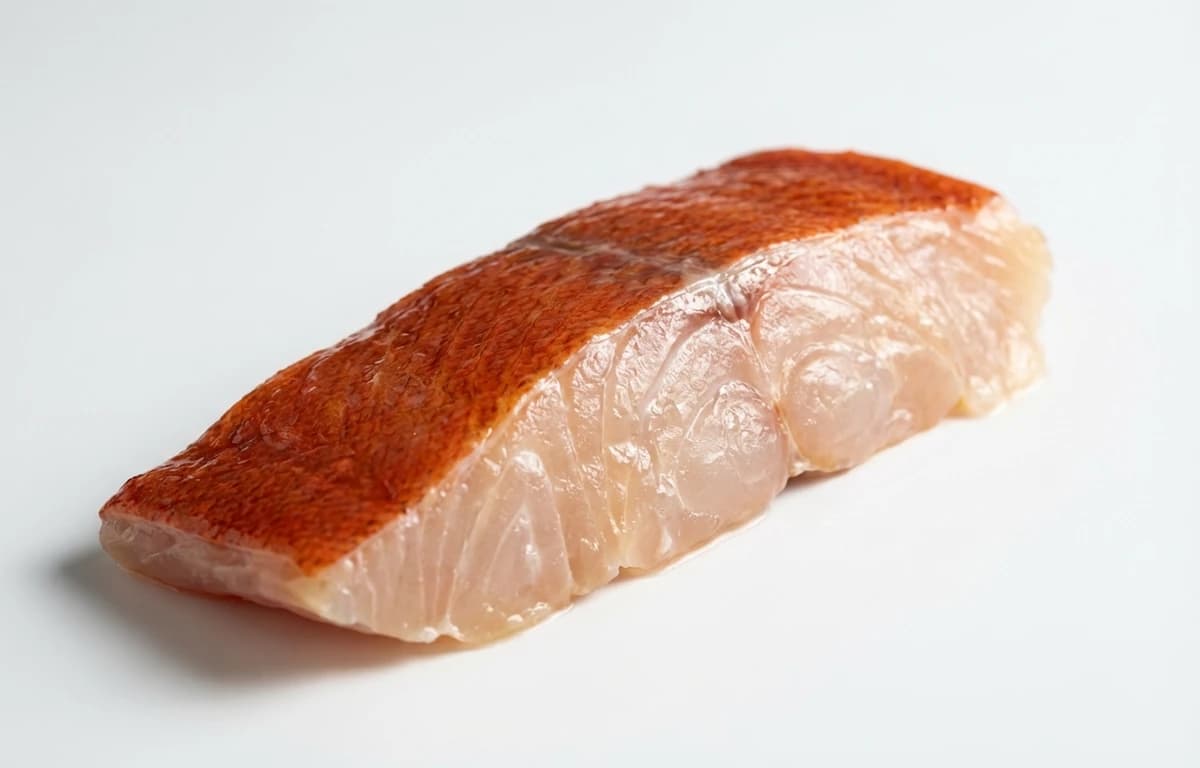
Loading...
Also known as: orange roughy, deep sea perch, red roughy, slimehead, hoplostethus atlanticus
Per 100g
Nutrition data source: USDA FoodData Central
Common measurement equivalents in grams
Raw orange roughy should be stored in the refrigerator and used within 1 to 2 days for optimal safety and quality.
Yes, it can be frozen for up to 3 to 4 months. Wrap it tightly in moisture-proof foil or plastic wrap to prevent freezer burn.
Tilapia, cod, haddock, or snapper are excellent substitutes due to their similar mild flavor and white, flaky texture.
Yes, orange roughy is a long-lived fish and is known to accumulate higher levels of mercury; it is recommended to limit consumption, especially for pregnant women.
Look for fillets that are firm to the touch, have a mild sea-like scent (not 'fishy'), and appear moist rather than dry or slimy.
Baking, broiling, or pan-searing are the best methods. Because it is lean, it benefits from being cooked with a little moisture or fat.
Fillets are typically sold deboned, but you should always check for small pin bones before cooking or serving.
Sustainability varies by region. It was heavily overfished in the past, so it is best to check current seafood watch guides for specific catch locations.
It has a very mild, delicate, and slightly sweet flavor with a firm, large-flaked texture.
raw orange roughy is a versatile ingredient found in cuisines around the world. With 126 calories per 100g and 14.7 grams of protein, it's a nutritious addition to many dishes.
Explore more ingredients in the seafood category with complete nutrition information.
View all seafood →Discover 0 recipes featuring raw orange roughy with step-by-step instructions.
Browse recipes →Explore more ingredients similar to raw orange roughy.
The most-searched ingredients on CraftMyMeals.
The safest way is to thaw it overnight in the refrigerator. For faster thawing, place it in a sealed bag under cold running water.