Vegetable
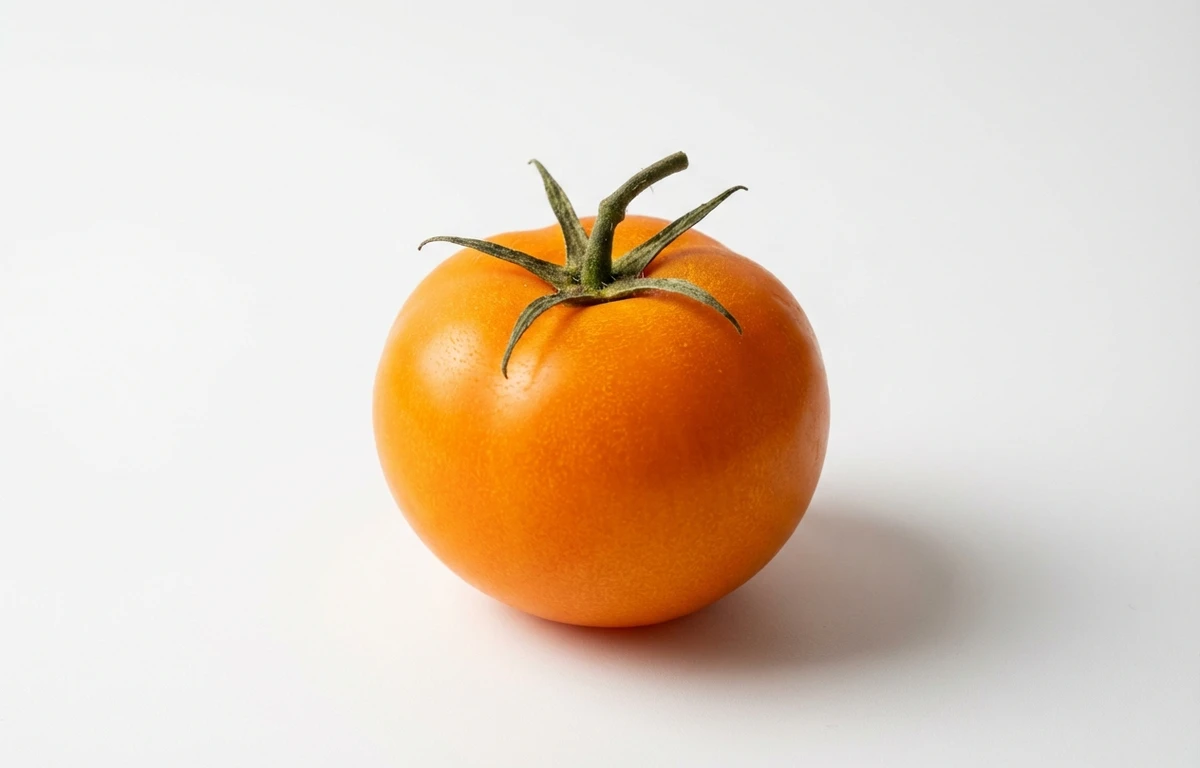
raw orange tomato.
VegetarianVeganGluten-freeDairy-freeNut-freePeanut-freeSoy-freeEgg-freeShellfish-freeHoney-freeAlcohol-free
SERVING
CALORIES
18
PROTEIN
0.90g
CARBS
3.9g
FAT
0.20g
FIBER
1.2g
NUTRITION PROFILE · per 100 g
Everything in this ingredient.
MACRONUTRIENTS
Calories18kcal—
Protein0.90g2%
Carbohydrates3.9g1%
Fiber1.2g4%
Sugar2.6g5%
Total fat0.20g0%
Saturated fat0.03g0%
Trans fat0g—
Cholesterol0mg0%
Water94.5g—
MINERALS
Sodium5.0mg0%
Potassium237mg5%
Calcium10mg1%
Iron0.27mg2%
Magnesium11mg3%
Phosphorus24mg2%
Zinc0.17mg2%
Copper0.06mg7%
Manganese0.11mg5%
Selenium0µg0%
VITAMINS
Vitamin A42µg5%
Vitamin C13.7mg15%
Vitamin D0µg0%
Vitamin E0.54mg4%
Vitamin K7.9µg7%
Thiamin (B1)0.04mg3%
Riboflavin (B2)0.02mg2%
Niacin (B3)0.59mg4%
Pantothenic acid (B5)0.09mg2%
Vitamin B60.08mg5%
Folate (B9)15µg4%
Vitamin B120µg0%
%DV based on a 2,000 cal diet. Source: USDA FoodData Central. A dash in the %DV column means there’s no established Daily Value for that nutrient.
HEALTH BENEFITS
Why eat it.
- ✓Rich in a form of lycopene (tetra-cis-lycopene) that may be more easily absorbed by the body, offering antioxidant benefits and potentially reducing the risk of certain cancers.
- ✓Excellent source of Vitamin C, which supports immune function, skin health, and collagen production.
- ✓Provides a good amount of Vitamin A, essential for maintaining healthy vision, skin, and immune response.
- ✓Low in calories and high in water content, contributing to hydration and weight management.
COOKING TIPS
In the kitchen.
- 1Their lower acidity and sweeter flavor make them ideal for eating raw in salads, sandwiches, and fresh salsas where their delicate taste can shine.
- 2The vibrant orange color adds a beautiful visual contrast to dishes. Use them to brighten up bruschetta, caprese salads, or pasta dishes.
- 3When cooked, their sweetness intensifies. They are excellent for creating a mild, sweet tomato sauce or for roasting with herbs and olive oil.
STORAGE
Keep it fresh.
- Store at cool room temperature (around 60-70°F or 15-21°C) away from direct sunlight for up to a week to preserve optimal flavor and texture.
- Avoid refrigerating whole tomatoes, as cold temperatures can degrade their flavor and cause a mealy texture. Only refrigerate after they have been cut.
FAQ
Frequently asked questions.
Are orange tomatoes healthier than red tomatoes?
Orange tomatoes are uniquely healthy because they contain tetra-cis-lycopene, a form of lycopene that the human body absorbs more efficiently than the lycopene found in red tomatoes. They are also excellent sources of Vitamin C and Vitamin A, supporting both immune function and vision.
How many calories and carbs are in orange tomatoes?
Orange tomatoes are very low in calories, containing approximately 18 calories per 100g. They provide about 3.9g of carbohydrates and 0.9g of protein, making them a nutrient-dense, low-energy food choice.
Are orange tomatoes good for weight loss?
Yes, orange tomatoes are excellent for weight loss due to their high water content and low calorie density. Their natural fiber and hydration levels help you feel full longer while providing essential vitamins without many calories.
Are orange tomatoes keto-friendly?
Yes, orange tomatoes are keto-friendly. With only 3.9g of total carbohydrates per 100g, they can be included in a ketogenic diet in moderation to provide essential antioxidants and vitamins.
Are orange tomatoes vegan and gluten-free?
Yes, orange tomatoes are a natural, unprocessed plant food. They are 100% vegan and naturally gluten-free, making them suitable for almost any dietary restriction or preference.
What do orange tomatoes taste like compared to red ones?
Orange tomatoes generally have a milder, sweeter, and less acidic flavor than red tomatoes. They often have fruity undertones, which makes them a popular choice for eating raw or in fresh summer salads.
Can I cook orange tomatoes or should they be eaten raw?
You can enjoy them both ways. While eating them raw preserves their high Vitamin C content, cooking them can help concentrate their flavors and make certain antioxidants more bioavailable, though it may change their vibrant color slightly.
How should I store orange tomatoes to keep them fresh?
Store orange tomatoes at room temperature away from direct sunlight to maintain their flavor and texture. Avoid refrigerating them unless they are fully ripe and you need to prevent spoilage, as cold temperatures can make the flesh mealy.
How can I tell if an orange tomato is ripe?
A ripe orange tomato should have a deep, uniform orange color and feel heavy for its size. It should be firm to the touch but yield slightly to gentle pressure, and it should have a faint, sweet aroma at the stem.
Are orange tomatoes less acidic than red tomatoes?
Generally, yes. Orange tomatoes are often preferred by people with acid sensitivity because they tend to have a higher sugar-to-acid ratio than red varieties, resulting in a smoother, less tangy flavor profile.