
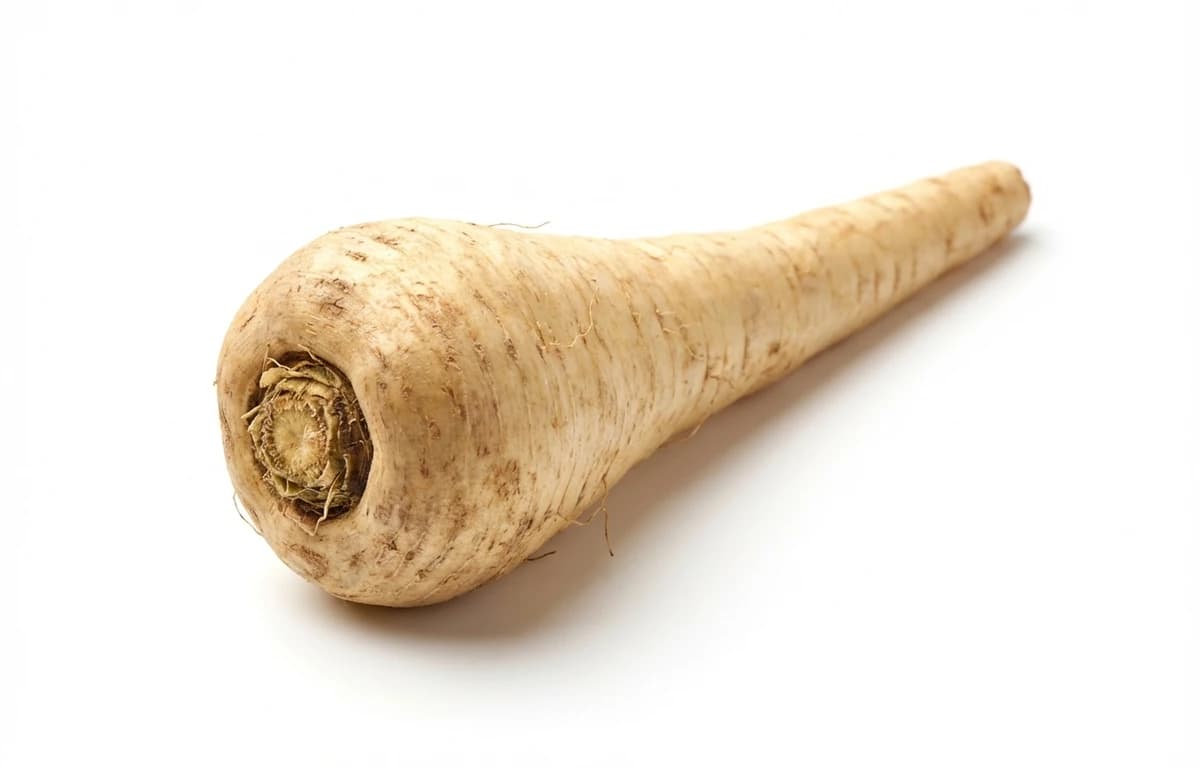
raw parsnip
Also known as:
Loading...
Also known as:
Per 100g
Nutrition data source: USDA FoodData Central
Common measurement equivalents in grams
Raw parsnips typically last 2 to 3 weeks in the refrigerator if kept in a plastic bag in the crisper drawer.
Yes, but it is best to blanch them first. Peel and cut them, boil for 2-3 minutes, plunge into ice water, dry, and then freeze for up to 10-12 months.
Carrots are the closest substitute in texture, while parsley roots or celery roots offer a similar earthy flavor profile.
Young, small parsnips have thin skins and only need a good scrubbing. Larger, older parsnips often have tough, bitter skins that should be peeled.
Look for firm, small to medium-sized roots with smooth skin. Avoid those that are limp, shriveled, or have many brown spots.
Yes, parsnips can be eaten raw. They are sweet and crunchy, making them a great addition to salads when grated or thinly shaved.
Very large parsnips often develop a fibrous, woody core. If you have large ones, it is best to cut them in half lengthwise and remove the tough center.
Parsnips have more natural sugar than carrots, especially after they have been exposed to a frost, which converts their starch into sugar.
They pair excellently with maple syrup, honey, thyme, rosemary, nutmeg, garlic, and butter.
raw parsnip is a versatile ingredient found in cuisines around the world. With 75 calories per 100g and 1.2 grams of protein, it's a nutritious addition to many dishes.
Explore more ingredients in the vegetable category with complete nutrition information.
View all vegetable →Discover 0 recipes featuring raw parsnip with step-by-step instructions.
Browse recipes →Yes, parsnips are a naturally gluten-free root vegetable.