
Loading...
Per 100g
Nutrition data source: USDA FoodData Central
Common measurement equivalents in grams
Pork chitterlings are a good source of complete protein, Vitamin B12, and essential minerals like zinc and selenium. However, they are relatively high in fat (16.61g per 100g) and cholesterol, so they should be consumed in moderation as part of a balanced diet.
They provide high levels of Vitamin B12 for nerve health and red blood cell formation, as well as zinc for immune support. Additionally, they are a natural source of collagen, which can benefit skin, hair, and joint health.
Yes, raw pork chitterlings are excellent for a keto or low-carb diet because they contain 0g of carbohydrates. Their high fat and moderate protein content align well with ketogenic nutritional requirements.
In their raw, natural state, pork chitterlings are 100% gluten-free. If you are purchasing pre-packaged or seasoned versions, check the label for additives, and be mindful of flour used if you choose to fry them.
Cleaning is the most critical step; they must be rinsed thoroughly multiple times in cold water to remove all debris. Health experts recommend boiling them for at least 5 minutes before cleaning to kill harmful bacteria like Yersinia enterocolitica.
Chitterlings have a very mild, earthy flavor and a distinctively chewy, tender texture. Because they are mild, they readily absorb the flavors of the aromatics, vinegar, and spices they are simmered with.
After cleaning, chitterlings typically require slow-cooking for 3 to 5 hours until they are completely tender. They should be simmered with onions, garlic, and vinegar to help mellow their strong natural aroma.
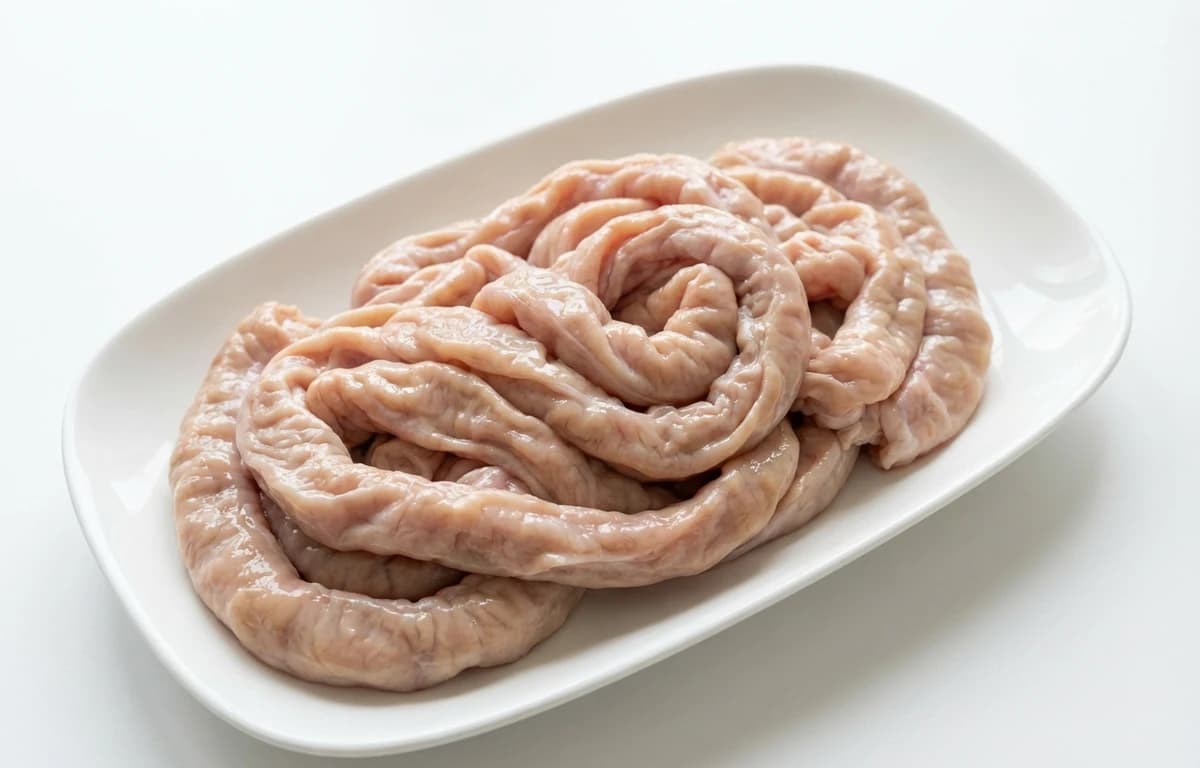
raw pork chitterlings is a versatile ingredient found in cuisines around the world. With 182 calories per 100g and 7.64 grams of protein, it's a nutritious addition to many dishes.
Explore more ingredients in the meat category with complete nutrition information.
View all meat →Discover 0 recipes featuring raw pork chitterlings with step-by-step instructions.
Browse recipes →Raw chitterlings are highly perishable and should be stored in the coldest part of the fridge for no more than 1 to 2 days. If you don't plan to cook them immediately, they can be frozen for up to 3 or 4 months.
While they have a naturally strong scent, a pungent, sour, or ammonia-like odor is a sign of spoilage. You should also discard them if they appear greyish, greenish, or feel excessively slimy to the touch.
Yes, chitterlings are safe for diabetics as they have a glycemic index of zero and will not spike blood sugar levels. However, because people with diabetes have a higher risk of heart disease, the high saturated fat content should be monitored.