Meat
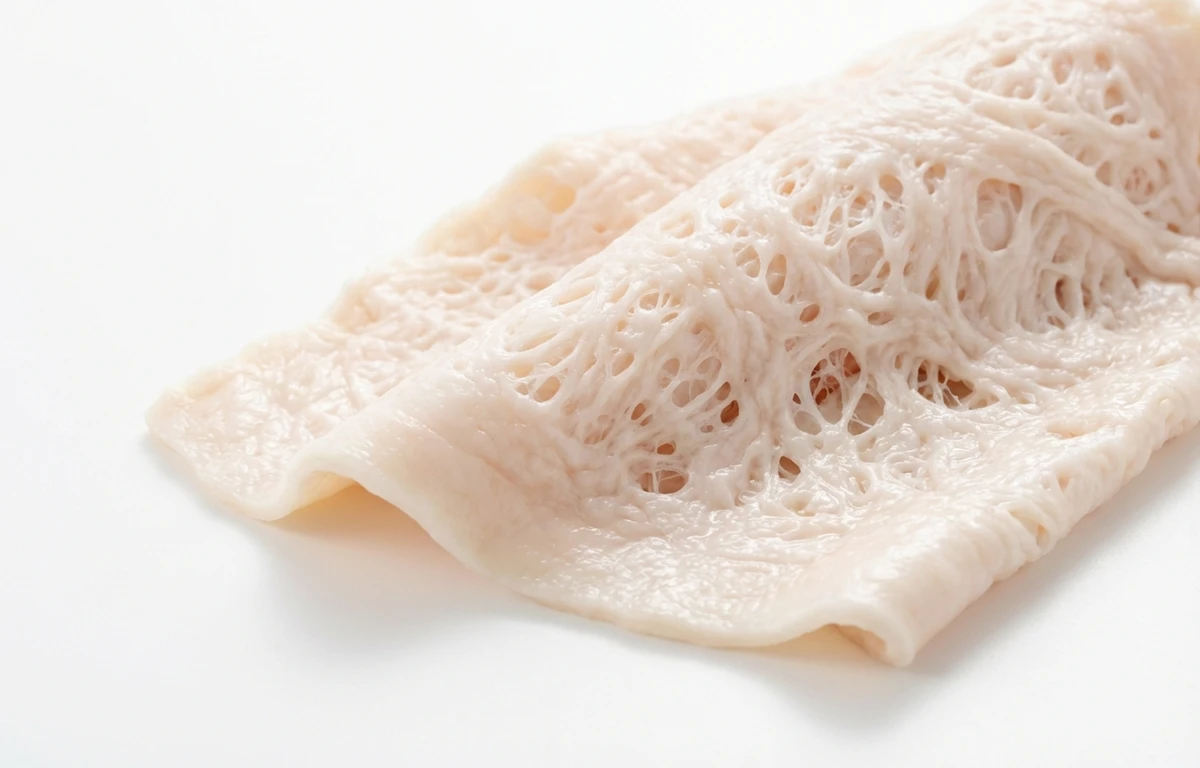
raw pork leaf fat.
VegetarianVeganGluten-freeDairy-freeNut-freePeanut-freeSoy-freeEgg-freeShellfish-freeHoney-freeAlcohol-freeHalalKosher
ALSO KNOWN AS
pork leaf fat
SERVING
CALORIES
902
PROTEIN
0.10g
CARBS
0g
FAT
100g
FIBER
0g
NUTRITION PROFILE · per 100 g
Everything in this ingredient.
MACRONUTRIENTS
Calories902kcal—
Protein0.10g0%
Carbohydrates0g0%
Fiber0g0%
Sugar0g0%
Total fat100g128%
Saturated fat39.2g196%
Trans fat0g—
Cholesterol95mg32%
Water0.20g—
MINERALS
Sodium0mg0%
Potassium0mg0%
Calcium0mg0%
Iron0.10mg1%
Magnesium0mg0%
Phosphorus0mg0%
Zinc0.10mg1%
Copper0mg0%
Manganese0mg0%
Selenium0.20µg0%
VITAMINS
Vitamin A0µg0%
Vitamin C0mg0%
Vitamin D2.5µg13%
Vitamin E0.60mg4%
Vitamin K0µg0%
Thiamin (B1)0mg0%
Riboflavin (B2)0mg0%
Niacin (B3)0mg0%
Pantothenic acid (B5)0mg0%
Vitamin B60mg0%
Folate (B9)0µg0%
Vitamin B120µg0%
%DV based on a 2,000 cal diet. Source: USDA FoodData Central. A dash in the %DV column means there’s no established Daily Value for that nutrient.
MEASUREMENT CONVERSIONS
How much is what.
1 cup210.6g
1 tablespoon13.2g
1 teaspoon4.4g
1 oz28.4g
1 lb453.6g
1 ml0.9g
1 liter890g
HEALTH BENEFITS
Why eat it.
- ✓Rich source of monounsaturated fats, particularly oleic acid, which is associated with heart health.
- ✓A natural source of Vitamin D, a nutrient crucial for bone health, immune function, and mood regulation.
- ✓Provides a stable cooking fat for high-heat methods like frying, as it has a high smoke point and is less prone to oxidation than many vegetable oils.
- ✓Contains choline, an essential nutrient important for brain health, liver function, and nerve function.
COOKING TIPS
In the kitchen.
- 1To render into lard, chop the fat into small, uniform pieces and cook slowly over low heat, with a little water to prevent scorching, until the fat has melted and the solid pieces (cracklings) are golden.
- 2The rendered lard from leaf fat is prized in baking for creating exceptionally flaky pie crusts, biscuits, and pastries due to its neutral flavor and large crystal structure.
- 3Strain the hot, rendered lard through cheesecloth or a fine-mesh sieve to remove impurities for a pure, white, and smooth final product.
- 4The crispy cracklings left over from rendering can be seasoned with salt and eaten as a snack or used as a topping for salads and other dishes.
STORAGE
Keep it fresh.
- Refrigerate raw pork leaf fat in an airtight container or tightly wrapped for up to 5 days at or below 40°F (4°C).
- For longer storage, freeze the raw fat in an airtight, freezer-safe bag or container for up to 6 months at 0°F (-18°C).
FAQ
Frequently asked questions.
Is pork leaf fat healthy?
Pork leaf fat is a nutrient-dense source of monounsaturated fats, specifically oleic acid, which is linked to heart health. It is also a rare natural source of Vitamin D and contains choline, which supports brain and liver function. However, because it is 100% fat and high in calories, it should be consumed in moderation.
How many calories and fat are in pork leaf fat?
Pork leaf fat is extremely calorie-dense, providing approximately 902 calories per 100g. It consists of 100g of fat, with 0g of carbohydrates and only trace amounts (0.1g) of protein.
Is pork leaf fat keto-friendly?
Yes, pork leaf fat is ideal for a ketogenic or low-carb diet. Since it contains zero carbohydrates and is composed entirely of fat, it helps individuals reach their fat macro goals without affecting blood sugar levels.
What is the difference between leaf fat and regular pork fat?
Leaf fat is the internal fat found around the kidneys, whereas regular pork fat (back fat) comes from under the skin. Leaf fat is prized for its mild, neutral flavor and superior texture, making it the preferred choice for delicate pastries and baking.
How do you use pork leaf fat in cooking?
It is most commonly rendered into 'leaf lard' by heating it slowly over low heat until it melts. Once rendered, it is used to create exceptionally flaky pie crusts, biscuits, and pastries, or used as a stable oil for high-heat frying and sautéing.
Is pork leaf fat better for frying than vegetable oils?
Pork leaf fat is often considered superior for frying because it has a high smoke point and is more chemically stable than many polyunsaturated vegetable oils. This means it is less likely to oxidize or break down into harmful compounds when exposed to high heat.
How should I store raw pork leaf fat?
Raw leaf fat is highly perishable and should be stored in the refrigerator for no more than 2 to 3 days. For longer storage, wrap it tightly in airtight packaging and freeze it; it will remain high quality for up to 6 to 12 months.
Is pork leaf fat halal or kosher?
No, pork leaf fat is neither halal nor kosher. It is an animal fat derived from pigs, which are strictly prohibited in both Islamic and Jewish dietary laws.
Do I need to process raw leaf fat before using it in recipes?
While you can use small amounts of chopped raw fat in some savory dishes, it is best to 'render' it first. Rendering removes the connective tissue and moisture, leaving you with pure, white lard that is shelf-stable and easier to incorporate into doughs.
How can I tell if pork leaf fat has spoiled?
Fresh pork leaf fat should be bright white and have a very faint, clean smell. If it develops a sour or rancid odor, turns yellowish or grey, or becomes slimy to the touch, it has spoiled and should be discarded.