Meat
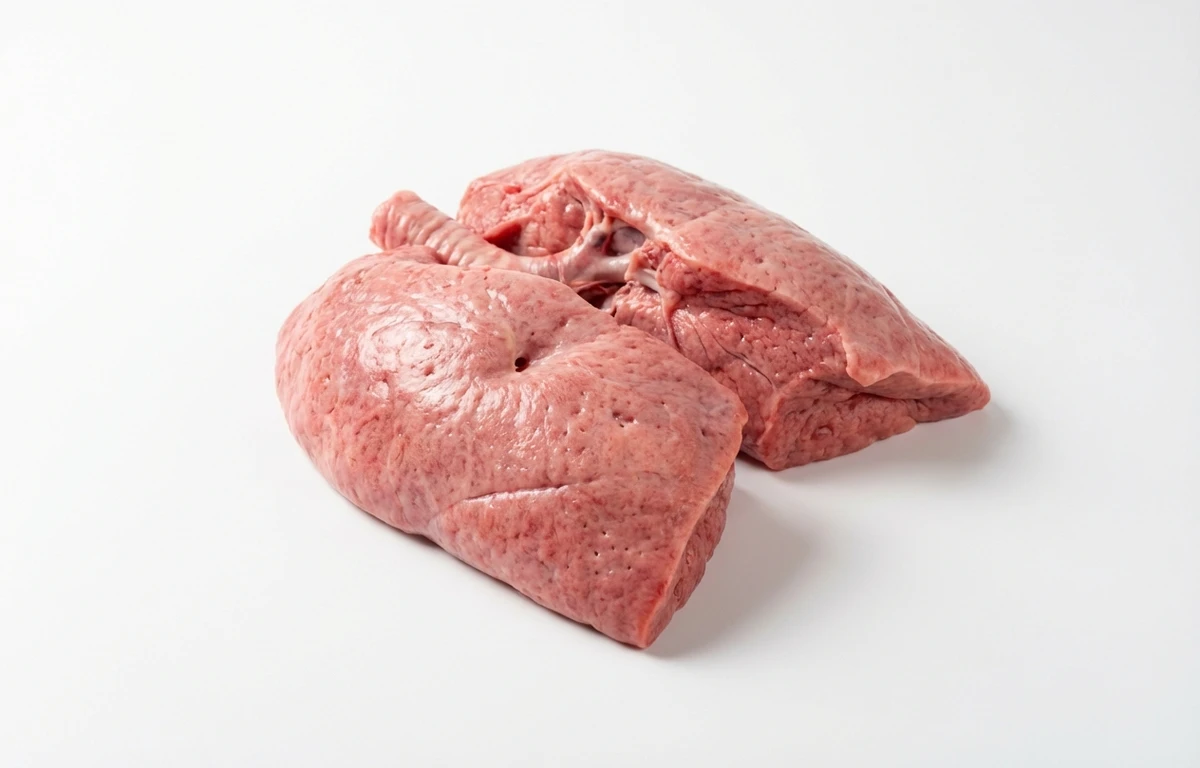
raw pork lungs.
VegetarianVeganGluten-freeDairy-freeNut-freePeanut-freeSoy-freeEgg-freeShellfish-freeHoney-freeAlcohol-freeHalalKosher
ALSO KNOWN AS
pig lungslightspork lightsraw pork lungspork lungs
SERVING
CALORIES
99
PROTEIN
16.6g
CARBS
0g
FAT
3.1g
FIBER
0g
NUTRITION PROFILE · per 100 g
Everything in this ingredient.
MACRONUTRIENTS
Calories99kcal—
Protein16.6g33%
Carbohydrates0g0%
Fiber0g0%
Sugar0g0%
Total fat3.1g4%
Saturated fat1.0g5%
Trans fat0g—
Cholesterol240mg80%
Water79.1g—
MINERALS
Sodium189mg8%
Potassium240mg5%
Calcium10mg1%
Iron18.9mg105%
Magnesium14mg3%
Phosphorus180mg14%
Zinc2.2mg20%
Copper0.10mg11%
Manganese0.02mg1%
Selenium40µg73%
VITAMINS
Vitamin A10µg1%
Vitamin C38mg42%
Vitamin D0.50µg3%
Vitamin E0.50mg3%
Vitamin K0.10µg0%
Thiamin (B1)0.10mg8%
Riboflavin (B2)0.30mg23%
Niacin (B3)3.5mg22%
Pantothenic acid (B5)0.80mg16%
Vitamin B60.10mg6%
Folate (B9)10µg3%
Vitamin B123.5µg146%
%DV based on a 2,000 cal diet. Source: USDA FoodData Central. A dash in the %DV column means there’s no established Daily Value for that nutrient.
MEASUREMENT CONVERSIONS
How much is what.
1 cup130g
1 oz28.4g
1 lb453.6g
HEALTH BENEFITS
Why eat it.
- ✓Excellent source of high-quality, complete protein for muscle maintenance and repair.
- ✓Rich in heme iron, a highly absorbable form that helps prevent iron-deficiency anemia.
- ✓Provides a significant amount of Vitamin B12, essential for nerve function and red blood cell formation.
- ✓Good source of essential minerals like selenium, which acts as an antioxidant, and phosphorus, which is vital for bone health.
COOKING TIPS
In the kitchen.
- 1Thoroughly clean before cooking by repeatedly flushing the airways with cold water to remove any impurities.
- 2Boil the lungs first in salted water to firm up the texture and clean them further before slicing and using in other preparations.
- 3Best suited for slow cooking methods like braising, stewing, or simmering in flavorful broths to tenderize their spongy texture.
- 4Pork lungs absorb flavors well, making them ideal for use in hearty soups, savory fillings for dumplings, or spicy stews.
STORAGE
Keep it fresh.
- Store raw pork lungs in the coldest part of the refrigerator (at or below 40°F / 4°C) and cook within 1-2 days.
- For longer storage, freeze immediately in an airtight, freezer-safe bag or container at 0°F (-18°C) for up to 3 months.
FAQ
Frequently asked questions.
Is pork lung healthy?
Yes, pork lung is a nutrient-dense organ meat that is low in calories and fat. It is an excellent source of high-quality protein, heme iron for blood health, and Vitamin B12, which is essential for nerve function and red blood cell formation.
How much protein and calories are in pork lung?
A 100g serving of raw pork lung contains approximately 99 calories and 16.6g of protein. It is a lean meat option with 0g of carbohydrates and only 3.1g of fat.
Is pork lung keto-friendly?
Yes, pork lung is highly keto-friendly and suitable for low-carb diets because it contains zero carbohydrates. Its high protein content makes it a great choice for those following a ketogenic lifestyle.
Is pork lung halal or kosher?
No, pork lung is neither halal nor kosher. Both Islamic and Jewish dietary laws strictly prohibit the consumption of any products derived from pigs, regardless of the specific organ or cut.
What does pork lung taste like?
Pork lung has a very mild, slightly metallic flavor and a unique, spongy, or airy texture. Because it is porous, it is excellent at absorbing the flavors of the spices, broths, or sauces it is cooked in.
How do you prepare raw pork lung for cooking?
It must be cleaned thoroughly by flushing the bronchial tubes with water until the tissue lightens in color. Most recipes recommend parboiling the lung in water with ginger or vinegar to remove impurities and firm the texture before slicing it for stir-fries or stews.
Can pork lung help with iron deficiency?
Yes, pork lung is rich in heme iron, which is the most absorbable form of iron for humans. Including it in your diet can help prevent iron-deficiency anemia and support healthy oxygen transport in the blood.
How should raw pork lung be stored?
Raw pork lung should be stored in an airtight container in the coldest part of the refrigerator and used within 1 to 2 days. For long-term storage, it can be frozen for up to 3 or 4 months.
How can you tell if pork lung has gone bad?
Fresh pork lung should be light pink or reddish with a mild scent. If it develops a greyish or brownish tint, feels excessively slimy, or emits a strong, sour, or off-putting odor, it has spoiled and should be discarded.
Is pork lung good for weight loss?
Pork lung is an excellent food for weight loss because it is very low in calories but high in protein. High-protein foods increase satiety, helping you feel full longer while maintaining muscle mass during a calorie deficit.