
Meat1 recipes
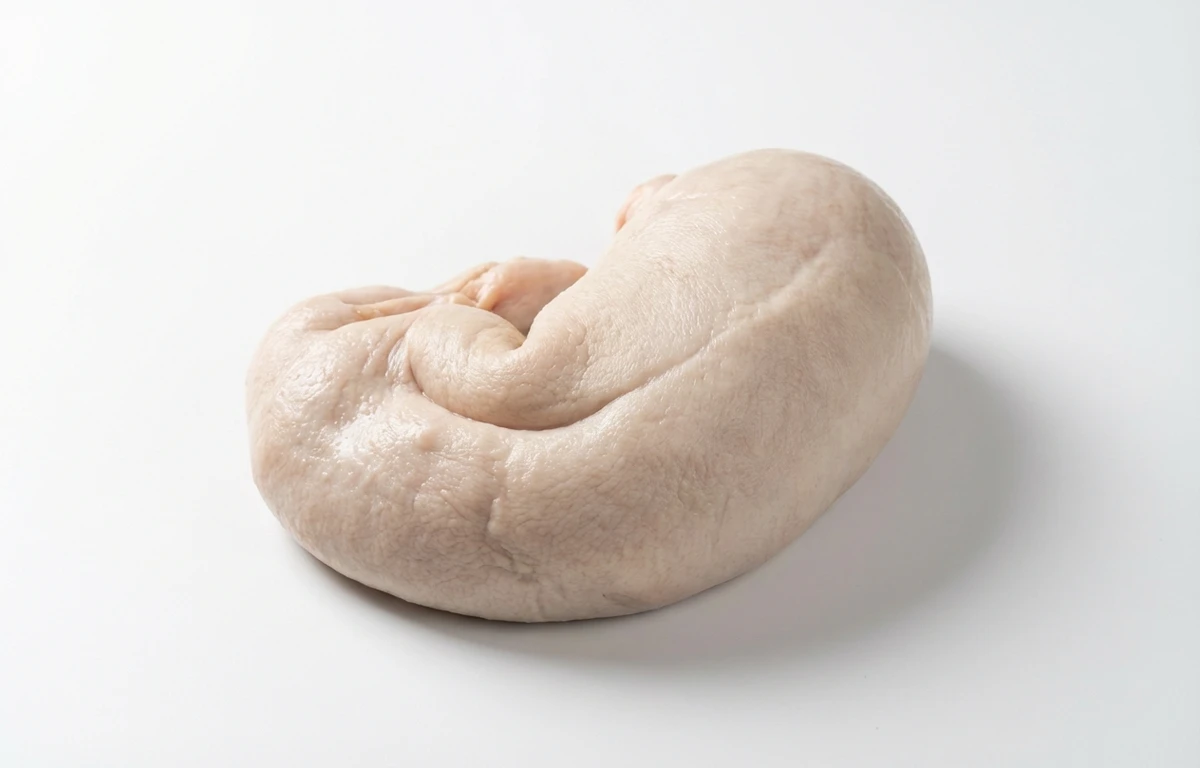
raw pork stomach.
VegetarianVeganGluten-freeDairy-freeNut-freePeanut-freeSoy-freeEgg-freeShellfish-freeHoney-freeAlcohol-freeHalalKosher
ALSO KNOWN AS
pork stomachraw hog mawraw pig stomachraw bucheraw pork tripe
SERVING
CALORIES
158
PROTEIN
17.2g
CARBS
0g
FAT
9.5g
FIBER
0g
NUTRITION PROFILE · per 100 g
Everything in this ingredient.
MACRONUTRIENTS
Calories158kcal—
Protein17.2g34%
Carbohydrates0g0%
Fiber0g0%
Sugar0g0%
Total fat9.5g12%
Saturated fat3.4g17%
Trans fat0g—
Cholesterol185mg62%
Water72g—
MINERALS
Sodium65mg3%
Potassium140mg3%
Calcium12mg1%
Iron1.8mg10%
Magnesium15mg4%
Phosphorus145mg12%
Zinc2.1mg19%
Copper0.10mg11%
Manganese0.02mg1%
Selenium25µg45%
VITAMINS
Vitamin A0µg0%
Vitamin C0mg0%
Vitamin D0.10µg1%
Vitamin E0.20mg1%
Vitamin K0µg0%
Thiamin (B1)0.05mg4%
Riboflavin (B2)0.25mg19%
Niacin (B3)2.5mg16%
Pantothenic acid (B5)0.60mg12%
Vitamin B60.10mg6%
Folate (B9)4.0µg1%
Vitamin B121.8µg75%
%DV based on a 2,000 cal diet. Source: USDA FoodData Central. A dash in the %DV column means there’s no established Daily Value for that nutrient.
MEASUREMENT CONVERSIONS
How much is what.
1 cup220g
1 oz28.4g
1 lb453.6g
1 piece600g
HEALTH BENEFITS
Why eat it.
- ✓High in protein for muscle repair
- ✓Good source of Vitamin B12 for nerve health
- ✓Contains essential minerals like selenium and zinc
- ✓Low in carbohydrates
- ✓Rich in collagen-forming connective tissue
COOKING TIPS
In the kitchen.
- 1Clean thoroughly by scrubbing with salt and vinegar to remove odor
- 2Parboil before slow cooking to ensure tenderness
- 3Best suited for braising, stewing, or deep-frying
STORAGE
Keep it fresh.
- Store in the coldest part of the refrigerator for up to 2 days
- Freeze in airtight bags for up to 4 months
- Keep raw stomach separate from cooked foods to avoid cross-contamination
FAQ
Frequently asked questions.
How do I clean raw pork stomach?
Turn it inside out, scrub vigorously with coarse salt and vinegar or lime juice, then rinse thoroughly under cold water until the slime is gone.
How long does it take to cook pork stomach?
It is a tough muscle and usually requires 1.5 to 3 hours of simmering or braising to become tender.
Can I freeze raw pork stomach?
Yes, it freezes well. Wrap it tightly in plastic wrap and place in a freezer bag for up to 4 months.
What is pork stomach called in Mexican cuisine?
It is commonly referred to as 'buche' and is often fried or braised for tacos.
Is pork stomach the same as tripe?
Technically, tripe refers to the stomach of ruminants like cows, but pork stomach is often colloquially called 'hog maw' or 'pork tripe'.
What are the nutritional benefits?
It is high in protein and B vitamins, though it is also relatively high in cholesterol.
How do I know if it's fresh?
Fresh pork stomach should be off-white or pale pink, firm to the touch, and have a mild, clean smell, not a pungent or sour odor.
What are common dishes using pork stomach?
Common dishes include Chinese braised hog maw, Pennsylvania Dutch stuffed hog maw, and Mexican buche tacos.
Should I remove the fat?
Yes, it is recommended to trim any excess external fat before cleaning and cooking for a better texture.



















