
Meat
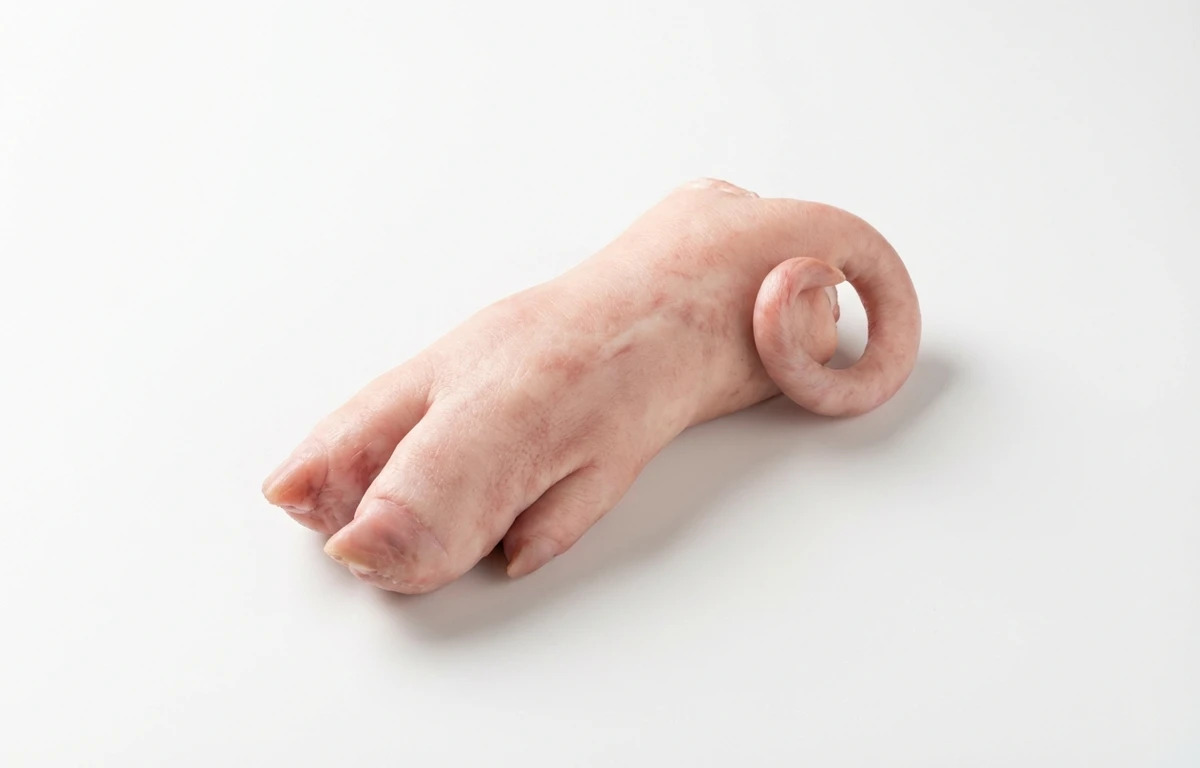
raw pork tail.
VegetarianVeganGluten-freeDairy-freeNut-freePeanut-freeSoy-freeEgg-freeShellfish-freeHoney-freeAlcohol-freeHalalKosher
ALSO KNOWN AS
pork tail
SERVING
CALORIES
378
PROTEIN
16.5g
CARBS
0g
FAT
34.2g
FIBER
0g
NUTRITION PROFILE · per 100 g
Everything in this ingredient.
MACRONUTRIENTS
Calories378kcal—
Protein16.5g33%
Carbohydrates0g0%
Fiber0g0%
Sugar0g0%
Total fat34.2g44%
Saturated fat12.5g63%
Trans fat0.10g—
Cholesterol95mg32%
Water48.5g—
MINERALS
Sodium55mg2%
Potassium180mg4%
Calcium15mg1%
Iron1.2mg7%
Magnesium12mg3%
Phosphorus130mg10%
Zinc2.1mg19%
Copper0.08mg9%
Manganese0.01mg0%
Selenium18.5µg34%
VITAMINS
Vitamin A0µg0%
Vitamin C0mg0%
Vitamin D0.50µg3%
Vitamin E0.20mg1%
Vitamin K0µg0%
Thiamin (B1)0.40mg33%
Riboflavin (B2)0.20mg15%
Niacin (B3)3.5mg22%
Pantothenic acid (B5)0.60mg12%
Vitamin B60.30mg18%
Folate (B9)4.0µg1%
Vitamin B120.80µg33%
%DV based on a 2,000 cal diet. Source: USDA FoodData Central. A dash in the %DV column means there’s no established Daily Value for that nutrient.
MEASUREMENT CONVERSIONS
How much is what.
1 cup150g
1 tablespoon9.4g
1 teaspoon3.1g
1 ml0.6g
1 liter625g
1 piece250g
HEALTH BENEFITS
Why eat it.
- ✓Excellent source of collagen and gelatin, which support joint health, skin elasticity, and gut integrity.
- ✓Provides complete protein containing all essential amino acids for muscle repair and growth.
- ✓Rich in minerals like phosphorus and calcium from the bones, contributing to bone and dental health.
- ✓Energy-dense due to its fat content, providing a substantial source of calories.
COOKING TIPS
In the kitchen.
- 1Best cooked using low-and-slow methods like braising, stewing, or simmering for several hours to break down tough connective tissue and render the meat tender.
- 2Ideal for absorbing rich flavors; cook with aromatics like soy sauce, star anise, ginger, and garlic.
- 3After slow-cooking, the skin can be crisped under a broiler or in a hot pan for a textural contrast.
- 4Use pork tails to create a rich, gelatinous, and flavorful base for soups and stocks.
STORAGE
Keep it fresh.
- Refrigerate raw pork tail at or below 40°F (4°C) in a sealed container on the bottom shelf and use within 1-2 days.
- For long-term storage, wrap tightly in plastic wrap and freezer-safe bags and freeze at 0°F (-18°C) for up to 6 months.
FAQ
Frequently asked questions.
Is pork tail healthy?
Pork tail is highly beneficial for joint and skin health due to its high collagen and gelatin content. While it provides essential minerals and complete protein, it is also high in calories and saturated fat, so it should be consumed in moderation as part of a balanced diet.
How much protein and fat are in pork tail?
A 100g serving of raw pork tail contains approximately 16.5g of protein and 34.2g of fat. It is an energy-dense meat with zero carbohydrates, making it a significant source of animal-based fats.
Is pork tail good for weight loss?
Due to its high caloric density (378 calories per 100g), pork tail is generally not a primary food for weight loss. However, its high fat and protein content can be very satiating, which may help with appetite control if consumed in small, controlled portions.
Is pork tail keto-friendly?
Yes, pork tail is excellent for ketogenic and low-carb diets. With 34.2g of fat and 0g of carbohydrates per 100g, it perfectly aligns with the high-fat, low-carb macronutrient ratios required to maintain ketosis.
How do you cook raw pork tail?
Pork tail is best prepared using slow-cooking methods like braising, stewing, or pressure cooking. These methods are necessary to break down the tough connective tissues and skin, transforming the collagen into a tender, silky gelatin.
What does pork tail taste like?
Pork tail has a rich, savory flavor similar to other fatty cuts of pork like pork belly. When slow-cooked, it develops a unique, sticky, and gelatinous texture that adds significant body and depth to soups and stews.
Why is pork tail recommended for joint health?
Pork tail is an excellent source of collagen and gelatin, which provide the amino acids necessary for maintaining cartilage and joint integrity. It also contains phosphorus and calcium from the bone, which support overall skeletal strength.
How do you store raw pork tail?
Raw pork tail should be stored in the coldest part of the refrigerator and used within 2 to 3 days. For long-term storage, wrap it tightly in plastic wrap or vacuum-seal it and store it in the freezer for up to 6 months.
Do I need to remove the skin or bone from pork tail?
No, the skin and bone are usually kept intact during cooking. The skin provides the majority of the beneficial collagen, while the bone adds minerals and flavor to the cooking liquid; the meat is typically eaten off the bone after it becomes tender.
Is pork tail gluten-free?
Yes, raw pork tail is naturally gluten-free as it is a pure animal protein. If you are on a gluten-free diet, ensure that any broths, soy sauces, or spice rubs used during the cooking process are also certified gluten-free.



















