
Meat
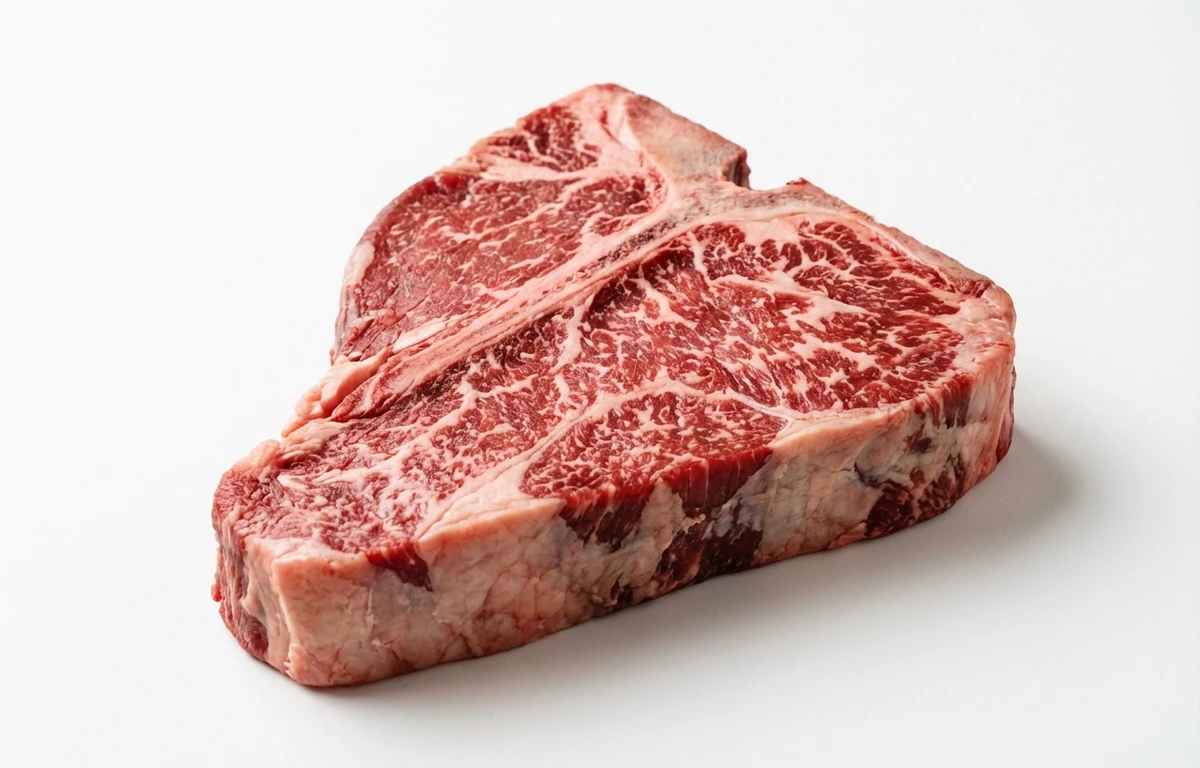
raw porterhouse steak.
VegetarianVeganGluten-freeDairy-freeNut-freePeanut-freeSoy-freeEgg-freeShellfish-freeHoney-freeAlcohol-free
ALSO KNOWN AS
porterhouse steak
SERVING
CALORIES
214
PROTEIN
20.5g
CARBS
0g
FAT
14.1g
FIBER
0g
NUTRITION PROFILE · per 100 g
Everything in this ingredient.
MACRONUTRIENTS
Calories214kcal—
Protein20.5g41%
Carbohydrates0g0%
Fiber0g0%
Sugar0g0%
Total fat14.1g18%
Saturated fat6.0g30%
Trans fat0.85g—
Cholesterol61mg20%
Water64.7g—
MINERALS
Sodium48mg2%
Potassium243mg5%
Calcium19mg1%
Iron2.0mg11%
Magnesium10mg2%
Phosphorus185mg15%
Zinc3.1mg29%
Copper0.06mg7%
Manganese0mg0%
Selenium19.7µg36%
VITAMINS
Vitamin A4.0µg0%
Vitamin C0mg0%
Vitamin D0.10µg1%
Vitamin E0.24mg2%
Vitamin K1.5µg1%
Thiamin (B1)0.05mg4%
Riboflavin (B2)0.23mg18%
Niacin (B3)4.9mg31%
Vitamin B60.62mg36%
Folate (B9)3.0µg1%
Vitamin B121.8µg75%
%DV based on a 2,000 cal diet. Source: USDA FoodData Central. A dash in the %DV column means there’s no established Daily Value for that nutrient.
MEASUREMENT CONVERSIONS
How much is what.
1 oz28.4g
1 lb453.6g
1 piece567g
HEALTH BENEFITS
Why eat it.
- ✓Excellent source of high-quality complete protein, essential for muscle growth, repair, and overall body function.
- ✓Rich in heme iron, a highly bioavailable form that helps prevent iron-deficiency anemia and supports oxygen transport in the blood.
- ✓Provides significant amounts of Vitamin B12, crucial for nerve function, DNA synthesis, and the formation of red blood cells.
- ✓Good source of zinc, which is vital for immune system function, wound healing, and cell growth.
COOKING TIPS
In the kitchen.
- 1For a superior crust, pat the steak completely dry with paper towels and season generously with coarse salt and black pepper just before cooking.
- 2Sear in a very hot pan, preferably cast iron, with a high-smoke-point oil for 2-4 minutes per side to develop a deep brown crust.
- 3Use a meat thermometer to achieve your desired level of doneness (130-135°F or 54-57°C for medium-rare).
- 4Always let the steak rest on a cutting board for 10-15 minutes after cooking before slicing. This allows the juices to redistribute, resulting in a more tender and flavorful steak.
STORAGE
Keep it fresh.
- Refrigerate immediately at or below 40°F (4°C) in its original packaging or on a plate covered with plastic wrap for up to 3-5 days.
- For long-term storage, wrap tightly in plastic wrap and heavy-duty foil or a freezer bag, and freeze at 0°F (-18°C) for up to 6-12 months for best quality.
- Thaw frozen steak safely in the refrigerator over 24-48 hours; never thaw at room temperature to prevent bacterial growth.
FAQ
Frequently asked questions.
Is porterhouse steak healthy?
Porterhouse steak is a nutrient-dense source of high-quality protein, heme iron, and Vitamin B12. While it supports muscle growth and blood health, it is relatively high in saturated fat and calories (214 kcal per 100g), so it should be enjoyed in moderation as part of a balanced diet.
How much protein and fat are in a porterhouse steak?
A 100g serving of raw porterhouse steak provides approximately 20.49g of protein and 14.06g of fat. It contains zero carbohydrates, making it a very high-protein, fat-rich food source.
Is porterhouse steak keto-friendly?
Yes, porterhouse steak is highly keto-friendly because it contains 0g of carbohydrates and a significant amount of fat. It is an ideal staple for those on ketogenic or carnivore diets looking for high-quality animal fats and proteins.
What is the difference between a porterhouse and a T-bone steak?
Both steaks are cut from the short loin and feature a T-shaped bone separating a strip steak and a tenderloin. The primary difference is size: a porterhouse must have a tenderloin section at least 1.25 inches thick, whereas a T-bone's tenderloin is much smaller.
How should I cook a raw porterhouse steak?
The most popular method is searing it in a hot cast-iron skillet with butter, garlic, and rosemary, then finishing it in the oven. Because it contains two different types of meat, using a meat thermometer is essential to ensure both the strip and tenderloin sides reach your desired doneness.
Is porterhouse steak gluten-free?
Raw porterhouse steak is naturally 100% gluten-free. However, if you are buying pre-marinated steaks or using store-bought spice rubs, check the ingredients list for hidden gluten or cross-contamination.
How long can I store raw porterhouse steak in the fridge?
Raw porterhouse steak should be stored in the coldest part of your refrigerator and typically lasts 3 to 5 days. For maximum freshness, keep it in its original vacuum-sealed packaging or wrap it tightly to prevent exposure to air.
Can I freeze raw porterhouse steak?
Yes, you can freeze raw porterhouse steak for 6 to 12 months. To maintain the best quality and prevent freezer burn, wrap the steak tightly in plastic wrap or use a vacuum sealer before placing it in a heavy-duty freezer bag.
How do I know if my porterhouse steak has gone bad?
Signs of spoilage include a strong, sour, or ammonia-like odor, a slimy or sticky texture on the surface, and a distinct grayish or greenish tint. If the meat feels slippery or smells off, it should be discarded immediately.
What are the specific health benefits of the iron and B12 in this steak?
The heme iron in porterhouse steak is highly bioavailable, helping to prevent iron-deficiency anemia and support oxygen transport. The Vitamin B12 is crucial for healthy nerve function, DNA synthesis, and the formation of red blood cells.



















