
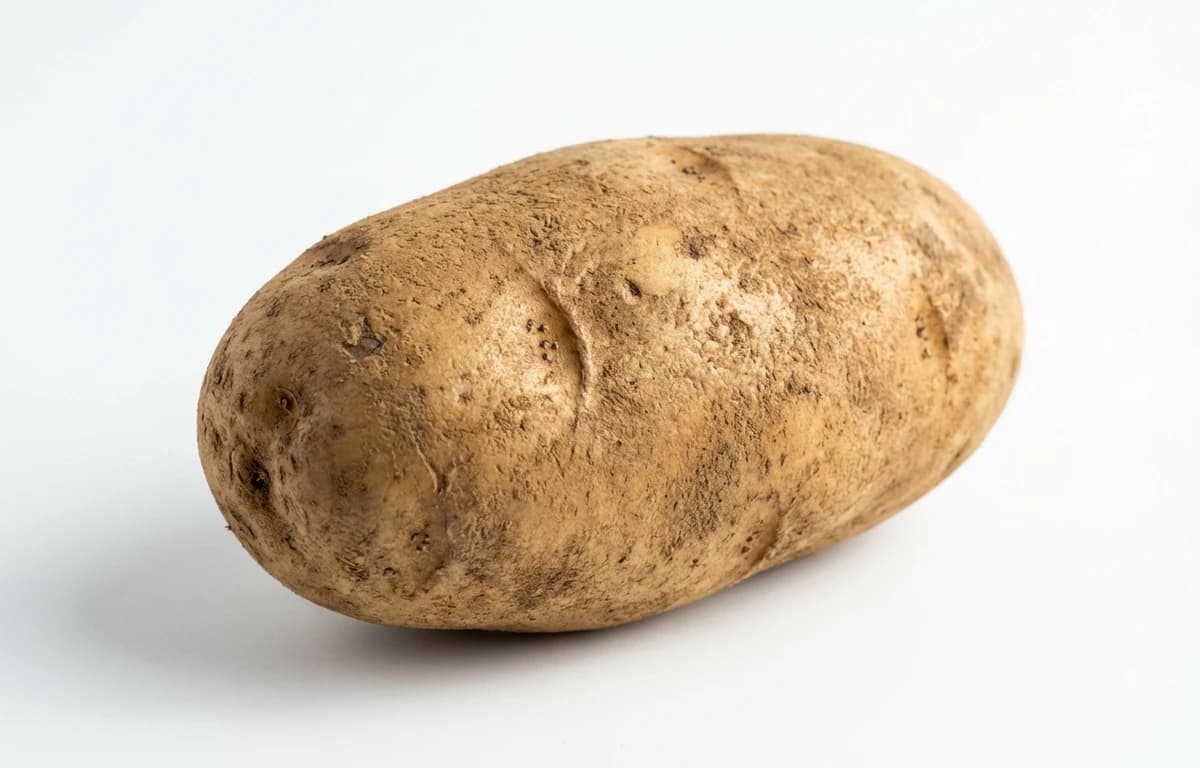
raw potato
Also known as: spud, alu, batata
Loading...
Also known as: spud, alu, batata
Per 100g
Nutrition data source: USDA FoodData Central
Common measurement equivalents in grams
In a cool, dark place, they can last 1-2 months. At room temperature, they typically last 1-2 weeks.
No, raw potatoes do not freeze well due to their high water content. They should be blanched or partially cooked before freezing.
Choose potatoes that are firm to the touch, have smooth skin, and are free of sprouts, cracks, or green discoloration.
No, green skin indicates the presence of solanine, a natural toxin. Small green spots can be peeled off, but heavily green potatoes should be discarded.
Cauliflower is the most common low-carb substitute, especially for mashed or roasted dishes. Radishes or turnips can also work.
Submerge the peeled or cut potatoes in a bowl of cold water with a splash of lemon juice or vinegar to prevent oxidation.
Yes, they are nutrient-dense and filling. However, their health impact depends on preparation; boiling or baking is healthier than deep-frying.
It is not necessary. The skin contains a significant portion of the potato's fiber and minerals. Just ensure they are scrubbed clean.
raw potato is a versatile ingredient found in cuisines around the world. With 77 calories per 100g and 2 grams of protein, it's a nutritious addition to many dishes.
Explore more ingredients in the vegetable category with complete nutrition information.
View all vegetable →