
Fruit
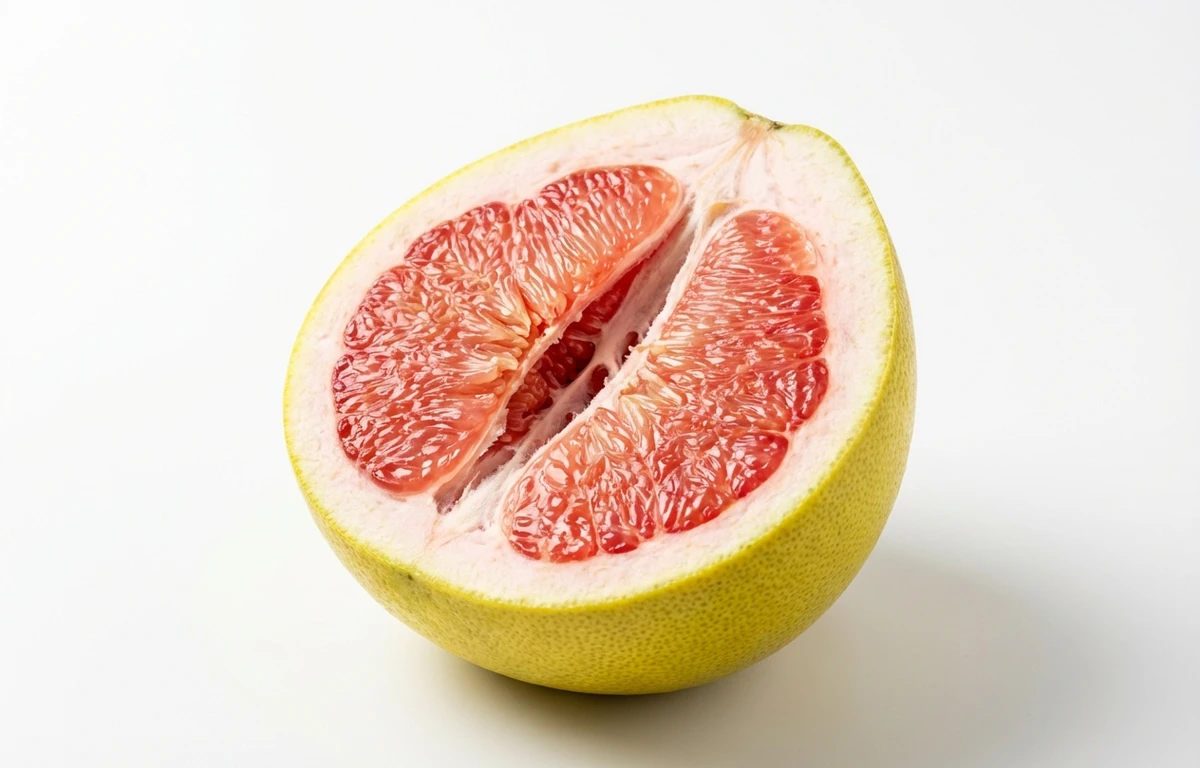
raw pummelo.
VegetarianVeganGluten-freeDairy-freeNut-freePeanut-freeSoy-freeEgg-freeShellfish-freeHoney-freeAlcohol-free
ALSO KNOWN AS
pomeloshaddockjabongchakotrabatabi lebujeruk balicitrus maximachinese grapefruit
SERVING
CALORIES
38
PROTEIN
0.76g
CARBS
9.6g
FAT
0.04g
FIBER
1.0g
NUTRITION PROFILE · per 100 g
Everything in this ingredient.
MACRONUTRIENTS
Calories38kcal—
Protein0.76g2%
Carbohydrates9.6g3%
Fiber1.0g4%
Sugar9.1g18%
Total fat0.04g0%
Saturated fat0g0%
Trans fat0g—
Cholesterol0mg0%
Water89.1g—
MINERALS
Sodium1.0mg0%
Potassium216mg5%
Calcium4.0mg0%
Iron0.11mg1%
Magnesium6.0mg1%
Phosphorus17mg1%
Zinc0.08mg1%
Copper0.05mg6%
Manganese0.02mg1%
Selenium0.10µg0%
VITAMINS
Vitamin A0µg0%
Vitamin C61mg68%
Vitamin D0µg0%
Vitamin E0.11mg1%
Vitamin K0µg0%
Thiamin (B1)0.03mg3%
Riboflavin (B2)0.03mg2%
Niacin (B3)0.22mg1%
Pantothenic acid (B5)0.30mg6%
Vitamin B60.04mg2%
Folate (B9)30µg8%
Vitamin B120µg0%
%DV based on a 2,000 cal diet. Source: USDA FoodData Central. A dash in the %DV column means there’s no established Daily Value for that nutrient.
MEASUREMENT CONVERSIONS
How much is what.
1 cup190g
1 oz28.4g
1 lb453.6g
1 piece600g
HEALTH BENEFITS
Why eat it.
- ✓Extremely high in Vitamin C for immune support
- ✓Contains powerful antioxidants like naringenin and naringin
- ✓Rich in potassium which supports heart health and blood pressure
- ✓High fiber content aids in healthy digestion
- ✓Low calorie density may assist in weight management
COOKING TIPS
In the kitchen.
- 1Always remove the thick white pith and the tough membranes as they are very bitter
- 2Use segments in Thai-style salads (Yam Som-O) with lime, chili, and peanuts
- 3The thick rind can be candied or used to make marmalade
STORAGE
Keep it fresh.
- Store whole pummelos at room temperature for up to one week
- Refrigerate whole fruit in the crisper drawer for up to 3 weeks
- Store peeled segments in an airtight container in the fridge for 3-4 days
FAQ
Frequently asked questions.
How do I pick a ripe pummelo?
Look for a fruit that feels heavy for its size and has a firm, unblemished skin. A slight floral fragrance is also a good sign of ripeness.
What does pummelo taste like?
It tastes like a sweet, mild grapefruit with very little to no bitterness, provided the membranes are removed.
How do I peel a pummelo?
Cut off the top and bottom, score the thick skin vertically in sections, peel the rind away, and then carefully pull the segments out of their tough membranes.
Can pummelo interact with medications?
Yes, like grapefruit, pummelo contains compounds that can interact with certain medications (like statins). Consult a doctor if you are on medication.
What is a good substitute for pummelo?
Grapefruit is the closest substitute, though it is more acidic and bitter. You can add a little sugar to grapefruit to mimic pummelo's sweetness.
Can you freeze pummelo?
Yes, you can freeze the segments. Remove all membranes first, then freeze in a single layer before transferring to a freezer bag.
Is the skin of the pummelo edible?
The outer zest and the thick white pith are edible but very bitter raw; they are usually candied or cooked into preserves rather than eaten raw.
Is pummelo high in sugar?
It contains about 9g of sugar per 100g, which is moderate for a fruit, similar to an orange but lower than a mango or grapes.



















