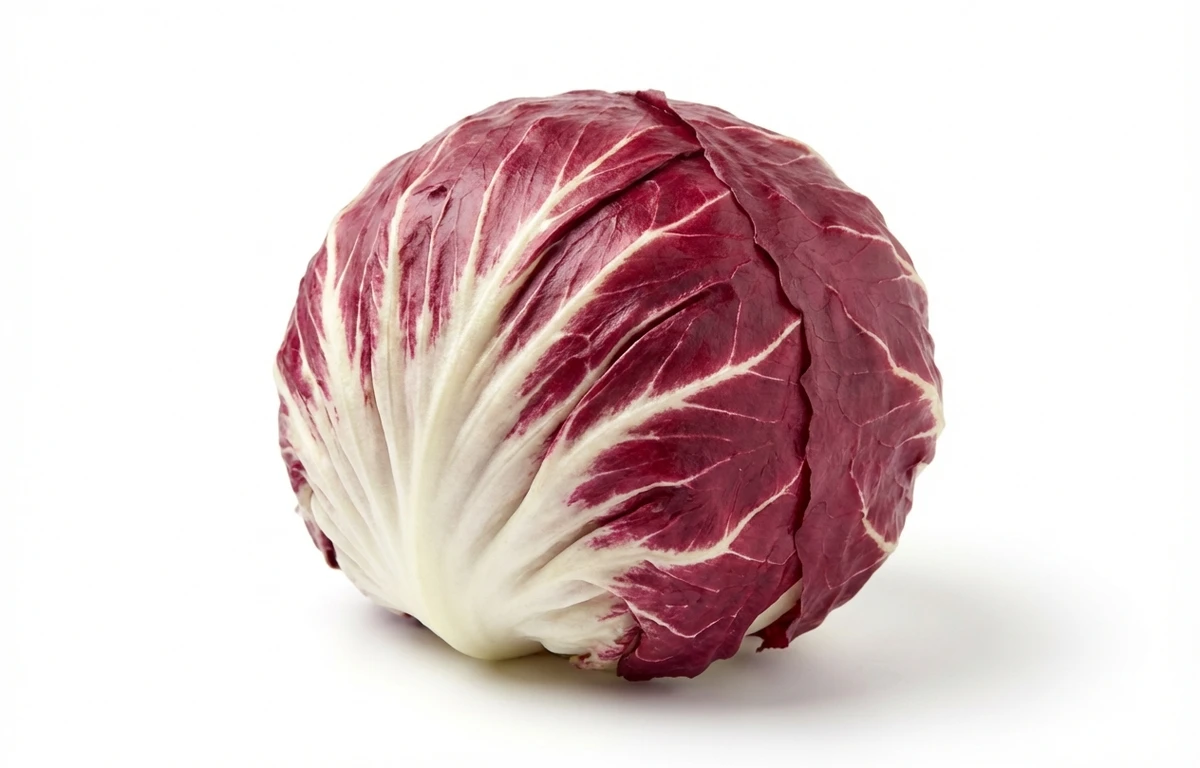
Vegetable
raw radicchio.
VegetarianVeganGluten-freeDairy-freeNut-freePeanut-freeSoy-freeEgg-freeShellfish-freeHoney-freeAlcohol-freeHalalKosher
ALSO KNOWN AS
radicchio
SERVING
CALORIES
23
PROTEIN
1.4g
CARBS
4.5g
FAT
0.25g
FIBER
0.90g
NUTRITION PROFILE · per 100 g
Everything in this ingredient.
MACRONUTRIENTS
Calories23kcal—
Protein1.4g3%
Carbohydrates4.5g2%
Fiber0.90g3%
Sugar0.60g1%
Total fat0.25g0%
Saturated fat0.06g0%
Trans fat0g—
Cholesterol0mg0%
Water93.1g—
MINERALS
Sodium22mg1%
Potassium302mg6%
Calcium19mg1%
Iron0.57mg3%
Magnesium13mg3%
Phosphorus40mg3%
Zinc0.62mg6%
Copper0.34mg38%
Manganese0.14mg6%
Selenium0.90µg2%
VITAMINS
Vitamin A1.0µg0%
Vitamin C8.0mg9%
Vitamin D0µg0%
Vitamin E2.3mg15%
Vitamin K255µg213%
Thiamin (B1)0.02mg2%
Riboflavin (B2)0.03mg2%
Niacin (B3)0.26mg2%
Pantothenic acid (B5)0.27mg5%
Vitamin B60.06mg4%
Folate (B9)60µg15%
Vitamin B120µg0%
%DV based on a 2,000 cal diet. Source: USDA FoodData Central. A dash in the %DV column means there’s no established Daily Value for that nutrient.
MEASUREMENT CONVERSIONS
How much is what.
1 cup40g
1 tablespoon2.5g
1 teaspoon0.8g
1 ml0.2g
1 liter166.7g
HEALTH BENEFITS
Why eat it.
- ✓Rich in antioxidants, particularly anthocyanins, which help combat cellular damage.
- ✓Excellent source of Vitamin K, crucial for bone health and proper blood clotting.
- ✓Contains inulin, a prebiotic fiber that supports a healthy gut microbiome.
- ✓The bitter compounds can stimulate bile production, aiding in digestion and supporting liver health.
COOKING TIPS
In the kitchen.
- 1To mellow its characteristic bitterness, grill or roast wedges of radicchio drizzled with olive oil until tender and slightly caramelized.
- 2Balance the bitter flavor in raw salads by pairing with sweet elements like balsamic glaze or fruit, and fatty ingredients like cheese, nuts, or avocado.
- 3For a less intense flavor, soak the separated leaves in ice-cold water for 30-60 minutes before using.
- 4Slice thinly (chiffonade) when adding to salads or slaws to distribute its potent flavor more evenly.
STORAGE
Keep it fresh.
- Store unwashed radicchio wrapped in a paper towel inside a plastic bag in the refrigerator's crisper drawer for up to 2 weeks.
- Keep the head whole until ready to use, as cut leaves will wilt and oxidize more quickly.
FAQ
Frequently asked questions.
Is radicchio healthy?
Yes, radicchio is highly nutritious and low in calories. It is an excellent source of Vitamin K for bone health and contains powerful antioxidants called anthocyanins, which help protect cells from oxidative stress.
What are the main health benefits of radicchio?
Radicchio supports digestive health through its inulin content, a prebiotic fiber that feeds healthy gut bacteria. Additionally, its bitter compounds can stimulate bile production, aiding in liver function and overall digestion.
Is radicchio good for weight loss?
Radicchio is an ideal food for weight loss as it contains only 23 calories and 0.25g of fat per 100g. Its high water and fiber content can help you feel full while providing essential micronutrients.
Is radicchio keto-friendly?
Yes, radicchio is very keto-friendly. With only 4.48g of total carbohydrates per 100g and a significant portion of that being fiber, it has a very low net carb count that fits well within a ketogenic lifestyle.
Is radicchio vegan and gluten-free?
Radicchio is a natural, plant-based vegetable, making it 100% vegan and naturally gluten-free. It is a safe and healthy choice for those with celiac disease or those following a plant-based diet.
What does radicchio taste like?
Raw radicchio has a bold, bitter, and slightly peppery flavor with a crisp, crunchy texture. The bitterness is its signature trait, which provides a sharp contrast when paired with sweet, salty, or acidic ingredients.
How do you reduce the bitterness of raw radicchio?
To mellow the bitter flavor, soak chopped radicchio leaves in cold water for 30 to 60 minutes before serving. You can also balance the bitterness by pairing it with citrus, balsamic vinegar, honey, or creamy cheeses.
How do you store radicchio and how long does it last?
Store whole heads of radicchio in the refrigerator's crisper drawer, wrapped in a paper towel and placed in a plastic bag. It typically stays fresh for 1 to 2 weeks, though it should be used within 2-3 days once the leaves are cut.
How do you know if radicchio has gone bad?
Fresh radicchio should have firm, vibrant burgundy leaves. If the leaves become slimy, develop dark brown or black mushy spots, or have a limp, rubbery texture, the vegetable has spoiled and should be discarded.
Can you cook radicchio or should it only be eaten raw?
While popular raw in salads, radicchio is delicious when grilled, roasted, or sautéed. Cooking the vegetable significantly reduces its bitterness and brings out a subtle sweetness, making it a versatile ingredient for warm dishes.