
Fruit
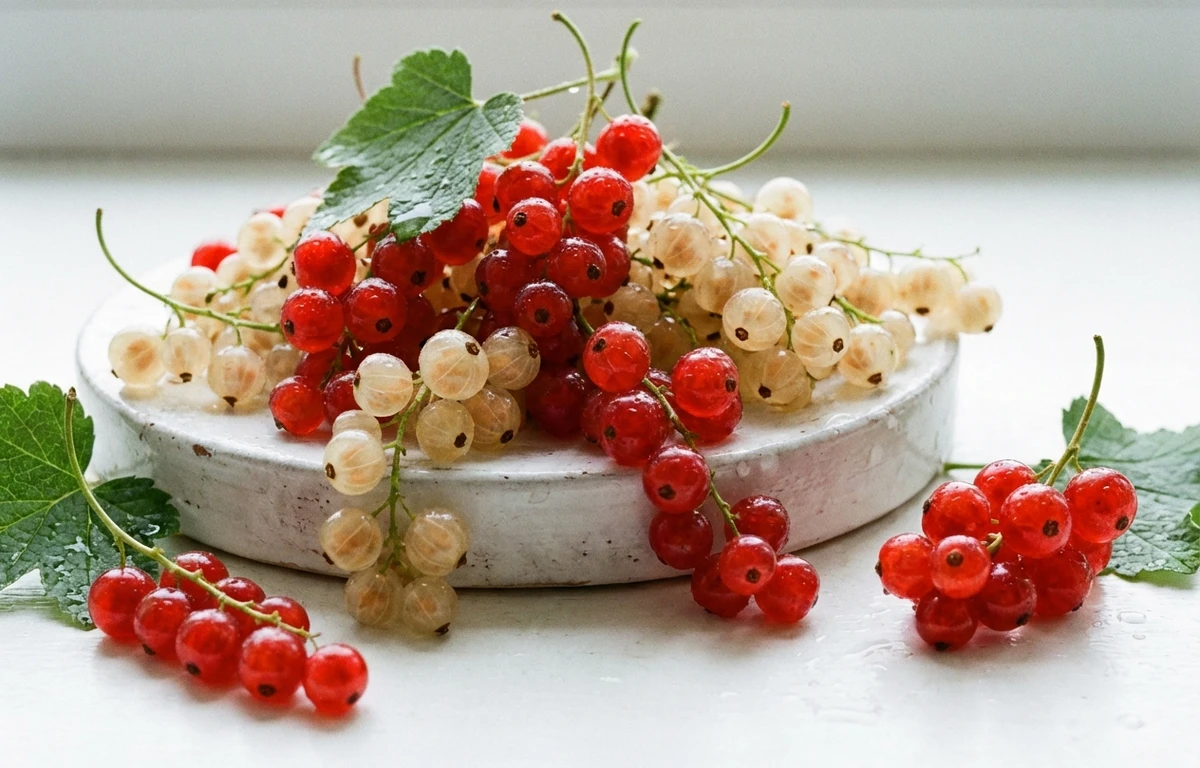
raw red and white currant.
VegetarianVeganGluten-freeDairy-freeNut-freePeanut-freeSoy-freeEgg-freeShellfish-freeHoney-freeAlcohol-freeHalalKosher
ALSO KNOWN AS
raw red and white currantsraw ribes rubrum
SERVING
CALORIES
56
PROTEIN
1.4g
CARBS
13.8g
FAT
0.20g
FIBER
4.3g
NUTRITION PROFILE · per 100 g
Everything in this ingredient.
MACRONUTRIENTS
Calories56kcal—
Protein1.4g3%
Carbohydrates13.8g5%
Fiber4.3g15%
Sugar7.4g15%
Total fat0.20g0%
Saturated fat0.01g0%
Trans fat0g—
Cholesterol0mg0%
Water84g—
MINERALS
Sodium1.0mg0%
Potassium275mg6%
Calcium33mg3%
Iron1.0mg6%
Magnesium13mg3%
Phosphorus44mg4%
Zinc0.23mg2%
Copper0.11mg12%
Manganese0.19mg8%
Selenium0.60µg1%
VITAMINS
Vitamin A2.0µg0%
Vitamin C41mg46%
Vitamin D0µg0%
Vitamin E0.10mg1%
Vitamin K11µg9%
Thiamin (B1)0.04mg3%
Riboflavin (B2)0.05mg4%
Niacin (B3)0.10mg1%
Pantothenic acid (B5)0.06mg1%
Vitamin B60.07mg4%
Folate (B9)8.0µg2%
Vitamin B120µg0%
%DV based on a 2,000 cal diet. Source: USDA FoodData Central. A dash in the %DV column means there’s no established Daily Value for that nutrient.
MEASUREMENT CONVERSIONS
How much is what.
1 cup112g
1 tablespoon7g
1 teaspoon2.3g
1 oz28.4g
1 lb453.6g
1 ml0.5g
1 liter500g
HEALTH BENEFITS
Why eat it.
- ✓High in Vitamin C which supports immune function and skin health
- ✓Rich in dietary fiber aiding in digestion and gut health
- ✓Contains antioxidants like anthocyanins that help reduce inflammation
- ✓Low glycemic index making it a suitable fruit for blood sugar management
- ✓Good source of Vitamin K which is essential for bone health and blood clotting
COOKING TIPS
In the kitchen.
- 1Use a fork to gently strip the berries from their stems to avoid crushing them
- 2Combine with sweeter fruits like strawberries to balance their natural tartness
- 3Simmer with a little sugar and water to create a quick coulis or glaze for meats
STORAGE
Keep it fresh.
- Store unwashed in a shallow container in the refrigerator for up to 5 days
- Keep the stems attached until ready to use to prevent the berries from leaking juice
- Can be frozen by spreading in a single layer on a tray before transferring to a bag
FAQ
Frequently asked questions.
What is the difference between red and white currants?
White currants are a color variant of the red currant; they are generally sweeter and less acidic than the red variety.
How long do fresh currants last in the fridge?
Fresh currants are delicate and typically last between 3 to 5 days when kept refrigerated in a breathable container.
Can you eat currant seeds?
Yes, the seeds inside currants are very small and perfectly safe to eat, providing a slight crunch.
What is a good substitute for red currants?
Cranberries (if cooked with sugar) or lingonberries are the best substitutes due to their similar tartness. Raspberries can work for fresh applications.
How do I know if currants are ripe?
Look for berries that are firm, translucent, and have a bright, consistent color. Avoid any that are shriveled or leaking.
Do I need to remove the stems before cooking?
Yes, the stems are woody and bitter. The easiest way to remove them is by pulling a fork down the length of the stem.
Are currants high in sugar?
No, currants are relatively low in sugar compared to other fruits, containing about 7-8g per 100g serving.
Can currants be frozen?
Yes, they freeze very well. Freeze them on a baking sheet first so they don't clump together, then move to a freezer bag for up to a year.
Are currants the same as the dried Zante currants?
No, dried Zante currants are actually small dried grapes (Black Corinth). Fresh red and white currants are true berries from the Ribes genus.
Are currants seasonal?
Yes, they are typically in season during the mid-to-late summer months, usually June through August.



















