
Fruit
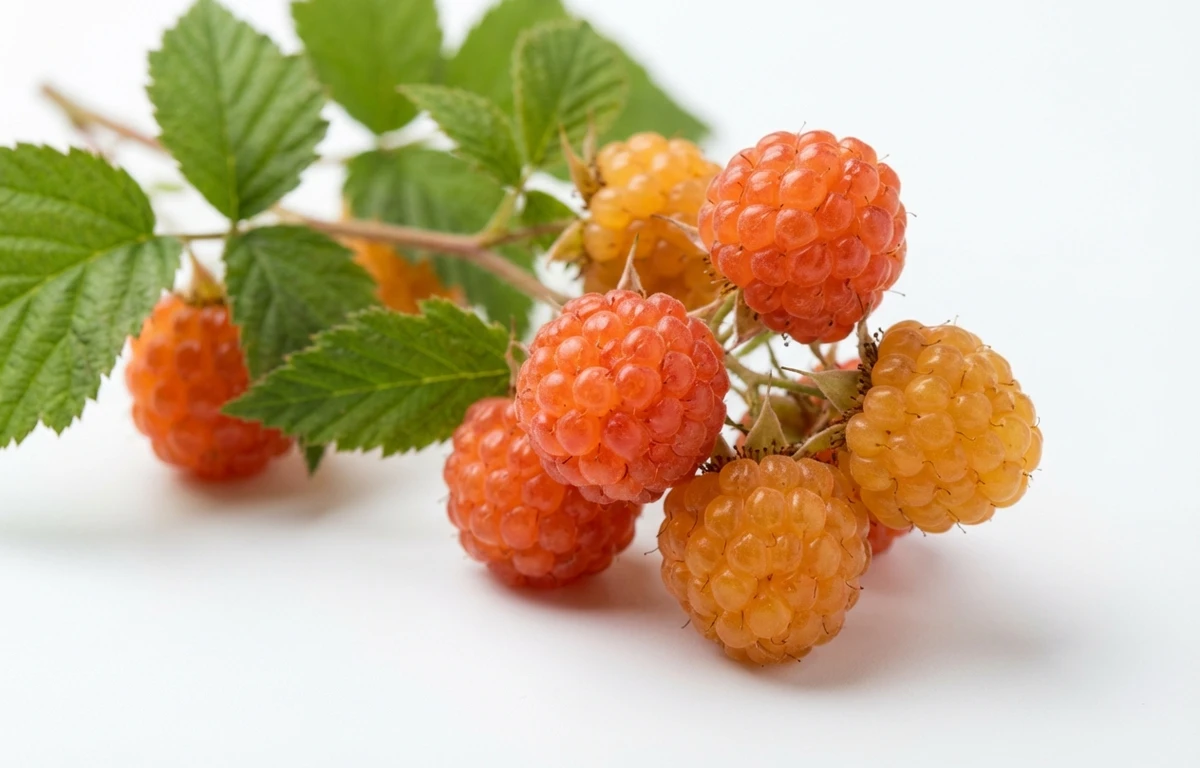
raw salmonberry.
VegetarianVeganGluten-freeDairy-freeNut-freePeanut-freeSoy-freeEgg-freeShellfish-freeHoney-freeAlcohol-freeHalalKosher
ALSO KNOWN AS
alaska berry
SERVING
CALORIES
47
PROTEIN
0.85g
CARBS
10.1g
FAT
0.33g
FIBER
1.9g
NUTRITION PROFILE · per 100 g
Everything in this ingredient.
MACRONUTRIENTS
Calories47kcal—
Protein0.85g2%
Carbohydrates10.1g4%
Fiber1.9g7%
Sugar3.7g7%
Total fat0.33g0%
Saturated fat0.01g0%
Water88.2g—
MINERALS
Sodium14mg1%
Potassium110mg2%
Calcium13mg1%
Iron0.40mg2%
Magnesium15mg4%
Phosphorus27mg2%
Zinc0.28mg3%
Copper0.03mg3%
Manganese1.1mg48%
VITAMINS
Vitamin A50µg6%
Vitamin C9.2mg10%
Vitamin E1.6mg11%
Vitamin K14.8µg12%
Thiamin (B1)0.04mg3%
Riboflavin (B2)0.06mg5%
Niacin (B3)0.47mg3%
Pantothenic acid (B5)0.17mg3%
Vitamin B60.08mg5%
Folate (B9)17µg4%
%DV based on a 2,000 cal diet. Source: USDA FoodData Central. A dash in the %DV column means there’s no established Daily Value for that nutrient.
MEASUREMENT CONVERSIONS
How much is what.
1 cup145g
1 tablespoon9.1g
1 teaspoon3g
1 ml0.6g
1 liter604.2g
1 piece6g
HEALTH BENEFITS
Why eat it.
- ✓Rich in Vitamin C, which supports the immune system and collagen production.
- ✓High in antioxidants like polyphenols and anthocyanins, which help combat oxidative stress.
- ✓Good source of dietary fiber, promoting digestive health and regular bowel movements.
- ✓Contains essential minerals like manganese, important for bone health and metabolism.
COOKING TIPS
In the kitchen.
- 1Handle gently as salmonberries are very delicate and can be easily crushed.
- 2Best enjoyed raw to appreciate their subtle, sweet-tart flavor. Add them to salads, yogurt, or oatmeal.
- 3When cooking, they are excellent for making light syrups, jellies, or jams, though they may require added pectin due to their high water content.
- 4Pair with complementary flavors like vanilla, cream, lemon, or other mild berries.
STORAGE
Keep it fresh.
- Refrigerate unwashed berries in a single layer in a breathable container. Use within 1-2 days as they are highly perishable.
- For long-term storage, freeze berries on a baking sheet in a single layer until solid, then transfer to a freezer-safe bag or container for up to 6 months.
FAQ
Frequently asked questions.
Are salmonberries healthy?
Yes, salmonberries are very healthy as they are low in calories and packed with essential nutrients. They are particularly rich in Vitamin C and antioxidants, which support immune function and protect cells from oxidative damage.
What are the primary health benefits of salmonberries?
Salmonberries provide high levels of Vitamin C for collagen production and manganese for bone health. Their antioxidant content, including polyphenols and anthocyanins, helps combat stress in the body, while their dietary fiber supports healthy digestion.
How many calories and carbs are in salmonberries?
A 100g serving of raw salmonberries contains approximately 47 calories and 10.05g of carbohydrates. They are a low-fat fruit option, providing only 0.33g of fat and 0.85g of protein per serving.
Are salmonberries keto-friendly?
Salmonberries can be included in a keto diet in moderation, as they contain about 10g of total carbs per 100g. Because a portion of these carbs is fiber, the net carb count is relatively low compared to many other fruits.
Are salmonberries vegan and gluten-free?
Yes, salmonberries are a natural plant-based fruit and are both vegan and gluten-free. They are safe for individuals with celiac disease or those following a strict plant-based lifestyle.
What do salmonberries taste like?
Salmonberries have a unique flavor that ranges from mildly sweet to slightly tart, often described as a more watery version of a raspberry. The taste varies by color, with the yellow-orange berries usually being milder and the deep red ones being more tart.
How can I use salmonberries in cooking?
Salmonberries are excellent for making jams, jellies, and syrups due to their high moisture content. They can also be used as a fresh topping for yogurt, blended into smoothies, or baked into muffins and tarts.
How do you store fresh salmonberries?
Salmonberries are highly perishable and very soft, so they should be stored in the refrigerator and consumed within 1 to 2 days. For longer storage, they can be frozen in a single layer on a tray before being transferred to a freezer-safe bag.
How can you tell if a salmonberry is ripe?
A ripe salmonberry will be bright yellow, orange, or deep red and will pull away from the central core very easily. If the berry is firm or resists being picked, it is likely not yet fully ripe.
Can you eat salmonberries raw?
Yes, salmonberries are safe and commonly eaten raw. It is recommended to wash them gently before consumption to remove any debris or insects, though they are very delicate and can bruise easily during washing.



















