
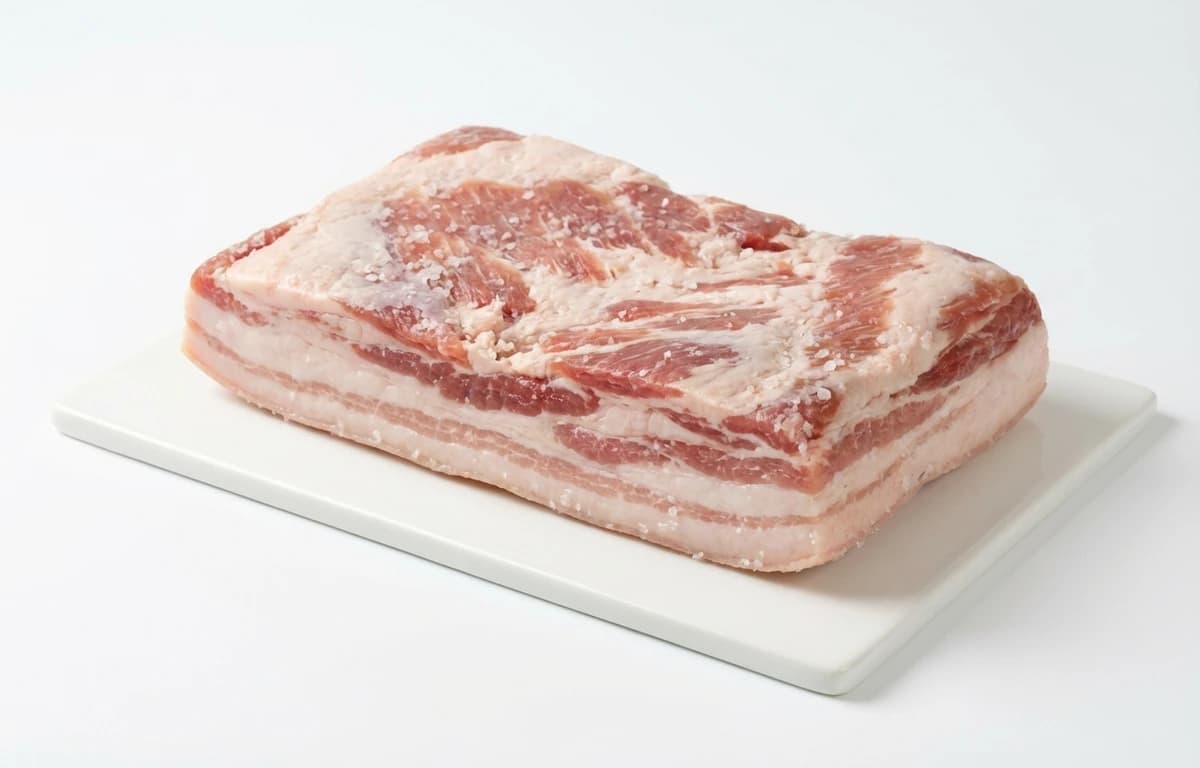
raw salt pork
Also known as: salt pork
Loading...
Also known as: salt pork
Per 100g
Nutrition data source: USDA FoodData Central
Common measurement equivalents in grams
Salt pork is very high in fat and sodium, so it should be consumed in moderation as a flavoring agent rather than a primary protein. While it provides energy and essential nutrients like B vitamins and choline, its high saturated fat content (80.5g per 100g) may not be suitable for heart-healthy diets.
Salt pork is a concentrated source of calories and energy, historically used by manual laborers. It contains choline for brain function, B vitamins (B3 and B12) for energy production, and selenium, an antioxidant mineral that helps protect cells from damage.
Yes, salt pork is highly keto-friendly because it contains 0g of carbohydrates and is extremely high in fat. It is frequently used in low-carb diets to add flavor and healthy fats to vegetable-heavy dishes like braised greens.
Before cooking, it is often recommended to rinse salt pork under cold water or blanch it in boiling water for a few minutes to remove excess surface salt. Once prepped, it is typically diced and rendered in a pan to create a flavorful fat base for stews or beans.
While both come from the pig's belly or back, salt pork is salt-cured and unsmoked, whereas bacon is cured and then smoked. Salt pork is significantly fattier and saltier, making it better suited as a seasoning base rather than a standalone breakfast meat.
No, salt pork should not be eaten raw. Although the salt-curing process helps preserve the meat, it is still considered a raw pork product that must be cooked thoroughly to ensure food safety and to properly render the fat.
raw salt pork is a versatile ingredient found in cuisines around the world. With 748 calories per 100g and 5.05 grams of protein, it's a nutritious addition to many dishes.
Explore more ingredients in the meat category with complete nutrition information.
View all meat →Discover 0 recipes featuring raw salt pork with step-by-step instructions.
Browse recipes →Salt pork should be kept tightly wrapped in the refrigerator, where it can last for 4 to 12 weeks due to its high salt content. For longer storage, it can be frozen for up to 6 months, though the texture may change slightly upon thawing.
In its pure form, salt pork is naturally gluten-free as it consists only of pork and salt. However, always check the label for any additives or spice rubs that may contain gluten-based stabilizers or flavorings.
Check for a sour or putrid odor, a slimy surface texture, or significant discoloration. While the fat is naturally white or creamy, if it turns distinctly yellow, grey, or green, the product has likely gone rancid and should be discarded.
The closest substitute is pancetta, which is also salt-cured but often seasoned with herbs. Slab bacon is another common alternative, though it will introduce a smoky flavor to the dish that salt pork does not have.