
Vegetable
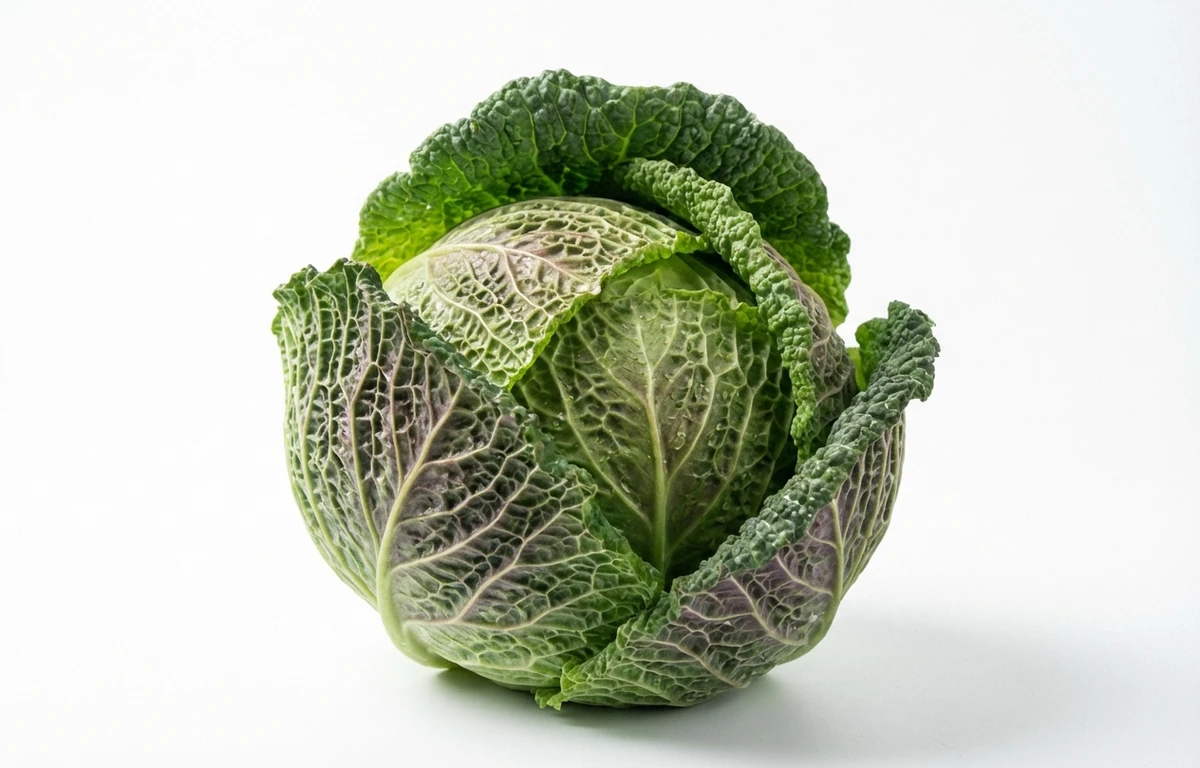
raw savoy cabbage.
VegetarianVeganGluten-freeDairy-freeNut-freePeanut-freeSoy-freeEgg-freeShellfish-freeHoney-freeAlcohol-freeHalalKosher
SERVING
CALORIES
27
PROTEIN
2.0g
CARBS
6.1g
FAT
0.10g
FIBER
3.1g
NUTRITION PROFILE · per 100 g
Everything in this ingredient.
MACRONUTRIENTS
Calories27kcal—
Protein2.0g4%
Carbohydrates6.1g2%
Fiber3.1g11%
Sugar2.3g5%
Total fat0.10g0%
Saturated fat0.01g0%
Trans fat0g—
Cholesterol0mg0%
Water91g—
MINERALS
Sodium28mg1%
Potassium230mg5%
Calcium35mg3%
Iron0.40mg2%
Magnesium28mg7%
Phosphorus42mg3%
Zinc0.27mg2%
Copper0.06mg7%
Manganese0.18mg8%
Selenium0.90µg2%
VITAMINS
Vitamin A50µg6%
Vitamin C31mg34%
Vitamin D0µg0%
Vitamin E0.17mg1%
Vitamin K68.8µg57%
Thiamin (B1)0.07mg6%
Riboflavin (B2)0.03mg2%
Niacin (B3)0.30mg2%
Pantothenic acid (B5)0.19mg4%
Vitamin B60.19mg11%
Folate (B9)80µg20%
Vitamin B120µg0%
%DV based on a 2,000 cal diet. Source: USDA FoodData Central. A dash in the %DV column means there’s no established Daily Value for that nutrient.
MEASUREMENT CONVERSIONS
How much is what.
1 cup70g
1 tablespoon4.4g
1 teaspoon1.5g
1 ml0.3g
1 liter291.7g
HEALTH BENEFITS
Why eat it.
- ✓Excellent source of Vitamin K, crucial for blood clotting and bone health.
- ✓Rich in Vitamin C, an antioxidant that supports immune function and collagen production.
- ✓Contains sulforaphane and other glucosinolates, compounds studied for their potential anti-cancer and anti-inflammatory properties.
- ✓Good source of dietary fiber, which promotes digestive health and regular bowel movements.
COOKING TIPS
In the kitchen.
- 1Its tender, crinkly leaves are ideal for making cabbage rolls as they are more pliable than other varieties.
- 2Shred thinly and use raw in salads and slaws for a milder, less peppery flavor than green cabbage.
- 3Savoy cabbage is excellent for braising, sautéing, or adding to soups, as it cooks quickly and absorbs flavors well without becoming mushy.
- 4For even cooking, remove the tough central core before chopping or shredding the leaves.
STORAGE
Keep it fresh.
- Store the whole, unwashed head in the crisper drawer of your refrigerator, where it can last for 1-2 weeks.
- Once cut, wrap the remaining cabbage tightly in plastic wrap or place it in an airtight container and refrigerate for up to 3 days.
FAQ
Frequently asked questions.
Is savoy cabbage healthy?
Yes, savoy cabbage is highly nutritious and low in calories. It is an excellent source of Vitamin K for bone health and Vitamin C for immune support, while providing beneficial fiber and antioxidants like sulforaphane that may have anti-inflammatory properties.
How many calories and carbs are in savoy cabbage?
Savoy cabbage is very low in calories, containing about 27 calories per 100g. It has approximately 6.1g of carbohydrates, 2g of protein, and almost no fat, making it a nutrient-dense addition to most diets.
Is savoy cabbage good for weight loss?
Absolutely. With only 27 calories per 100g and a high fiber content, it helps promote satiety and keeps you feeling full for longer. Its high water content and low calorie density make it an ideal food for weight management.
Is savoy cabbage keto-friendly?
Yes, savoy cabbage is keto-friendly. It contains about 6.1g of total carbs per 100g, but because a significant portion of that is dietary fiber, the net carb count is low enough to fit easily into a ketogenic or low-carb lifestyle.
Is savoy cabbage vegan and gluten-free?
Yes, savoy cabbage is a natural vegetable and is both 100% vegan and gluten-free. It is a safe and healthy choice for individuals with celiac disease, gluten sensitivities, or those following a plant-based diet.
Can you eat savoy cabbage raw?
Yes, savoy cabbage can be eaten raw and is frequently used in salads, wraps, or slaws. Its crinkled leaves are more tender and flexible than regular green cabbage, making it easier to chew and digest when uncooked.
What does savoy cabbage taste like?
Savoy cabbage has a milder, sweeter, and more delicate flavor compared to the sharp or peppery bite of red or green cabbage. Its texture is unique due to its lace-like, crinkled leaves, which are less crunchy and more tender than other varieties.
How do you store savoy cabbage and how long does it last?
Store the whole head in a perforated plastic bag in the crisper drawer of your refrigerator. It typically stays fresh for 1 to 2 weeks, though once it is cut, you should wrap it tightly and use it within 2-3 days.
How do you prepare savoy cabbage for cooking or eating?
Remove any wilted outer leaves and rinse the head under cold water. Cut the cabbage into halves or quarters and slice out the tough inner core; the remaining crinkled leaves can then be shredded for salads or sliced for sautéing and steaming.
How can you tell if savoy cabbage has gone bad?
Fresh savoy cabbage should have crisp, bright green leaves and feel heavy for its size. Signs of spoilage include limp or slimy leaves, significant yellowing, dark brown spots, or a strong, unpleasant sour odor.



















