
Loading...
Per 100g
Nutrition data source: USDA FoodData Central
Yes, scallions are highly nutritious and low in calories. They are an excellent source of Vitamin K for bone health and blood clotting, as well as Vitamins A and C, which support the immune system and vision.
Scallions are very low in calories, containing approximately 32 calories per 100g. They have about 7.34g of carbohydrates and 1.83g of protein, making them a light addition to any meal.
Yes, scallions are keto-friendly. Because they are typically consumed in small amounts as a garnish or seasoning, their net carb contribution to a meal is negligible, fitting easily into a low-carb lifestyle.
People on a low FODMAP diet can eat the green tops of scallions, which are low in fermentable carbs. However, they should avoid the white bulbous ends, as these contain higher levels of fructans that can trigger digestive issues.
Scallions have a mild, sweet onion flavor that is much less pungent than full-sized onions. The white base has a slightly sharper bite, while the green stalks are fresh and grassy.
Yes, both the white bulbs and the green stalks are edible. The white parts are often sautéed like onions to build flavor, while the green parts are usually sliced thin and used as a fresh garnish.
To keep scallions crisp, store them in the refrigerator wrapped in a damp paper towel inside a plastic bag. Alternatively, place them upright in a jar with an inch of water on the counter or in the fridge to extend their shelf life.
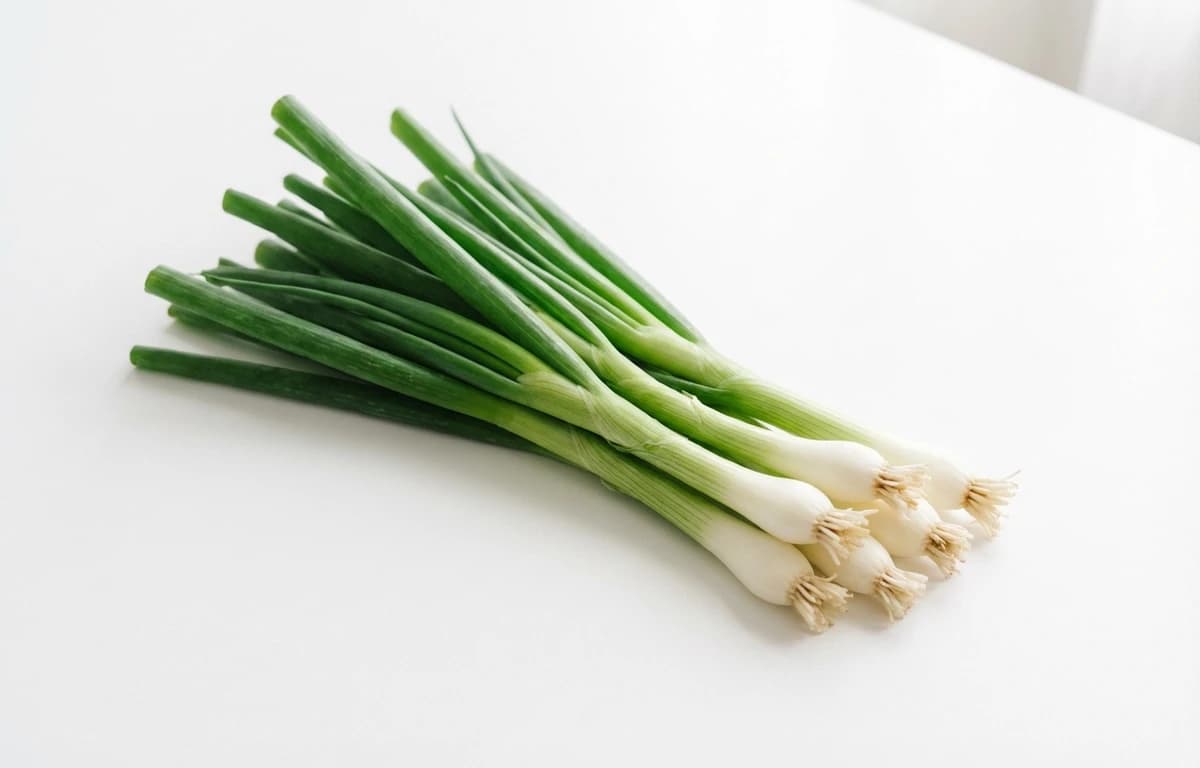
raw scallion is a versatile ingredient found in cuisines around the world. With 32 calories per 100g and 1.83 grams of protein, it's a nutritious addition to many dishes.
Explore more ingredients in the vegetable category with complete nutrition information.
View all vegetable →Discover 0 recipes featuring raw scallion with step-by-step instructions.
Browse recipes →Fresh scallions should be firm and bright green. If they become slimy, wilted, or develop a yellowish color and a pungent, sour odor, they are no longer fresh and should be discarded.
Yes, scallions can be used as a substitute for onions, especially in recipes that require a milder flavor. Use the white parts for cooking and the green parts for raw applications like salads or as a finishing touch.
The sulfur compounds and flavonoids found in scallions have anti-inflammatory and heart-protective properties. These compounds may help reduce blood pressure and lower the risk of certain chronic diseases when consumed as part of a balanced diet.