
Vegetable1 recipes
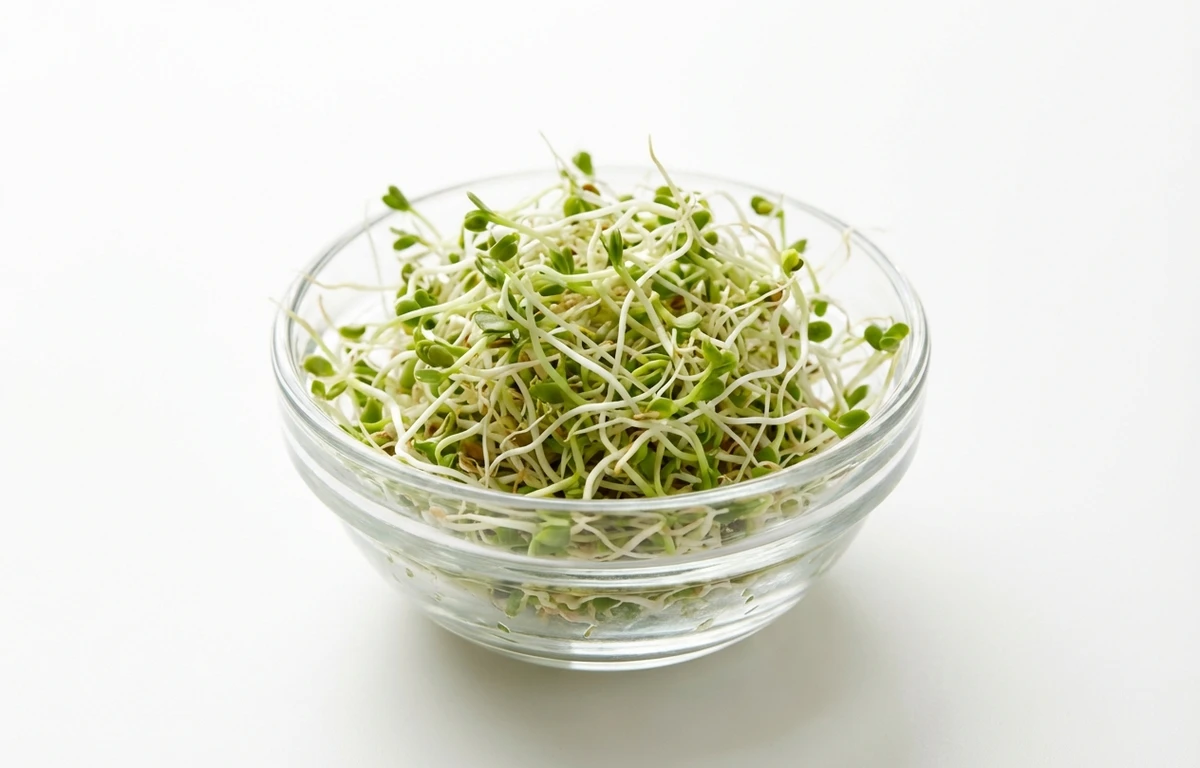
raw sprouted alfalfa seeds.
VegetarianVeganGluten-freeDairy-freeNut-freePeanut-freeSoy-freeEgg-freeShellfish-freeHoney-freeAlcohol-free
ALSO KNOWN AS
alfalfa sproutsraw alfalfa sproutslucerne sproutssprouted alfalfaMedicago sativa sprouts
SERVING
CALORIES
31
PROTEIN
4.0g
CARBS
2.1g
FAT
0.69g
FIBER
1.9g
NUTRITION PROFILE · per 100 g
Everything in this ingredient.
MACRONUTRIENTS
Calories30.6kcal—
Protein4.0g8%
Carbohydrates2.1g1%
Fiber1.9g7%
Sugar0.18g0%
Total fat0.69g1%
Saturated fat0.07g0%
Trans fat0g—
Cholesterol0mg0%
Water91.1g—
MINERALS
Sodium6.0mg0%
Potassium79mg2%
Calcium32mg2%
Iron0.96mg5%
Magnesium27mg6%
Phosphorus70mg6%
Zinc0.92mg8%
Copper0.16mg18%
Manganese0.19mg8%
Selenium0.60µg1%
VITAMINS
Vitamin A8.0µg1%
Vitamin C8.2mg9%
Vitamin D0µg0%
Vitamin E0.02mg0%
Vitamin K30.5µg25%
Thiamin (B1)0.08mg7%
Riboflavin (B2)0.13mg10%
Niacin (B3)0.48mg3%
Pantothenic acid (B5)0.56mg11%
Vitamin B60.03mg2%
Folate (B9)36µg9%
Vitamin B120µg0%
%DV based on a 2,000 cal diet. Source: USDA FoodData Central. A dash in the %DV column means there’s no established Daily Value for that nutrient.
MEASUREMENT CONVERSIONS
How much is what.
1 cup33g
1 tablespoon2.1g
1 teaspoon0.7g
1 oz28.4g
1 lb453.6g
1 ml0.1g
1 liter139.5g
HEALTH BENEFITS
Why eat it.
- ✓High in Vitamin K which supports bone health and blood clotting
- ✓Contains antioxidants that help reduce oxidative stress
- ✓Low calorie density makes it excellent for weight management
- ✓Source of plant-based protein and essential minerals
- ✓May help lower blood cholesterol levels
COOKING TIPS
In the kitchen.
- 1Best consumed raw to preserve delicate enzymes and vitamins
- 2Add to sandwiches, wraps, or salads just before serving for crunch
- 3Rinse thoroughly in cold water and drain well before use
STORAGE
Keep it fresh.
- Store in a breathable container or a plastic bag with small holes
- Keep refrigerated and use within 3 to 5 days for maximum freshness
- Ensure sprouts are dry before storing to prevent mold and slime
FAQ
Frequently asked questions.
How long do alfalfa sprouts last in the fridge?
They typically last 3-5 days. If they become slimy, smell musty, or turn dark brown, they should be discarded.
Can you freeze alfalfa sprouts?
No, freezing is not recommended as the high water content causes the cell walls to burst, resulting in a mushy texture upon thawing.
What is the best way to clean alfalfa sprouts?
Place them in a bowl of cold water, swirl gently to loosen hulls, then drain thoroughly using a salad spinner or paper towels.
Are alfalfa sprouts safe to eat raw?
While commonly eaten raw, they carry a risk of bacterial contamination (like Salmonella). Children, the elderly, and pregnant women should consider lightly steaming them.
What can I use as a substitute for alfalfa sprouts?
Clover sprouts, broccoli sprouts, or radish sprouts are the best alternatives. Microgreens or shredded lettuce can also work in sandwiches.
How do I pick the best alfalfa sprouts at the store?
Look for bright green tops and crisp, white roots. Avoid containers with excess water at the bottom or any signs of yellowing.
Are alfalfa sprouts high in protein?
For a vegetable, they are relatively high in protein by weight, providing about 4g per 100g serving.
Do alfalfa sprouts contain gluten?
No, alfalfa sprouts are naturally gluten-free as they are the germinated seeds of a legume, not a cereal grain.
What do alfalfa sprouts taste like?
They have a very mild, nutty, and slightly sweet flavor with a crisp, watery texture.
RECIPES
Cook with raw sprouted alfalfa seeds.
1 recipes · sorted by what’s quick



















