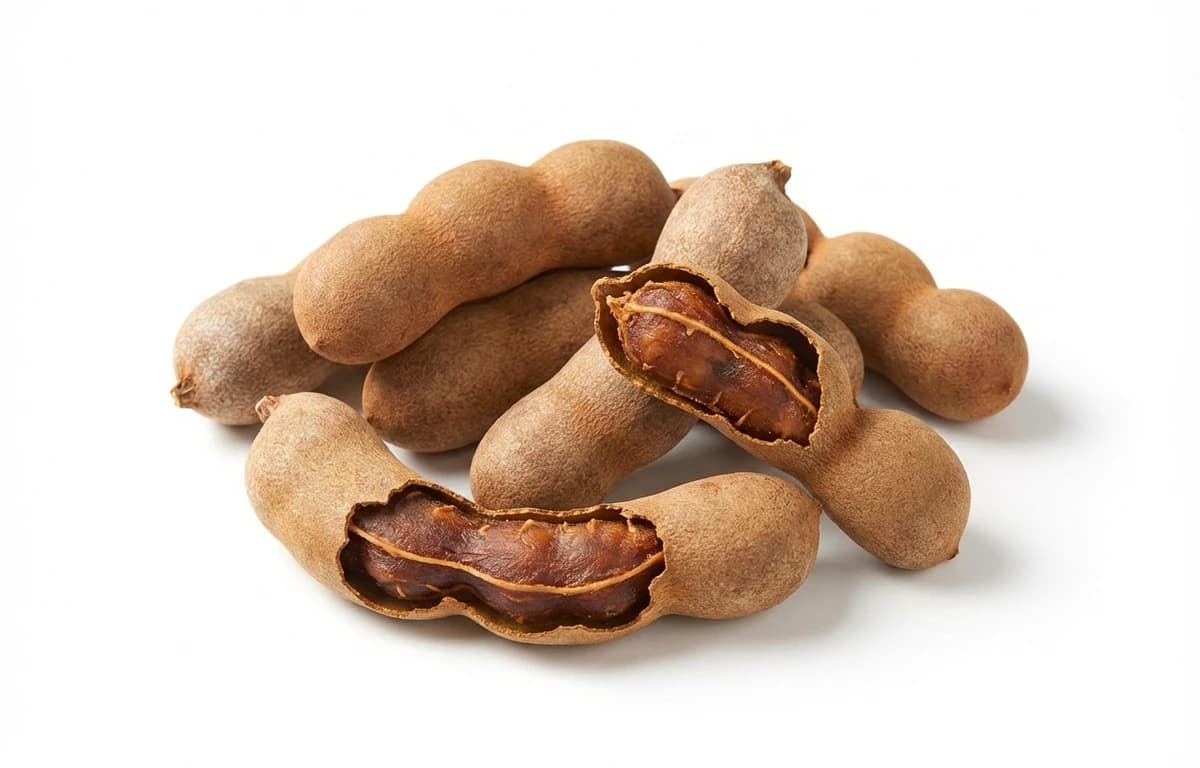
raw tamarind
Also known as: raw imli, raw puli, raw chinch, raw valan puli, raw hunasehannu
Loading...
Also known as: raw imli, raw puli, raw chinch, raw valan puli, raw hunasehannu
Per 100g
Nutrition data source: USDA FoodData Central
Common measurement equivalents in grams
Look for pods that are heavy for their size and have a hard, intact shell without cracks or holes. If buying deshelled pulp, it should be dark brown and slightly sticky, not dry or brittle.
The best substitutes are lime juice, amchur (dried mango powder), or kokum. Use about 1 tablespoon of lime juice for every 1 tablespoon of tamarind paste.
Whole pods last about a month at room temperature. Deshelled pulp lasts 6 months in the fridge and up to a year in the freezer if kept airtight.
Yes, tamarind seeds are very hard and inedible. Soak the pulp in water and mash it with your fingers to separate and discard the seeds and tough fibers.
Yes, it is highly acidic due to tartaric acid, which gives it its signature sour taste. It is often used to balance flavors in spicy or sweet dishes.
Absolutely. Freezing tamarind pulp in ice cube trays is a convenient way to have pre-measured portions ready for cooking.
No, raw tamarind refers to the fruit in its natural pod or the unprocessed pulp. Tamarind paste is a processed, concentrated version that is often smoother and more potent.
It is a staple in Pad Thai, Sambar, Rasam, various Indian chutneys, and Sinigang (a Filipino sour soup).
raw tamarind is a versatile ingredient found in cuisines around the world. With 239 calories per 100g and 2.8 grams of protein, it's a nutritious addition to many dishes.
Explore more ingredients in the fruit category with complete nutrition information.
View all fruit →Discover 0 recipes featuring raw tamarind with step-by-step instructions.
Browse recipes →