
Beverage2 recipes
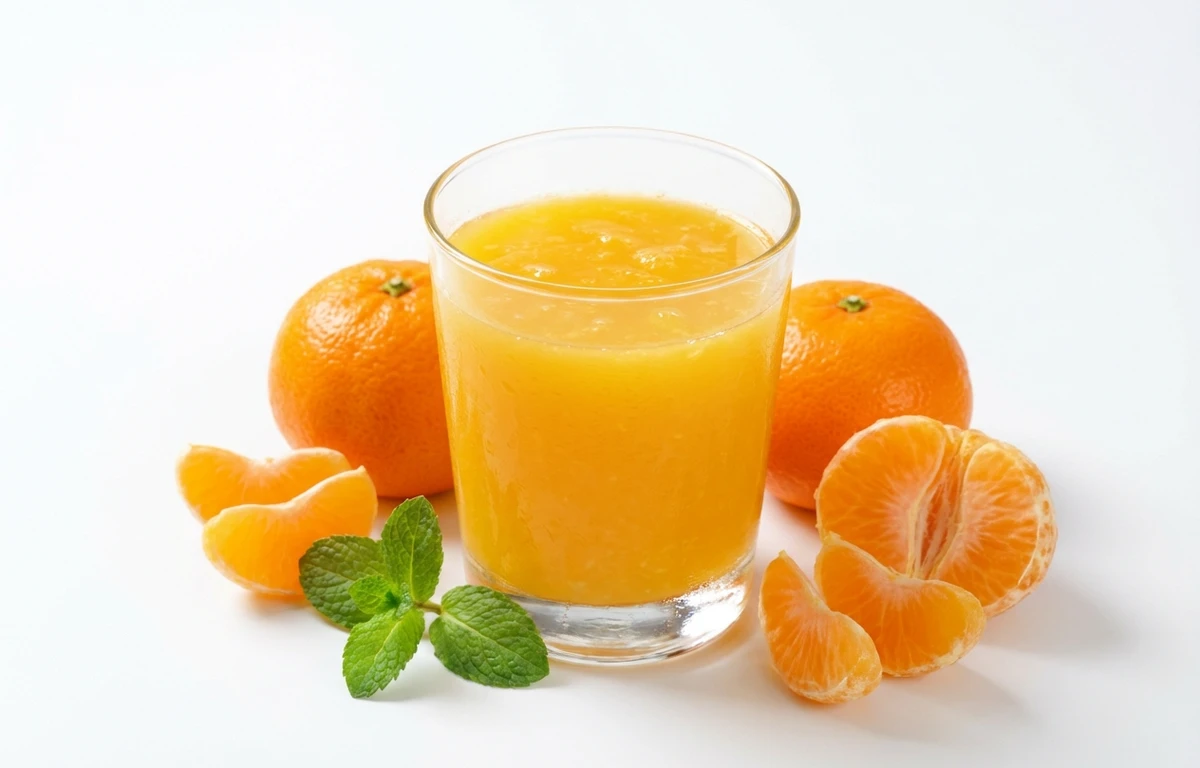
raw tangerine juice.
VegetarianVeganGluten-freeDairy-freeNut-freePeanut-freeSoy-freeEgg-freeShellfish-freeHoney-freeAlcohol-free
ALSO KNOWN AS
tangerine juice
SERVING
CALORIES
43
PROTEIN
0.50g
CARBS
10.1g
FAT
0.20g
FIBER
0.20g
NUTRITION PROFILE · per 100 g
Everything in this ingredient.
MACRONUTRIENTS
Calories43kcal—
Protein0.50g1%
Carbohydrates10.1g4%
Fiber0.20g1%
Sugar9.9g20%
Total fat0.20g0%
Saturated fat0.02g0%
Trans fat0g—
Cholesterol0mg0%
Water88.9g—
MINERALS
Sodium1.0mg0%
Potassium178mg4%
Calcium18mg1%
Iron0.20mg1%
Magnesium8.0mg2%
Phosphorus14mg1%
Zinc0.03mg0%
Copper0.03mg3%
Manganese0.04mg2%
Selenium0.10µg0%
VITAMINS
Vitamin A13µg1%
Vitamin C31mg34%
Vitamin D0µg0%
Vitamin E0.13mg1%
Vitamin K0µg0%
Thiamin (B1)0.06mg5%
Riboflavin (B2)0.02mg2%
Niacin (B3)0.10mg1%
Pantothenic acid (B5)0.13mg3%
Vitamin B60.04mg2%
Folate (B9)5.0µg1%
Vitamin B120µg0%
%DV based on a 2,000 cal diet. Source: USDA FoodData Central. A dash in the %DV column means there’s no established Daily Value for that nutrient.
MEASUREMENT CONVERSIONS
How much is what.
1 cup247g
1 tablespoon15.4g
1 teaspoon5.1g
1 ml1g
1 liter1029.2g
HEALTH BENEFITS
Why eat it.
- ✓Excellent source of Vitamin C, which supports immune function and skin health.
- ✓Rich in antioxidants like flavonoids (hesperidin, naringenin) that help protect cells from damage.
- ✓Promotes hydration due to its high water content.
- ✓Contains potassium, which is important for maintaining healthy blood pressure levels.
COOKING TIPS
In the kitchen.
- 1Use as a bright, tangy base for salad dressings when combined with olive oil and herbs.
- 2Incorporate into marinades for chicken, fish, or pork to add a sweet and acidic flavor that helps tenderize the meat.
- 3Reduce it in a saucepan to create a flavorful glaze for roasted vegetables or meats.
- 4Add to smoothies, cocktails, or mocktails for a fresh citrus burst.
STORAGE
Keep it fresh.
- Store in an airtight glass container in the refrigerator to minimize oxidation and nutrient loss.
- For best quality and highest vitamin content, consume within 24-48 hours of juicing.
- Freeze in ice cube trays for long-term storage (up to 3 months) to use in smoothies or other beverages.
FAQ
Frequently asked questions.
Is raw tangerine juice healthy?
Yes, raw tangerine juice is very healthy as it is an excellent source of Vitamin C, which supports immune function and skin health. It also contains beneficial antioxidants like flavonoids and potassium, which helps maintain healthy blood pressure levels.
How many calories and carbs are in raw tangerine juice?
Per 100g, raw tangerine juice contains approximately 43 calories and 10.1 grams of carbohydrates. It is a low-fat beverage with only 0.2g of fat and 0.5g of protein per serving.
Is raw tangerine juice keto-friendly?
Raw tangerine juice is generally not considered keto-friendly because it contains about 10g of net carbs per 100g, primarily from natural sugars. Those on a strict ketogenic diet should consume it in very small portions or opt for whole fruit to include fiber.
Is raw tangerine juice vegan and gluten-free?
Yes, raw tangerine juice is naturally vegan and gluten-free. It is a pure fruit extract that contains no animal derivatives or grain-based proteins, making it safe for those with these dietary restrictions.
What does raw tangerine juice taste like compared to orange juice?
Tangerine juice is typically sweeter, more aromatic, and slightly less acidic than standard orange juice. It has a more intense citrus flavor and often a deeper orange-red hue.
How long does fresh raw tangerine juice last?
Because it is unpasteurized, fresh raw tangerine juice should be kept refrigerated and consumed within 2 to 3 days. After this period, the juice may begin to ferment or lose its nutritional potency and fresh flavor.
Can I freeze raw tangerine juice?
Yes, you can freeze raw tangerine juice for up to 6 months. Freezing it in ice cube trays is a convenient way to preserve the juice for use in smoothies, cocktails, or recipes without it spoiling.
Can diabetics drink raw tangerine juice?
Diabetics should consume tangerine juice in moderation because it contains concentrated natural sugars without the fiber found in whole fruit. This can cause a faster rise in blood glucose levels compared to eating a whole tangerine.
How can I use raw tangerine juice in cooking?
Tangerine juice is versatile and can be used in salad dressings, citrus glazes for chicken or fish, and in desserts like sorbets or tarts. Its bright acidity and sweetness make it an excellent base for marinades and cocktails.
Is raw tangerine juice better than pasteurized juice?
Raw juice typically contains higher levels of heat-sensitive nutrients like Vitamin C and active enzymes that are reduced during pasteurization. However, raw juice has a much shorter shelf life and must be handled carefully to avoid bacterial contamination.
RECIPES
Cook with raw tangerine juice.
2 recipes · sorted by what’s quick



















