
Poultry
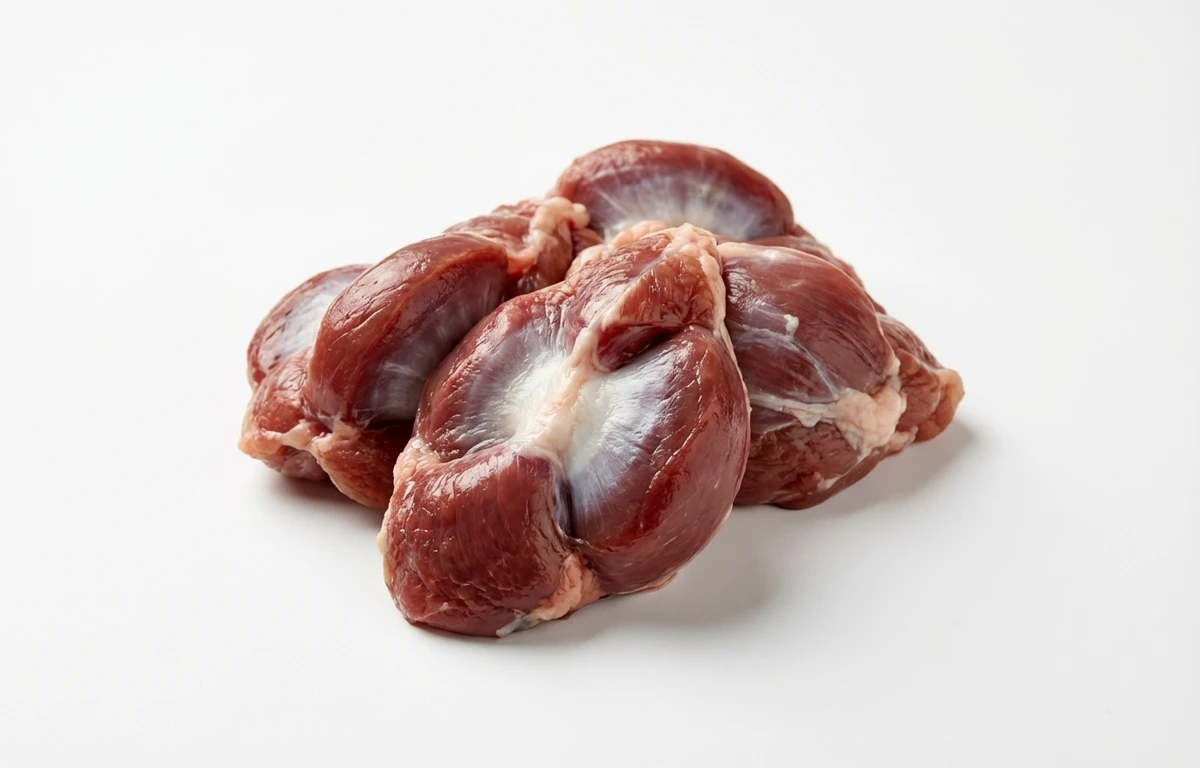
raw turkey gizzard.
VegetarianVeganGluten-freeDairy-freeNut-freePeanut-freeSoy-freeEgg-freeShellfish-freeHoney-freeAlcohol-free
ALSO KNOWN AS
raw turkey gizzardsuncooked turkey gizzardraw turkey giblets (gizzard portion)
SERVING
CALORIES
118
PROTEIN
19.2g
CARBS
0g
FAT
3.9g
FIBER
0g
NUTRITION PROFILE · per 100 g
Everything in this ingredient.
MACRONUTRIENTS
Calories118kcal—
Protein19.2g38%
Carbohydrates0g0%
Fiber0g0%
Sugar0g0%
Total fat3.9g5%
Saturated fat1.1g6%
Trans fat0g—
Cholesterol195mg65%
Water75.8g—
MINERALS
Sodium67mg3%
Potassium224mg5%
Calcium12mg1%
Iron3.4mg19%
Magnesium16mg4%
Phosphorus158mg13%
Zinc2.8mg25%
Copper0.15mg17%
Manganese0.03mg1%
Selenium25.4µg46%
VITAMINS
Vitamin A0µg0%
Vitamin C0mg0%
Vitamin D0µg0%
Vitamin E0.20mg1%
Vitamin K0µg0%
Thiamin (B1)0.04mg3%
Riboflavin (B2)0.21mg16%
Niacin (B3)3.5mg22%
Pantothenic acid (B5)0.60mg12%
Vitamin B60.15mg9%
Folate (B9)8.0µg2%
Vitamin B121.8µg75%
%DV based on a 2,000 cal diet. Source: USDA FoodData Central. A dash in the %DV column means there’s no established Daily Value for that nutrient.
MEASUREMENT CONVERSIONS
How much is what.
1 cup252g
1 tablespoon15.7g
1 teaspoon5.2g
1 oz28.4g
1 lb453.6g
1 liter1050g
1 piece45g
HEALTH BENEFITS
Why eat it.
- ✓Excellent source of high-quality lean protein
- ✓Rich in Iron which helps prevent anemia
- ✓High in Vitamin B12 for nerve function and DNA synthesis
- ✓Contains Selenium, a powerful antioxidant
- ✓Good source of Zinc for immune system support
COOKING TIPS
In the kitchen.
- 1Braise or slow-cook for at least 1-2 hours to break down the tough connective tissue
- 2Parboil before frying or grilling to ensure the interior is tender
- 3Ensure the internal temperature reaches 165°F (74°C) for food safety
STORAGE
Keep it fresh.
- Store in the coldest part of the refrigerator for no more than 1-2 days
- Freeze in airtight containers or heavy-duty freezer bags for up to 4 months
- Keep raw gizzards separate from other foods to prevent cross-contamination
FAQ
Frequently asked questions.
How long does raw turkey gizzard last in the fridge?
Raw turkey gizzards are highly perishable and should be cooked or frozen within 1 to 2 days of purchase.
Can you freeze raw turkey gizzards?
Yes, they freeze very well. Wrap them tightly to prevent freezer burn and they will maintain quality for about 3-4 months.
How do you clean raw turkey gizzards?
Rinse under cold water. If not already cleaned, butterfly them to remove the inner sediment and peel away the tough, yellow inner lining and any excess fat.
What is the best way to cook turkey gizzards?
Because they are a hard-working muscle, they are very tough. Low and slow methods like braising, stewing, or pressure cooking are best.
Are turkey gizzards healthy?
They are very healthy in terms of protein, iron, and vitamins, but they are high in cholesterol, so they should be eaten in moderation.
What can I substitute for turkey gizzards?
Chicken gizzards are the closest substitute, though they are smaller. Duck or goose gizzards also work well.
How do I know if raw turkey gizzards have gone bad?
Look for a slimy texture, a greyish tint, or a sour, ammonia-like odor. If any of these are present, discard them immediately.
Are turkey gizzards larger than chicken gizzards?
Yes, turkey gizzards are significantly larger and slightly tougher than chicken gizzards, often requiring longer cooking times.
What dishes are turkey gizzards commonly used in?
They are popular in Southern-style fried gizzards, giblet gravies, dirty rice, and various Asian stir-fries or braises.



















