
Poultry
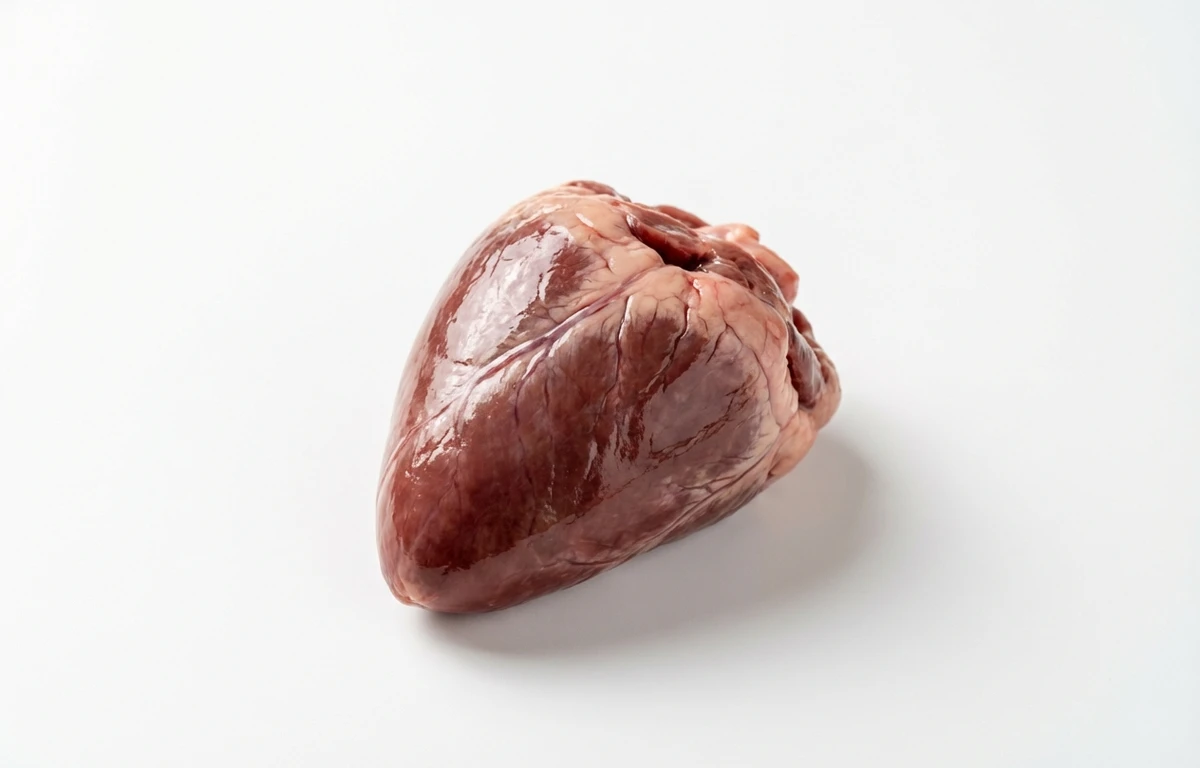
raw turkey heart.
VegetarianVeganGluten-freeDairy-freeNut-freePeanut-freeSoy-freeEgg-freeShellfish-freeHoney-freeAlcohol-free
ALSO KNOWN AS
turkey heart
SERVING
CALORIES
140
PROTEIN
16.7g
CARBS
0.40g
FAT
7.4g
FIBER
0g
NUTRITION PROFILE · per 100 g
Everything in this ingredient.
MACRONUTRIENTS
Calories140kcal—
Protein16.7g33%
Carbohydrates0.40g0%
Fiber0g0%
Sugar0g0%
Total fat7.4g10%
Saturated fat1.9g10%
Trans fat0.08g—
Cholesterol225mg75%
Water74.5g—
MINERALS
Sodium129mg6%
Potassium179mg4%
Calcium18mg1%
Iron3.7mg21%
Magnesium21mg5%
Phosphorus183mg15%
Zinc3.2mg29%
Copper0.49mg54%
Manganese0.10mg4%
Selenium35.4µg64%
VITAMINS
Vitamin A82µg9%
Vitamin C3.0mg3%
Vitamin D0.40µg2%
Vitamin E0.31mg2%
Vitamin K0µg0%
Thiamin (B1)0.17mg14%
Riboflavin (B2)1.1mg87%
Niacin (B3)6.4mg40%
Pantothenic acid (B5)3.1mg62%
Vitamin B60.48mg28%
Vitamin B1213.3µg554%
%DV based on a 2,000 cal diet. Source: USDA FoodData Central. A dash in the %DV column means there’s no established Daily Value for that nutrient.
MEASUREMENT CONVERSIONS
How much is what.
1 piece24g
HEALTH BENEFITS
Why eat it.
- ✓Extremely rich in Coenzyme Q10 (CoQ10), which supports cardiovascular health and cellular energy production.
- ✓Excellent source of B vitamins, especially B12, crucial for nerve function, DNA synthesis, and red blood cell formation.
- ✓High in essential minerals like iron for oxygen transport, zinc for immune support, and selenium, a powerful antioxidant.
- ✓Provides a concentrated source of high-quality, complete protein necessary for muscle building and tissue repair.
COOKING TIPS
In the kitchen.
- 1Trim any tough silver skin or excess fat before cooking for a more tender result.
- 2Slice thinly and cook quickly over high heat (grilling, searing, stir-frying) to an internal temperature of 165°F (74°C) to avoid a tough, rubbery texture.
- 3Marinate for at least 30 minutes in acidic ingredients like citrus juice or vinegar to help tenderize the muscle and infuse flavor.
- 4Can be slow-cooked in stews or braises, which breaks down the connective tissue, resulting in a very tender and flavorful meat.
STORAGE
Keep it fresh.
- Refrigerate raw turkey hearts immediately in an airtight container at 40°F (4°C) or below and cook within 1-2 days.
- For long-term storage, freeze in a freezer-safe bag or vacuum-sealed pouch at 0°F (-18°C) for up to 3-4 months for optimal quality.
FAQ
Frequently asked questions.
Is turkey heart healthy?
Yes, turkey heart is highly nutritious. It is an exceptional source of Coenzyme Q10 (CoQ10) for heart health, B vitamins like B12 for nerve function, and essential minerals including iron, zinc, and selenium.
How much protein is in turkey heart?
A 100g serving of turkey heart provides approximately 16.7g of high-quality, complete protein. This makes it an excellent choice for muscle repair and maintaining lean body mass.
Is turkey heart keto-friendly?
Yes, turkey heart is very keto-friendly as it contains only 0.4g of carbohydrates per 100g. Its moderate fat content (7.44g) and high protein make it ideal for low-carb and ketogenic diets.
What does turkey heart taste like?
Turkey heart has a rich, slightly gamey flavor that is more intense than turkey breast or thigh meat. Because it is a hard-working muscle, it has a firm, dense, and slightly chewy texture similar to a lean steak.
How do you prepare and cook turkey heart?
Turkey hearts can be sliced and quickly pan-seared, grilled on skewers, or slow-cooked in stews to tenderize them. Before cooking, it is often recommended to trim away any excess surface fat or tough connective vessels.
Can I feed raw turkey heart to my pets?
Yes, raw turkey heart is a popular addition to raw food diets for dogs and cats because it is rich in taurine and essential nutrients. However, ensure it is sourced from high-quality suppliers and consult a veterinarian regarding proper portions.
How long does raw turkey heart last in the refrigerator?
Raw turkey heart is highly perishable and should be stored in the coldest part of the refrigerator for no more than 1 to 2 days. For longer storage, wrap it tightly and freeze it for up to 6 to 9 months.
How can you tell if turkey heart has gone bad?
Fresh turkey heart should be deep red and firm with a neutral, slightly metallic scent. If it develops a sour or ammonia-like odor, a slimy surface texture, or turns a greyish-green color, it has spoiled and should be discarded.
Is turkey heart a good source of iron?
Yes, turkey heart is an excellent source of heme iron, which is the form of iron most easily absorbed by the body. This makes it a beneficial food for supporting oxygen transport in the blood and preventing anemia.
Do I need to soak turkey hearts before cooking?
While not strictly necessary, some cooks prefer to soak turkey hearts in cold salted water for 30 minutes to help draw out residual blood and mellow the flavor. Always pat them dry before searing to ensure they brown properly.



















