
Loading...
Per 100g
Nutrition data source: USDA FoodData Central
Common measurement equivalents in grams
Raw turkey legs should be kept in the refrigerator for no more than 1 to 2 days before cooking or freezing.
Yes, they can be frozen for up to 9 months. Ensure they are wrapped airtight to prevent freezer burn.
The safest way is in the refrigerator. Allow approximately 24 hours for every 4-5 pounds of meat.
No, washing raw poultry can spread bacteria to your sink and kitchen surfaces. Cooking to the proper temperature kills all bacteria.
Chicken legs (drumsticks and thighs) or duck legs are the best substitutes, though they are smaller and may cook faster.
Turkey breast is lower in fat and calories, but turkey leg meat (dark meat) contains higher levels of iron, zinc, and B vitamins.
Look for a sour or ammonia-like smell, a slimy texture, or a greyish/greenish discoloration.
Turkey legs must reach an internal temperature of 165°F (74°C) to be safe for consumption.
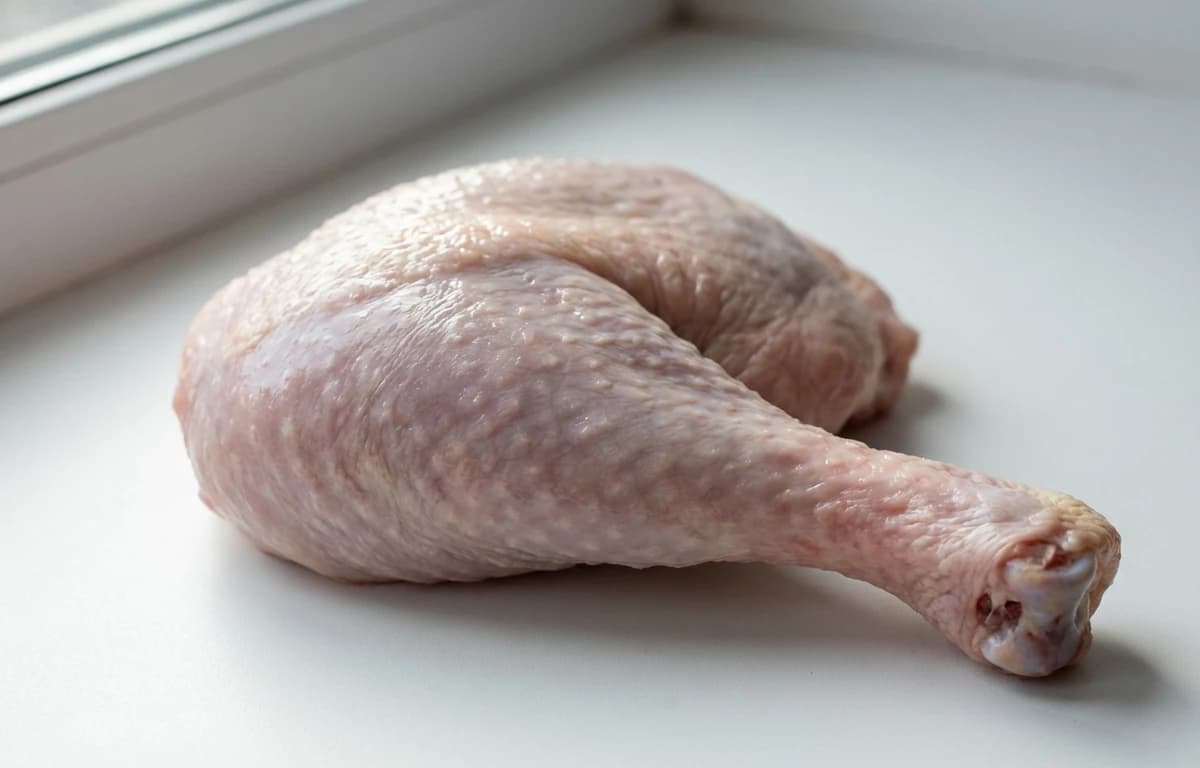
raw turkey leg is a versatile ingredient found in cuisines around the world. With 144 calories per 100g and 19.2 grams of protein, it's a nutritious addition to many dishes.
Explore more ingredients in the poultry category with complete nutrition information.
View all poultry →Discover 0 recipes featuring raw turkey leg with step-by-step instructions.
Browse recipes →